Showing posts with label agrarian crisis. Show all posts

Monday, June 14, 2021

Time for farmers to go political


Pic courtesy: Khaleej Times 

In a tweet, the popular IndianHistorypics handle shared the cover story of the erstwhile popular Hindi weekly Dharamyug (Sept 1972) titled: Ann Upjaaye Kisan ! Bhhooko Mare Kisan ! (Farmers grow food! Farmers die of hunger!). The focus was on how the people who produce food for the country were themselves living in hunger. That was a time five years after the Green Revolution had set in and valiant farmers in the north-western region had literally pulled the country from the throes of a ‘ship-to-mouth’existence.

Nearly 50 years later, the iconic farm protest at the doorsteps of New Delhi showcases the piteous condition of farmers, who have somehow survived against all odds, and yet produced a record harvest year after year. Faced with mounting indebtedness, the spate of farm suicides over the years leaves behind a trail of neglect and apathy. With the policy focus remaining on increasing crop production, successive governments have turned a blind eye to the deplorable living conditions of farmers and farm workers. This was the outcome of a flawed economic thinking that aimed at pushing farmers out of agriculture to join the army of daily wage workers in the cities. 

For several decades now, farmers have been protesting in one part of the country or the other, demanding a guaranteed price for their crops in the form of a higher Minimum Support Price (MSP) and have invariably been asking for karza mukti (loan waivers). These two demands actually reflected the urgent need to address the crying need of providing economic justice to the farming community, languishing at the bottom of the pyramid. But nothing tangible came about, with the states either ignoring the protests or at best offering a temporary reprieve. The agrarian crisis in the process has only worsened. 

According to the National Crime Record Bureau (NCRB), recorded farm protests across the country were 4,837 in 2016, 3,300 in 2017 and 2008 in 2018. A CSE study quoting media reports however showed the number of major farm protests in the country increasing five folds between 2017 and 2021. Besides local issues, most of these protests highlighted the economic disparities that farmers were living with. 

Realising that the continuing farm protests had failed to draw nation’s attention to the acute farm crisis, and knowing that farmers and farm workers have been routinely treated by various political affiliations as nothing more than a vote bank, farmer leader Balbir Singh Rajewal had invited me way back in 2015 to take an initiative to bring farm leaders from across the country on one platform. We deliberated on the objectives as well as the challenges it posed considering that farm unions were broadly divided on the lines of caste, religion and political ideologies and bringing them together may not be that easy. A few decades back, I remember the two stalwarts of the farm movement in the country -- Mahendra Singh Tikait of Bhartiya Kisan Union (BKU) and Prof M D Nanjudaswamy of Karnataka Rajya Ryot Sangha (KRRS) – too had wanted me to take an initiative to bring the farming unions together but I had politely wriggled out of it.   

Not many of the 52 farm leaders, representing major factions of unions/organisations spread across the country, who assembled for a three days conclave at Chandigarh in Aug 2015, actually knew each other. That was perhaps the first time several farm leaders, cutting across ideologies and political affiliations had sat on the same table. During the course of the intense discussions that followed, aimed at bringing the farm unions together, the leaders acknowledged the need to work together and agreed to form a loose network called Kisan Ekta. More importantly, the Chandigarh conclave helped create a strong camaraderie and bonhomie among farmer leaders.   

In the next three conclaves held at Bangalore, Akola and Shimla, an effort was made to reach out to some other farmer leaders as well. While the general consensus was that farm movement in the country should remain apolitical, there were a few who were strong votaries for forming instead a political party. Among them were some whose argument was that by being apolitical, as the past experience had shown, farmers would remain perpetually at the mercy of political leaders. Vote bank politics will continue to keep the farming community divided, and the farmer leaders should therefore consider forming a political party. Farmer leaders agreed in principle, but were not willing to take a political plunge, for reasons they understood better. In a TV interview at Shimla, to a question whether Kisan Ekta will soon be a political party, my response was that the objective behind uniting farm unions was to ‘influence’ the political process.   

The year 2020 however marks a watershed in farmers struggle with all divergent leaning farm unions of Punjab coming together to wage a united protest against the three central farm laws. This has spread in other parts too. Not only from Punjab, farmer leaders from Haryana and Uttar Pradesh too have emerged taller on the national scene. So have many other regional leaders emerging stronger in other parts of the country. The rush for clicking selfies with them is an indication of their growing popularity. With farmer leaders now expanding the outreach through mahapanchyatsin different parts of the country, the crucial issue related to the withdrawal of the three central laws and the demand for making MSP a legal right for farmers has reached every nook. In addition, their efforts to reach out to other communities which certainly has political ramifications, is bearing fruits. 

In any case, considering that more than 50 per cent of the population is engaged in agriculture and allied activities, the time was never so ripe for the collective farmer leadership to rethink its role -- whether to go political or remain apolitical. After all, reversing the flawed economic design that has kept farmers deliberately impoverished all these years in the name of economic growth will require farmers to emerge stronger on the political front, and play a pivotal role in decision making. #

Time for farmers to have a say in politics. The Tribune. June 9. 2021. 
https://www.tribuneindia.com/news/comment/time-for-farmers-to-have-a-say-in-politics-265750
READ MORE - Time for farmers to go political

Friday, February 28, 2020

Seeds of the Next Agricultural Revolution


Pic from the web

This essay I wrote for the book: Handbook of Indian Agriculture 2020 -- Charting the way out of the farm crisis. 

At an age when young people are full of hope and aspirations, a 22-year-old young farmer in Barnala district in Punjab too attempted to turn around his small farm into a successful venture. Inheriting a small loan of Rs 8-lakh, and knowing well that farming had already taken an alarming toll in his family, he still decided to take up the challenge. Aware that entrepreneurship comes with associated risks, he still took 8-acres of land on lease at an annual rent of Rs 50,000 a year.

But in 2017, his standing wheat crop was damaged from a freak hailstorm. His dreams were shattered, and he could never recover from the battering he received. Unable to pay back the loan, and with lenders breathing down his neck, he was finally left with no option but to take the fatal route.

Lovepreet Singh was the fifth member in three generations of his farm family to have ended his life. About a year and a half ago, his father, Kulwant Singh, had hanged himself. His grandfather too had earlier committed suicide. That three generations of a Punjab farm family were sucked in by continuing agrarian distress clearly shows how prolonged the farm crisis has been. Not many will believe it, but Punjab, the seat of Green Revolution, has slowly turned into a hotbed of farm suicides. There is hardly a day when newspapers don’t carry reports of farmers committing suicide.

A house-to-house survey conducted by three public sector universities -- Punjab Agricultural University, Ludhiana; Punjabi University, Patiala and Guru Nanak Dev University, Amritsar – had computed the farm and farm workers suicide toll between 2000 and 2015 at a staggering 16,606. Another study by Punjabi University found that one in every three farmers in the State was living below the poverty line. In Maharashtra, 15,356 farm suicides have been reported in six years, between 2013 and 2018, reveals an RTI. At the national level, 11,379 suicides by farmers and farm workers were compiled by the National Crime Record Bureau (NCRB) for 2016, although the report was released three years late. This count was a little lower from the farm suicides tally for 2015, when 12,602 suicides were reported. A year earlier, in 2014, a total of 12, 360 farm suicides were officially recorded. The serial death dance on the farm has continued unabated.

While suicides reflected the acute distress that prevailed on the farm, essentially it was an outcome of the skewed economic policies that deliberately kept agriculture impoverished. Food prices had to be kept low to keep economic reforms viable. Keeping farm gate prices low to ensure affordable prices for consumers and ensuring a supply of cheaper raw material for the industry remained the political priority. In the process, the entire economic burden was very conveniently passed on to farmers. With real farm incomes remaining stagnant or declining over the decades, the match in reality was fixed against farmers.

Fifty years after the advent of Green Revolution, Economic Survey 2016 brought out the unpleasant truth. Accordingly, the average income of a farming family in 17 States of India, which means literally half the country, was a paltry Rs 20,000 a year. In other words, the average income was less than Rs 1,700 a month. At a time when it is not possible to even rear a cow in Rs 1,700 per month, I wonder how these families had been surviving year after year. Also, let’s not forget, the meagre farm income that Economic Survey mentioned was not only based on what the farmer was able to sell, but also included what they saved for household consumption, clearly pointing to the deep agrarian crisis. Several other studies had pointed to declining farm incomes. This is substantiated by an OECD-ICRIER study showing farmers lost an estimated Rs 45-lakh crore by being denied their rightful price in the 16-year period, between 2000-01 and 2016-17.

Now let us look at America. A report in The New York Times published way back in Feb 2010, showed how the US agriculture despite having high crop productivity, using state-of-art technology, and laced with heavy subsidies, had been sliding into depression over the years, forcing an increasing number of farmers to file for bankruptcy and quit farming. To illustrate, it specifically talked of a tragic suicide by a dairy farmer, Dean Pierson, who one fine morning after the milking was complete, took out his small-caliber rifle and shot all 51 cows on his farm in the head. He then sat on a chair and shot himself in the head. Falling prices and rising costs had pushed Dean Pierson into despair, a phenomenon that has engulfed a dominant section of the US farming community, increasingly encountering mental depression. As per the American Farm Bureau Federation, 91 per cent farmers and farm workers are faced with distress. Farm suicide rate is 45 per cent higher than the rest of the society. Such is the acute mental agony that farmers are undergoing that as many as 87 per cent of them fear they have little choice left but to quit farming. With median US farm income remaining in the negative for six years in a row, farm debt in 2019 was expected to rise to $ 418 billion.

With the number of small dairy farms falling by 17,000 in the 10 year period, between 2007 and 2017, the US had lost 30 per cent of its dairy farms. On an average, an America dairy farmer gets only 11 cents for every dollar of milk sold in the market. Over the years, milk prices have continuously been on the decline in America, Europe and Australia/New Zealand. Not only milk, prices of most commodities have remained subdued. Farmers have been finding it difficult to recover their cost of cultivation. Writing in his blog, Mike Callicrate, an American farmer, says the price at which his father sold corn on 2 December 1974, was $3.58 per bushel (equal to 25.40 kg). Forty-four years later, in January 2018, he sold corn at $ 3.56, down two cents from what his father had earned in 1974. The farmer who planted his first field of corn in 1974 can expect the same prices for his corn as he retires. All the while the prices of seed, land, equipment, fertilizer, and fuel have grown exponentially,” he wrote.

With small farmers cultivating less than two hectares accounting for 86.2 per cent of the farming population, often the agrarian distress in India is blamed on fragmented land holdings. While the argument that these small landholdings are not viable does make economic sense but the larger question that still remains unanswered is how come in the US, where the average landholding is 180 hectares, farming should turn unviable? Or for that matter in Australia, where the average farm size is 4,331 hectares, why should agriculture be in crisis? The other argument I find being commonly articulated is that the continuing agrarian distress is because of lack of irrigation and low crop productivity. While this may appear to be true for the suicide-affected regions of Vidharbha and Marathwada region in Maharashtra, the fact that Punjab, which has 98 per cent assured irrigation and tops the global chart in productivity of cereal crops – wheat rice and maize – belies this explanation. Why it is that even with assured irrigation and higher productivity, Punjab has turned into a suicide prone region?     

Although the scale of farming may be quite different, from the tiny smallholdings in India to the sprawling farms in America and elsewhere, agriculture remains a victim of economic policies that have deliberately kept farm output prices low. Whether it is India, America or Australia (or for that matter any other country) the intensive farming model is built on producing surpluses, becoming globally competitive, and in the process slashing farm incomes. Even in the US, from where India borrowed the Green Revolution technology, the high rate of crop productivity has failed to translate into higher income for farmers. Farm incomes have been on the decline despite the US having the largest commodity exchange in the world, the Chicago Mercantile Exchange, and with the multi-brand retail giant Wal-Mart having completed 50 years. Addressing the 2018 Agricultural Economic and Outlook Foreign Trade Forum, Dr Robert Johannson, Chief Economist of the US Department of Agriculture (USDA) had acknowledged: ‘Real farm prices, when indexed for inflation, have fallen sharply since 1960.’ 

The two unsavoury scenarios I presented above – from two parts of the world – are necessary to understand that neither subsistence agriculture of India nor the high-tech agriculture in America is economically viable. Nor is it environmentally sustainable. Farmers in both the countries, burdened over the years with mounting debt, are faced with acute distress, and are increasingly abandoning agriculture. Small American farmers are faced with extinction, screams a headline in the Time magazine. Outcome of an economic design, this is exactly what the American policy makers had desired. This is very clearly summed up by the US agriculture secretary, Sonny Perdue, when unmindful of the raging farm crisis, he said: “In America, the big get bigger and the small go out.”

This is not what India needs. Blindly aping the economic prescriptions flowing in from the West is not what India requires or can afford. India’s next agricultural revolution has to be based on its domestic priorities. The policy contours therefore have to be desi -- something that gels with the country’s unique and varied agro-climatic conditions, and brings about a turnaround in agriculture that leads to Sabka Saath, Sabka Vikas. In a country where roughly 600 million people are dependent on agriculture, directly and indirectly, and where urban jobs have dried up, with unemployment soaring to a 45-year high, an economically viable agriculture is the only way to absorb bulk of the 1.25 million new job entrants who join the employment queue every year. The huge population in agriculture should not be seen as a burden; it should be viewed as an impeccable strength. Instead of pushing a large section of the farming population to swarm into the cities, joining the ranks of dehari mazdoor, what has to be understood is that an attractive agricultural model, based on local production, local procurement and local distribution, and having backward and forward linkages with rural industries, alone can re-energise the rural economy thereby propelling the Indian economy into a still higher growth trajectory.  

At a time when India is celebrating the 150thyear of Mahatma Gandhi’s birth anniversary, it is important to draw a roadmap for a sustainable agricultural revolution drawing from the Gandhian principles. Mahatma had once said that what India needs is a production system by the masses, and not for the masses. Considering that small farmers in India are the backbone of a healthy food system, sustaining millions of farm livelihoods therefore should become the first prerogative. For any vibrant rural economy to be sustained, the first and foremost requirement is to make farming a viable proposition. This is only possible if the dominant economic thinking is willing to look beyond the policy prescriptions which aim at sacrificing agriculture for the sake of economic growth, and have created appropriate economic conditions – by way of steep cuts in public sector investments and by deliberately keeping farm prices low – forcing farmers to abandon agriculture and migrate into the cities.   

At the heart of the transformation towards a new agricultural revolution lies a fundamental change on how income security can be assured for small farmers, and how land and water resources are used effectively through a farming system based on ecological principles. It needs a determined desi reform agenda to revitalise agriculture, usher in prosperity for farmers, and bring in a healthy food and agriculture system. 

To move away from intensive farming systems that has denuded oils, mined groundwater, contaminated the food chain, and is leading to increasing desertification is the need of the times. Especially at a time when a UN-sponsored initiative — The Economics of Ecosystems and Biodiversity (TEEB) — for agriculture and food, has in a study computed the ecological cost of the entire food and farming systems, from cutting down of forests to making land available for cultivation, from intensive farming systems to global trade in food, and further to food waste going into the landfills, accounting for 47 to 51 per cent of global greenhouse gas emissions. Considering that a shift towards agro-ecological farming systems will reduce GHG emissions in Europe by 47 per cent, as studies have shown, the shift to non-chemical agriculture in India becomes absolutely imperative. Andhra Pradesh has already shown the way, first with Community Managed Sustainable Agriculture (CMSA) and followed-up with Zero-Budget Natural Farming (ZBNF) practices which have already made 5-lakh farmers to make a shift towards regenerative agricultural practices. The proposal to make the northeast a hub for organic agriculture is a step in the right direction. The agro-ecological farming systems need to be gradually expanded to other regions as well in a phased manner. At present less than 1 per cent subsidy support goes for regenerative agriculture, which needs to grow substantially in the years to come. Skill development programmes, backed by appropriate agricultural extension and research have to be launched. But more importantly, the research focus of agricultural universities has to change towards agro-ecological farming systems. This is not easy considering the resistance shown by the top brass of the scientific community. 

Considering that a majority of the land holdings are small, collectivisation of small farmers gives them bigger bargaining power, sharing of costs and better access to resources. Whether through Farmer Producer Organisations (FPOs) or through Cooperative farming, small farms have to be aggregated. Drawing from the experience of the milk cooperatives, an equally efficient value chain for food commodities can also be built. Whatever be the approach, the underlying principle has to be on assuring farmers a profitable price thereby ensuring income security. This can be achieved by setting up a National Commission for Farmers Income and Welfare, incorporating the existing Commission for Costs and Prices (CACP), with the mandate to ensure that the minimum income a farmer receives is not less than the minimum income of the lowest government employee in hierarchy. Direct Income Support and Deficiency Payments can be the two approaches to bring about parity in incomes with other sections of the society. At no stage should farmers be left to face the volatility of markets.      

An efficient marketing system would depend upon creating an adequate infrastructure for agricultural markets. At present, an APMC mandi covers an area of 500 square kms. This has to be reduced to 80 sq kms as per the recommendations of the Swaminathan Committee. Another report says a total of 42,000 mandis are required if the objective is to provide a market yard in five kms radius. While the APMC network requires corrective measures to weed out corrupt practices, a network of village roads, like in Punjab, needs to be laid out linking them with the agricultural markets. Besides managing the huge surplus that flows in at the time of harvests, the new APMC markets infrastructure must provide a mechanism for a price incentive for good quality produce. The minimum support price (MSP) which benefits only 6 per cent of the farmers should cover the entire farming community. This will require procurement network to be expanded for all the crops for which MSP is announced. Food processing industries can be set up at places from where a sizeable quantity of the particular raw material is procured. For instance, I have never understood why Punjab should be importing wheat atta when it happens to be the biggest contributor of wheat to the central kitty.

Revitalising agriculture will require public sector investments to be significantly enhanced. Against a public sector investment varying between 0.3 to 0.4 per cent of the GDP between 2011-12 and 2016-17, at least 5 per cent of the GDP should flow to agriculture. After all, nearly 50 per cent population remains dependent on agriculture. A part of the public sector investments can go in for creating off-farm employment opportunities. In addition, like the 7,000 small and big steps laid out for ease of doing business, agriculture too needs ease of doing farming norms, at least 5,000 if not more, to be spelt out. Let us not wait for the World Bank to direct us on ease of doing farming norms. Let it be part of the desi reforms being proposed.

Delivering such a transformation will certainly be a challenge, but a new agricultural revolution based on sustainability and economic viability alone has the potential to reboot the economy. And as Nelson Mandela had once said: “it always seems impossible until it is done.”#

Source: My essay on Seeds of the Next Agricultural Revolution in the book: Handbook of Indian Agriculture 2020: Charting the way out of the farm crisis. Business Line. Feb 2020

READ MORE - Seeds of the Next Agricultural Revolution

Sunday, December 29, 2019

For farmers, another depressing year passes by.


Another year passes by. While there were a lot of expectations for a better future for farmers, but as 2019 fades into history, the farming community is still grappling to recover the cost of cultivation. With prices dropping across the spectrum, barring a few crops where assured procurement takes place, farmers incurred massive losses. With agriculture is crisis, the farm labour too had to bear the brunt. Farm wages had prevailed at a five-year low.

For almost two decades now real farm incomes have been on the decline. The depressing trend continued in 2019 as well, and when nearly 42 per cent of the country was reeling under a severe drought in April, spanning across Andhra Pradesh, Karnataka, Maharashtra, Gujarat, Jharkhand, Bihar and parts of Northeast, Rajasthan, Tamil Nadu and Telengana, I thought the plight of farmers undergoing a severe drought at the time of Lok Sabha elections would dominate the electoral campaigns. Except for some mention in Maharashtra, Karnataka, and Telengana, the worsening agrarian crisis failed to evoke a political response.

The raging drought was followed by an erratic monsoon causing huge crop damage in Karnataka, Maharashtra, Kerala and parts of Madhya Pradesh. So much so that after three years of continuous drought, torrential rains that lashed Marathwada region of Maharashtra in August were termed as ‘wet drought’. And yet, foodgrain production jumped to 281.37 million tonnes in 2018-19, showing an increase of 15.63 million tonnes over the average production achieved in the preceding five years (2013-14 to 2017-18). However, in an era of record harvests, the gain in foodgrain production failed to translate into higher income for farmers. According to Niti Aayog, growth in real farm incomes has been ‘near zero’ in the past two years, and prior to that in the five year period between 2011-12 to 2015-16 real farm income growth had hovered at less than half a percent every year.

This has been the travesty of Indian agriculture clearly pointing to a perennial neglect of farming. Somehow agriculture continues to be seen as a non-economic activity which somehow has to be sustained by pumping in subsidies. With dominant economic thinking aimed at pushing a large section of the population from the rural to the urban areas, which are in need of cheap labour, the neglect of agriculture is a natural outcome of flawed economics. After all, with public sector investment in agriculture, between 2011-12 and 2017-18, remaining at 0.3 to 0.4 per cent of the GDP, and with nearly 50 per cent population engaged in agriculture, the reasons for the continued neglect becomes all too apparent. 

Unfortunately what is not being realised is that with unemployment rising to a 45-year high, and the economy on a slowdown spiral, strengthening agriculture is the only way to improve rural spending thereby creating more demand, which in turn will drive the wheels of the national economy. If only farmers could earn a profit from every crop they harvest, the face of agriculture will change for the better, forever. And once agriculture becomes profitable, it will see a reverse migration from the cities to the villages, and will end up absorbing a large proportion of unemployed youth. As I have often reiterated agriculture alone holds the potential to reboot the sagging Indian economy.

The continued decline in farm incomes over the past two decades was reflected in a leaked consumption expenditure survey report for 2017-18 – which has been shelved by the government – showing an average rural household spending on food to be at a paltry Rs 580 per month, roughly Rs 19 a day. Seen in conjecture with the findings of the Global Hunger Index 2019 which ranks India at 102nd position among 117 countries, and considering that 600 million people are dependent on agriculture, it becomes easier to draw a link between falling farm incomes, declining household food consumption and the worrying levels of hunger. The challenge therefore is to increase rural household consumption, which depends on focusing on income generation at the farm and non-farm level in rural areas.

In the interim budget 2019, an effort was made to provide direct income support to agriculture to partly offset the losses farmers have been suffering, something that I have been asking for over the years. Under the PM-Kisan Samman Nidhi scheme a provision was made for providing Rs 6,000 per year for every land owning farmers. With an additional budget provision of Rs 75,000-crore, it resulted in 141 per cent rise over the allocation of Rs 57,600-crore for agriculture in the 2018-19 Budget. While this translates to a miniscule support of Rs 500 per month, it is in reality a tectonic shift in policy planning, moving from ‘price policy’ to ‘income policy’ support in agriculture.

Instead of providing a slew of booster doses for the industry to prop up the economy in downturn, which includes Rs 1.45-lakh crore corporate tax concessions, Rs 75,000-crore for bank recapitalisation and a stimulus package of Rs 25,000-crore to real estate, what can really spur demand is to provide more money into the hands of poor. This is only possible if the focus shifts to bolstering PM-Kisan and MNREGA as the two policy interventions that can make a difference. My suggestion would be to provide for an economic stimulus package of Rs 1.50-lakh crore under the PM-Kisan scheme which would ensure that the direct income support for farmers rises to Rs 18,000 per year or Rs 1,500 per month. In addition, the PM-Kisan scheme needs to be expanded in such a manner so as to bring the estimated 40 per cent tenant farmers in its fold. Spruce it with an extra allocation for MNREGA, at the same time ensuring its effective implementation, and the stimulus would shift to those who actually need it.

This has to be accompanied by a series of reforms in agriculture and rural development, and the country will see resurgence in rural spending thereby reinvigorating the economy. Tax cuts for corporate can wait, but the poor cannot. #

Depressing trend. Orissa Post. Dec 29, 2019. 
https://www.orissapost.com/depressing-trend/

किसानों की मायूसी का एक और साल. Amar Ujala, Dec 29, 2019.


READ MORE - For farmers, another depressing year passes by.

Wednesday, November 27, 2019

Rs 1,700 not enough to even feed a cow, how can a farmer-family survive on it? -- An interview

Rs 1,700 not enough to even feed a cow, how can a farmer-family survive on it?: Devinder Sharma


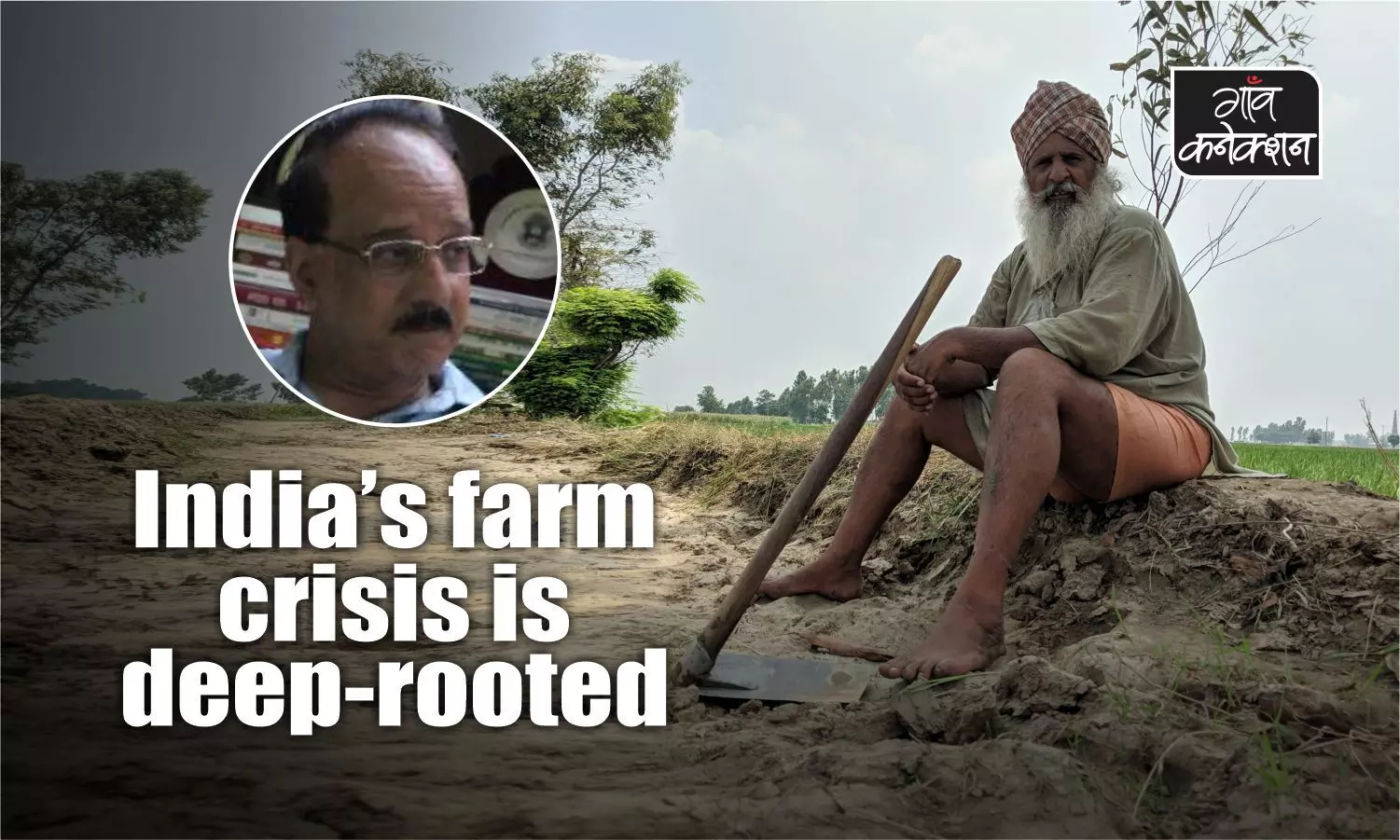
With the rising input costs and failure to get a suitable price for the crops, about 50% of farmers are resolving to drop farming. The country is witnessing a drastic fall in the agriculture development rate. Excerpts from the conversation between country's renowned food and export policy expert Devinder Sharma and deputy news editor Gaon Connection, Arvind Shukla concerning agriculture and the farmer crisis.

Be it India or the US, which is the root cause of agriculture and farmers crisis? 

While understanding the worldwide agricultural crisis one can easily discern a fact that everywhere the governments have knowingly kept the farmers at a disadvantage in terms of their income. Farmers did not get a fair price for their crops. This only caused the current crisis.In order to understand the situation, we will have to know about the economic design and cycles of India and other countries. We may compare the agriculture in the 1960s and present times in the US to find that the real income of the farmers has gone down. This is admitted by the Chief Economic Advisor of the US Agricultural Department. In 2018, the average income of the US farmers has fallen not for the first time, but for the sixth year in a row. This is the state of the US which we look up to in matters of technological advancements and policies. India too suffers from a similar crisis. Our governments have deliberately kept farmers away from better incomes to discourage agriculture because it is believed that economic transformation would only be realized upon agriculture's fall. Economists of India and elsewhere are of the opinion that people be pulled to the cities to provide cheaper labour for the industries. Industries require cheap raw materials in order to thrive. This is why the agriculture crisis is existent. The Indian Economic Survey 2016 informs that in 17 states or we can say half of India, farmer family's average annual income is Rs 20,000 which is Rs1,700 per month. Such an amount cannot even support a cow's upkeep. Now imagine how would a farmer family be managing on such a pittance?

A large portion of Indian population is directly engaged with agriculture. Is such a sizeable population then constantly being overlooked? 

The NITI Aayog had, in one of its reports, mentioned that for the past two years the farmers' real income rise was zero. In the five years prior to this, the real income of the farmer families had only increased by a mere half per cent. I know the exact figure to be 0.44%. Let us go back a little further in the past. A research revealed that for the period 1985-2005, the farm-get price (the price which a farmer receives) remained frozen. Keeping in mind the inflation, one would notice that the price which farmers got in 2005 was the same as that in 1995, rising input costs notwithstanding. It means that for over 20 years the prices remained constant. We can understand better with the help of another report. As per a report of Organization for Economic Co-ordination and Indian Council for Research on International Economic Relations (OECD-ICRIER), the farmers suffered a loss of Rs 45 lakh crore during the period 2000-2017 due to not getting a fair price for their produce. So, you can well understand the agriculture crisis where the farmer is made to survive on the same income for the past 40 years. Had the same happened to any of us, we would have long committed suicide or left the business for good. There is a need to view this crisis in terms of income versus expenditure.But instead, such a scenario was created that farming isn't economically viable because of poor yield to the farmer. This notion is false. 

But isn't it generally said that the farmers are disappointed over poor yield? 

I agree that many crops fall short at the national level, but even more important is to know what will be done of a better yield. Is it to be found dumped by the farmers on the roads due to lack of fair pricing or resulting in farmers' suicide? This means that the problems lies elsewhere and we are looking for it somewhere else. Take for example the situation in Punjab. With 98% of the area in Punjab well irrigated, there would hardly be a single field without access to water. Punjab leads the world in paddy and wheat crops output. Better irrigation, better crop output and still Punjab shocks the world by the frequent cases of farmers' suicides. In the past 10 years, more than 10 thousand farmers have ended their lives in Punjab. This shows amply that the crisis is not due to lack of irrigation or production because even in the regions having an abundance of both farmers are still resorting to suicides. Somewhere the policymakers, governments and politicians will have to really look and think what is actually wrong and find means to resolve it. It should not be that for an Indian problem we look into Europe and the US for finding the solution. Many times, we have taken the wrong lessons from foreign nations and have paid dearly for it. So, I say that we should seriously deliberate to find a localized solution. 

A big concern for the farmers is their input cost. The government now talks of zero budget natural farming. Tell us more about it. 

I believe that the term 'zero- budget' has sent across the message that we need not invest anything during farming and that the farmers needn't put in much. If the policymakers believe that a decrease in the cost of production will translate into an increase in the income then such a formula of zero budget is problematic. India has had a long tradition of natural methods and low-cost production. Even you at some point been asked what is in a name. Once I was told by the famous writer Khushwant Singh that his record-breaking novel was rejected by over 20 publishers before he renamed it as Train to Pakistan. Zero budget, therefore, seems an obvious escapist move to absolve a government of its responsibility. The RBI date for the period 2011-2016-17 reveals that the total agricultural investment in the country was a mere 0.4% of the GDP while the sector supports 50% of the population. It means that one isn't inclined to invest for 50%. So, following the 0.4% investment, the zero-budget formula of the NITI Aayog seems but natural. I believe zero-budget farming technique to be sound, it just needs the addition of agro-ecological or needs to be kept nature and environment-friendly. Many people in India have worked on natural farming—Narayan Reddy in Karnataka, Bhaskar Salve in Gujarat and Naamalvar in Tamil Nadu had taught people to cultivate without pesticides. With these three long gone, there are still many who are dedicated to promoting natural farming at their own level. Farming should involve minimum external input, whatever is available in fields or home must be used for farming. Finance Minister, Nirmala Sitaramanan had begun a new chapter by mentioning it (zero budget farming). This needed to be vocalized because the world has finally understood that it is better to keep harmful pesticides at bay. India started a dialogue when such issues are already taken up in the US and Europe. 

Does it mean that the developed nations are considering a revisioning of existing agricultural practices? 

A few days ago, there came up a report of a commission in Britain (food farming and countryside commission) advocating several major changes. The report warned that the path of intensive farming that we currently follow is not correct. People's health has suffered, the soil has suffered, input costs have risen, environment adversely affected, water drained out and even climatic changes have all been attributed to the intensive farming system which called for intensive use of fertilizers and pesticides. They say that Britain must undergo a transitional period towards agroecological systems by adopting nature-based farming.If Britain thinks on these lines that this is the right opportunity for India as we had adopted their modern farming practices and methods before. So, if they are changing so we must. All nature-based processes are beneficial. Whether organic farming or zero-budget natural farming or home therapy or bio-dynamics—we must promote and adopt them judiciously. Some process would more effective in Punjab than Karnataka, a technique used successfully in Rajasthan may not be as effective in Kerala. Therefore, varied techniques must be brought into use. We would have to show the farmers the way to resolve their woes. Pesticides anyway are poisons and their use in any crop is bound to have its ill-effects.#

Published: Sept 14, 2019

Link: https://www.gaonconnection.com/read/devinder-sharma-shares-his-views-on-the-plight-of-farmers-in-india-their-low-incomes-and-zero-budget-farming--46233  

READ MORE - Rs 1,700 not enough to even feed a cow, how can a farmer-family survive on it? -- An interview

Monday, June 3, 2019

Incorporating the US/EU farm design will not reform Indian agriculture


Taking people out of agriculture to become dehari-mazdoor in cities is not the way forward.

Punjab, the food bowl, has broken all previous records in wheat productivity. From 50.64 quintals per hectare achieved last year, the average wheat yield has risen to 51.71 quintals per hectare. With such high crop productivity and with 98 per cent cultivable area under assured irrigation, Punjab farming should be an epitome of rural prosperity. But wait a minute, there is hardly a day when newspapers don’t carry reports of farmers committing suicide. With 10,000 farmer suicides reported in past 10 years, Punjab has in fact turned into a hotbed of farm suicides.

Now let us look at America. In 2018, the average farm incomes had nosedived, with the US Department of Agriculture (USDA) estimating the ‘median’ farm income to be in the negative. Yes, you heard it right. The ‘median’ net farm income stood at minus $ 1,553 (or minus Rs 107,739). In other words, the average farm household in the US was living in debt, with the debt margin increasing substantially for half the households existing below the ‘median’. What made it still worse was that 2018 was not an exceptional year, the downward trend in farm incomes had continued for six years in a row. No wonder, the National Farmers Union and Farm Women United in the US have time and again expressed concern at the growing stress, and increasing depression among farm workers. 

Let’s come back to Punjab. A recent study entitled ‘Levels of Living: Farmers and Agricultural Labourers’ by the Punjabi University has shown that 85.9 per cent of agricultural dependant households are living in debt. The average debt that a farming household carries is Rs 5.52 lakh. The burden of debt is more for the farm workers, wherein the average debt per household is roughly Rs 68,330. In simple words, the high productivity achieved was not translating into higher incomes. Like in the US, the burden of debt increases for the household with smaller farm size. The burden for small farmers being so severe that even the promised farm loan waiver of Rs 2-lakh is unable to provide succour. Otherwise, I see no reason why the spate of farm suicides in Punjab should not come down by a significant margin.

The question that arises, and is invariably ignored, is to ascertain why farm indebtedness should be mounting in a frontline agricultural state which has very high yields of wheat, rice and maize, amongst the highest in the world. Why is it that despite putting in hard labour, keeping crop pests at bay, keeping an overnight vigil from stray animals, protecting the standing crop from weather anomalies, and producing an abundant and top-quality harvest fails to get farmers the rightful price? Why is it that despite the crop yields improving year after year, more and more youngsters are not only quitting farming but are also leaving the country? In 2018, an estimated 1.5 lakh students had gone abroad for studies, and it is well-known that a majority will not return. Looking at the growing trend, a number of institutes in Punjab have started offering free IELT courses to their students.

This surely is an outcome of the continuing neglect of farming. For several decades, agriculture distress has been growing not only in the more progressive Punjab and Haryana, but also across the country’s rural landscape, and clearly much more severely. With farming turning uneconomical and a losing proposition, what do we expect the younger people in rural areas to do? And if all that the policy makers are suggesting as the possible way out is to borrow the failed prescriptions from America or for that matter the European Union, the rural youth feels stranded and lost. If the US agriculture is in itself faced with a terrible farm crisis, leading to negative farm incomes, and with EU agriculture somehow gasping on massive federal subsidies, I see no reason why the policy prescription to revitalise Indian agriculture cannot be more grounded, based on naturally available strengths.

Among the tasks cut out for the new government, agrarian distress and unemployment definitely takes precedence. But if the thrust of the policy imperatives being suggested is to bring in more market reforms, primarily ensuring that the sales of tractors, automobiles and FMCG products picks up in the rural areas, farm distress will only aggravate further. Some mainline economists and the dominant industrial lobby groups are demanding land acquisitions to be made easier, dismantling of the APMC regulating mandis and phasing out Minimum Support Price (MSP) in the next three years, among other things. In fact, much of the emphasis is on incorporating the US farm economy design, which relies on private markets and strengthening corporate control of agriculture.

If these policies had worked, I see no reason why US family farms would be in crisis. Why should the number of dairy farms in the US for instance come down from 70,000 in 2007 to 40,000 in 2017? Just to add, why should dairy farmers be committing suicide at an alarming rate? This is happening at a time when the world’s biggest commodity trading centre, the Chicago Mercantile Exchange is located in the US, and the world’s biggest organised retail chain the US-based WalMart has completed more than half a century. But neither commodity trading nor the entry of private markets could rescue agriculture. Some studies point out that in the 1930s, a US farmer would save 70 cents for every dollar of produce sold. After the entry of organised retail chains, the net income of farmers has now dropped to 4 cents per dollar. If the BigAg prescription had worked, the US agriculture wouldn’t have been crying for a still bigger social security net.

Considering that small farmers in India are the backbone of a healthy food system, sustaining millions of livelihoods, and provides a trigger for a vibrant rural economy, I sincerely hope the new government does not get attracted by a borrowed economic design that has outlived its utility. As India gets ready to mark the 150thbirth anniversary of Mahatma Gandhi, the new government will do well to draw a roadmap for reviving agriculture based on the Gandhian principles. Taking people out of agriculture to become dehari mazdoor in cities is not the way forward. What India needs is a production system by the masses, and not for the masses. Making agriculture economically viable and environmentally sustainable is what the Mahatma had dreamt. 

Let farm reforms take root. The Tribune. June 1, 2019
https://www.tribuneindia.com/news/comment/let-farm-reforms-take-root/781377.html?fbclid=IwAR2FkXcBWMhDOdJVtXzqcjo3qTJezAzr1ZfL_hFOBtqnQwfFbZC1907QXdc  
READ MORE - Incorporating the US/EU farm design will not reform Indian agriculture

Thursday, November 22, 2018

Providing An Assured Monthly Income is the First Step Towards Addressing Agrarian Crisis


A decade after Avtar Singh committed suicide unable to bear the pressure to repay farm loan; his two sons took the same fatal route. Roop Singh, 40, and his younger brother Basant Singh, 32, jumped into the Bhakra canal in Punjab. They were residents of Patiala district in Punjab.

Two generations of the family were consumed by the scourge of mounting farm debt. While the two sons ended their lives in November 2017, their father had died some 10 years earlier, in 2008. Both the brothers together owned 2.5 acres of land and were cultivating another 30 acres on contract. But unable to generate any profits, the outstanding debt continued to swell. After all, how long can a farmer be expected to draw credit from multiple sources to repay the initial loan amount. The vicious cycle of mounting indebtedness eventually takes its toll.

There is hardly a day when reports of farmers committing suicide do not appear in Punjab newspapers. Punjab, the country’s food bowl, is no exception; the serial death dance across the country shows no signs of abating. The tragedy that struck these farming families symbolises the
agony that the entire farming community is living with. There is hardly a day when farm suicides are not reported from one part of the country or other. In the past 21 years, more than 3.20-lakh farmers have committed suicide; every 41 minute a farmer ending his life somewhere in the country. Those who have refrained from taking the extreme step are no better. They continue to somehow survive, living in acute distress, and hoping against hope. Several studies have shown that almost 58 to 62
per cent farmers sleep empty stomach.

Farmers are in reality the victims of an economic design. A recent report by CRISIL points to the denial of a rightful income as the major reason behind the agrarian crisis sweeping through the country. “While the average annual growth in Minimum Support Price (MSP) was 19.3 per cent between 2009 and 2013, it was only 3.6 per cent between 2014 and 2017,” the report states. This minimal increase in the MSP does not even correspond to the annual rise in DA for the government
employees. In order to keep food inflation under control, successive governments have denied farmers their rightful income. The entire burden of keeping food prices low has been very conveniently passed on to farmers. In other words, it is the farmers who are bearing the entire
cost of subsidising the consumers. Farmers are being deliberately paid less, kept impoverished. Still, what farmers don’t realise is that every time they take to cultivation, they actually cultivate losses.

The Commission for Agricultural Cost and prices (CACP) computes the net returns. Let’s try to see whether the net returns have increased. In Maharashtra, which has been faced with massive silent protests by Marathas, and which I believe is the primary reason for the discontent, the net return per hectare for paddy is Rs 966, which means if worked on a monthly basis it will come to less than Rs 300 a month. For Ragi, Maharashtra farmers actually incur a loss of Rs 10,674 per hectare; for Moong (minus Rs 5,873); for urd (minus Rs 6,663). Even for cotton, the net return is only Rs 2,949 per hectare. Considering that cotton is sown in June and its harvesting begins in October, with the
pickings going on to November, December or even January, the average income per month from cultivating cotton comes to a paltry Rs 700 per hectare. 

Viewed from the national level, the net returns for crops like paddy, sugarcane, maize, and cotton have actually declined in the past three years. For most of the dryland crops, the returns are in the negative. If the farmer is destined to harvest losses, I wonder what kind of technological and financial support can bail them out. Giving them more credit, even if it comes from institutional agencies/banks, has only pushed them further into a debt trap. As a former Prime Minister Chaudhury Charan Singh had once remarked: A farmer is born in debt and dies in debt.

The mandate for CACP, which works out the MSP for various crops, is not only to provide an assured price to farmers but also to ensure that it does not lead to inflationary pressures. The prices therefore are deliberately kept low, and in many cases are actually less than even the cost of production that the farmers have to entail. This economic design is not in any way peculiar to India, it is global. As John F Kennedy had once remarked: “Farmer is the only man in our economy who buys everything at retail, sells everything at wholesale and pays for freight both ways.” But what is not being realised is that farmers in US/Europe are being paid massive subsidies, including Direct Income Support. In
India, farmers only receive input subsidies which actually benefit the manufacturers.

The entire burden of keeping food prices low has been very conveniently passed on to farmers. In other words, it is the farmers who are bearing the entire cost of subsidising the consumers. While farmers were denied their rightful income, huge salary jumps were provided to other sections of the society. From a monthly salary of Rs 90 per month in 1970, the salary of school teachers for instance jumped by 280 to 320 times by the year 2015, a period of 45 years. In the same period, salary of
government employees went up by 120 to 150 times; and that of college professors by 150 to 170 times. Wheat price for farmers on the other hand has increased by a paltry 19 times in the same period.

Farm incomes remain almost frozen or bare enough to cover only the cost of production. Keeping food prices low is also in consonance with the dominant economic thinking aimed at drastically reducing the work force in agriculture.

This is what the World Bank had desired way back in 1996. It had expected 400 million people to be moved out from the rural to the urban areas in India by the years 2015. Since every World Bank loan comes with roughly 140 to 150 condionalities, each loan re-emphasised the urgency to move farmers out of agriculture. Former Prime Minister Manmohan Singh had time and again expressed the need to shift 70 per cent farmers. Former RBI Governor Raghuram Rajan used to say that the biggest reforms would be when farmers are moved out of agriculture, to meet the ever-growing demand of cheaper labour for the infrastructure industry. The National Skill Development Council already has spelled out plans to bring down the population in farming from the existing 52 per cent to 38 percent by 2022. For all practical purposes, debt and farming have now become synonym.

Seventy years after Independence, and 55 years after the Green Revolution was launched, economic freedom continues to elude farmers. Economic Survey 2016 made it abundantly clear. Accordingly,
the average income of a farming family in 17 States of India does not exceed Rs 20,000 a year. In other words, farming families in roughly half the country are surviving on less than Rs 1,700 a month. Knowing that it is not possible to rear a cow in the same amount, I shudder to think how
these families survive year after year. 

It is generally believed that expanding irrigation and raising crop productivity is the way to enhance farmers’ income. If irrigation and high productivity alone could raise farmers’ income I see no reason why Punjab, the food bowl of the country, has lately turned into a suicide hotspot. Punjab has 98 per cent cultivable area under assured irrigation and the crop productivity matches with the best in the world. With 45 quintals per hectare productivity of wheat and 60 quintals/hectare for rice, Punjab tops the global chart. And yet, Punjab is witness to a spate of suicides every week. Policy planners have refrained from looking beyond raising crop productivity as the answer to the worsening agrarian
crisis.

I am of the firm opinion that a tinkering here and there is not going to address the agrarian crisis. It needs a holistic approach, a paradigm shift in economic thinking. To begin with, the effort should be to make farming economically viable. After all, everything boils down to how much net income a farmer gets in his hand at the end. Therefore, three steps that immediately need to be considered are:

1) The Commission for Agricultural Costs and Prices, which works out the MSP for crops, should be directed to factor in 4 allowances in the MSP being paid to farmers – House allowance, Medical allowance, Educational allowance and Travel allowance. So far, the MSP only covers the cost of production. Compare with the government employees who get a total of 108 allowances.

2) Since MSP benefits only 6 per cent farmers, it needs to be understood that the demand for providing 50 per cent profit over MSP will benefit only these 6 per cent farmers. For the remaining 94 per cent farmers, who are dependent on the exploitative markets, the need is to redesign the CACP into a Commission for Farmers Income and Welfare, with the mandate to provide a minimum assured monthly income package of Rs 18,000 to a farmer’s family. 

3) Public sector investments must come in urgently for constructing APMC mandis, and also for storage godowns. At present, there are only 7,700 APMC mandis. What India needs is to set up 42,000 mandis for every 5 kms radius. And like in Brazil, where it is mandatory for a market
yard to procure anything a farmer brings, APMC mandis should be quipped to do the same. #

The article was first published in the State of India's Environment 2018. 
https://www.downtoearth.org.in/blog/agriculture/it-s-time-we-shift-farmers-economic-burden-62229?fbclid=IwAR11LZLo9TYdHKTpljocjIHGxougPjmkf0HRWlBNGE4HU-rrC029mKRV37g
READ MORE - Providing An Assured Monthly Income is the First Step Towards Addressing Agrarian Crisis

Tuesday, October 30, 2018

Understand the economic design that pushes farmers out of agriculture

In case you missed watching it, here is the video of an interview in Hindi that I gave to popular #AajTak TV Channel, that went viral.

खेती का चक्रव्यूह 2/5


To know more, click on the links below.

खेती का चक्रव्यूह :- 1/5


खेती का चक्रव्यूह 3/5 :-


खेती का चक्रव्यूह 4/5 :-


खेती का चक्रव्यूह 5/5 :-


READ MORE - Understand the economic design that pushes farmers out of agriculture