Showing posts with label Farmers. Show all posts

Thursday, December 23, 2021

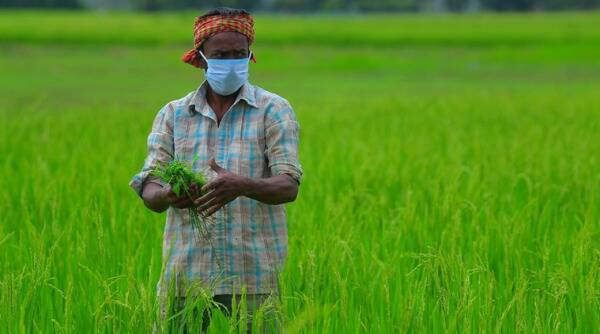
Failure to get a fair price forces farmers to burn the produce.


Pic courtesy: National Herald

At a time when wholesale price inflation has touched the highest in three decades, there is distressing news on the farm front. Within a span of a week, three farmers have burned their standing crop or the harvested produce at three different locations across the country. The crops are different, but the reason for putting it on fire is the same – failure to get a fair price that covers the actual cost farmers had incurred in its cultivation.

On Dec 11, an angry Chakalu Venkateswarlu, hailing from Kurnool district in Andhra Pradesh, put on fire the 25 bags of onions (each weighing 50 kg) that he had brought to the Kurnool Agricultural Market Yard, when he found the best price being offered to him was Rs 500 per quintal (Rs 5 per kg). Realising that such a low price did not even cover his cost of production, transportation cost and the mandifee, the frustrated farmer preferred to sprinkle petrol on his produce and put it on fire.

Four days later, another farmer from Dhone mandal in Andhra Pradesh, put his 3 acres under banana plantation to fire when the prices in the wholesale market effectively crashed to Rs 2 to Rs 3 per kg. Mallikarjuna claims that he had spent about Rs 5 lakh in cultivating bananas, but when the prices fell so low at the time of third harvest, he felt defeated. All that he had earned from marketing his crop was not more than Rs 1.5 lakh. Out of exasperation therefore he was left with little choice but to burn the plantation.

In Madhya Pradesh, a couple of days later, an irate Shankar Sirfira, a farmer from Deoli, burnt 160 kg of garlic that he had brought to the Mandsaur market yard. In the video clip that went viral on the social media, he was heard saying that he had spent Rs 2.5-lakh on cultivating garlic but all he got in the market was Rs 1-lakh. This did not even cover the cost of cultivation. He said all he wanted from the government was to ensure a fair price to farmers.

The three painful incidents that I have highlighted above may appear to be isolated but are a reflection of the deeper agrarian distress that prevails. There are tens of thousands of farmers cultivating the same crops who are lashed with the same ferocious blow from markets but whose despair, dismay and hopelessness goes unrecorded. When prices crash, economists blame it on supply demand disequilibrium but fail to see the human suffering it unleashes. Not only in India but globally too, the volatility of the markets has destroyed livelihoods, and increasingly forced farmers to abandon farming, sell of their lands and migrate to the cities looking for menial jobs. 

This is no less than mayhem. Take the case of America, where the farm gate prices have been on a steady decline since 150 years thereby gradually pushing farmers out of agriculture. With a hollow disquiet prevailing in the countryside, not only have farm suicides increased but so has mental distress. In the US alone, from where we borrow the failed market reforms in agriculture, as many as 915,725 farm workers and their families are being treated for depression at the Migrant Health Centres that have been set up nationwide. This is happening at a time when hardly 1.5 per cent of the US population now remains in farming. While there may be complex reasons behind the mental health challenges that farmers and farm workers are faced with, fluctuating commodity prices remains on the top.  

But for policy planners and media especially business journalists’ mayhem occurs only when equity indices plunge, when stock markets ends at a lower level. This is how the economic design is cast. While a dominant section of the mainline economists rue the slide in stock markets, they spare no effort in welcoming the low farm prices that eventually leads to increased farm indebtedness, pushing more and more farmers to migrate to the urban centres.  

No wonder, the daggers are already out against any possible move to provide farmers with a guaranteed income by way of a legal sanctity for Minimum Support Price (MSP) for 23 crops for which the prices are announced every year. Some senior economists, who themselves get a guaranteed salary packet linked to inflation every month, are the ones to talk about the virtues of free markets for farmers, which they believe would lead to price discovery. Although I have earlier talked in these columns of how the markets in case of highly commercial products like chocolate and coffee have left millions of primary growers of cocoa beans and coffee bean in Africa and Latin America to live in misery, the case of banana value chains squeezing farmer’s income is no less of an eye-opener. A study shows for every Euro worth of purchase by European consumers, banana producers in Latin America, from where the fruit is imported, receive only 5 to 9 per cent of the end price.

It is the primary producers who play a strenuous role, working the hardest, and yet their share of income in the agricultural value chains is the lowest, not even covering the cost of production. And let’s not forget. For the three commercially important crops – coffee beans, banana and cocoa beans – there is no MSP, nor is there any APMC mandis that we can point our fingers to. It is the big multinationals operating in a competitive environment that actually thrives on sucking farmers’ wealth. Imagine, if the global agricultural chains had set an example by guaranteeing a minimum economic price covering the cost of production plus a reasonable share of profits, farming too would have been a profitable enterprise.

Instead of leaving it to exploitative market forces, as the international evidence has conclusively shown, the time is ripe for India to usher in a new set of ingenious farm reforms that begins by first ensuring a living income for farmers. Guaranteeing an economically-viable livelihood to 50 per cent of the country’s population is the way to bridge the great economic divide. #

Source: Don't let exploitative market forces run riot. The Tribune. Dec 23, 2021. https://www.tribuneindia.com/news/comment/dont-let-exploitative-market-forces-run-riot-353356


READ MORE - Failure to get a fair price forces farmers to burn the produce.

Saturday, December 11, 2021

The Indian farm movement has in reality challenged the free market doctrine.


Protesting farmers welcomed back with showering of flowers. 
Pic courtesy: NDTV.com 

Flowers have already been ordered. Ladoos and sweets are being prepared. Celebrations are being planned all the way to welcome back the brave farmers who camped at the borders of New Delhi for over a year, finally returning home victorious.

Farmers are the new heroes. They came; they sat peacefully on protest, and finally forced the powers that be to listen to them. They have left an indelible mark in contemporary history.

Braving all odds, and determined to stay put till their demands are met, protesting farmers have demonstrated the strength of purpose. The courage, the perseverance and the tenacity exhibited by tens of thousands of protesting farmers has ushered in a ray of hope. Standing up against the collective power of the market forces, and that includes mainline economists and credit rating agencies; farmers have shown that all is not lost. Given the grit and resolve, ordinary people not only have the power to democratically reclaim their policy space but also sow the seeds for a new beginning.

With the sudden rollback of the three contentious farm laws, and the acceptance in principle of the need to have a guaranteed Minimum Support Price (MSP) for farmers, the Indian farm movement has in reality challenged the free market doctrine. This wasn’t easy because over the past few decades, with the corporate media blacking out the voices of economic sanity, an overwhelming impression in favour of macroeconomics was created by pushing in the TINA factor – there is no alternative. The bureaucracy too has been more of a pen pusher, living comfortably in their ivory towers. Political leaders, barring a few notable exceptions and cutting across party lines, preferred to follow the FOMO logic – fear of missing out or in other words fear of being left out. 

Take a selection of the newspaper editorials after the farm laws were repealed. An overwhelming number of editorials were left with little option but to welcome the decision to withdraw the laws in view of the ongoing protests but invariably backed the need to bring these market reforms in agriculture back at some stage. The same media had earlier expressed regret when the land acquisition laws were withdrawn and but urged the need to leave it to the sanguinity of the states to implement it if they felt it was required. Even at a time when the Nobel Prize in Economics this year has challenged the basic premise on which labour reforms are being pushed, that higher wages lead to low employment, Indian media houses are turning a blind eye to the underlying message of higher wages leading to higher employment, that the prize tries to convey.   

Not only the media, scientists and economists too floundered unable to stand up and question the credibility of sponsored research and education that backed market reforms in agriculture. Farm distress had been lingering on for several decades now, and all that scientists and economists focused on was the need to raise crop productivity as the way to increase farm incomes. Not explaining that if this argument made any economic sense then why was agriculture in deep crisis in the rich developed countries where private investments had flowed in, and where productivity was among the highest in the world. Instead of understanding why protesting farmers anger had spilled on to the streets, economists, business analysts and TV anchors spared no effort in taunting them, aligning them with separatist forces and even branding them as anti-national.

There were honorable exceptions of course, but the historic farm movement has certainly exposed the fall guys, the losers. At the same time, the unprecedented support from the society at large, which woke up from their slumber to extend a helping hand in whatever possible manner they could, will remain the hallmark of what essentially turned out to be a people’s movement. From cobblers to tailors, from dry-cleaners to doctors, from retired bureaucrats to industrialists, from students to teachers, from shop keepers to dhaba owners, support had poured in from all sections and from every corner. The outpouring of public support to back up the protesting farmers cause is a clear pointer to how disconnected are the urban elite, and that includes academicians and policy makers, from the ground realities, the kind of economic growth the majority population desires. There are lessons here, and I hope economists do not fail again to look at economics as if people matter. Perhaps it is advisable to go back to the drawing room, and dig out economist F E Schumacher’s collections of essays in his path-breaking book Small is Beautiful.  

The pro-active participation by farm women, standing shoulder to shoulder with their men-folk, was a unique feature of this farm movement. Whenever I traveled to the protest sites, I was left amazed and awe struck at the immense power that the women force brought in. In the days and months to follow, the emergence of women power as a strong pillar of the farm movement will be a topic of intense research and analysis.   

Once the jubilation's are over, and protesting farmers are back in their crop fields, it will be time to pick up from where the protesting farmers left. First and foremost, it is time to accept that we, as society, failed to acknowledge that a terrible agrarian distress prevailed in our own back yard. While we were more or less complacent given the easy availability of ample food choices on the supermarket shelves, we failed to recognise that the people, who gave us our food, were themselves living in hunger. With the farm movement bringing out the stark and harsh reality, it is time now to stand up and ask for rebuilding agriculture, where farmers are seen with dignity and pride, where farmers do not have to commit suicide or abandon agriculture and migrate, and this is only possible if farming becomes a viable enterprise.

Instead of accusing and abusing farmers for derailing market reforms, it is time to understand that markets have failed everywhere in the world to enhance farm income, to provide a living income to farmers. A guaranteed income in the form of an assured MSP is what farmers are asking for. This is the real reform that will not only revitalize agriculture but will bring in rural prosperity. Moving beyond market fundamentalism, let us not be again swayed by biased newspaper editorials and the diatribe that TV anchors have relished against farmers. Let us for a change try to understand the reasons behind the farmers’ outburst, and in our own little way call for economic justice for farmers.

Farmers have done their job. It is time for us to pick up the baton and complete the race. That’s the surest way to achieve Sabka Saath Sabka Vikas. #

Source: Farmers have done their job. It's time for us to pick the baton and complete the race. Bizz Buzz. Dec 9, 2021. https://www.thehansindia.com/business/farmers-have-done-their-job-719334

READ MORE - The Indian farm movement has in reality challenged the free market doctrine.

Friday, October 22, 2021

Farmers are also wealth creators


Pic courtesy: frontline.thehindu.com

We all know it by now. Agriculture was the saviour during the gloomy days of the pandemic. Not only that an individual household got its regular supply of food during the lockdown, and those who could not afford were supplied with free rations, but agriculture also kept the wheels of economy moving. At a time when the economy had slipped by 23.9 per cent in the first quarter of the 2020 financial year, agriculture was the only bright spot registering a gross-value added (GVA) growth of 3.4 per cent. 

All through the year, agriculture provided a solid foundation. Despite the Covid-19 disruptions, and at a time when all other sectors of the economy were struggling, desperately counting the emerging green shoots, the country achieved a record foodgrain production of 308.65 million tonnes. The bumper harvest reaped in 2020-21 was higher by 11.15 million tonnes over what was achieved in the previous year. In addition, the country also produced 329.9 million tonnes of fruits, vegetables, and aromatic and plantation crops, including spices; around 204 million tonnes of milk, and 36.10 million tonnes of oilseeds. 

Simply put, farmers produced economic wealth for the country. Not only during the pandemic, but what needs to be appreciated is that year after year, farmers have toiled hard to bring food to our table. From a stage when India was living in a ‘ship-to-mouth’ existence, and that was not too far distant in the mid-1960s, the role Indian farmers have played in turning the country food self-sufficient is widely recognised. Agriculture has taken a quantum jump, increasing food production six times in seven decades, between 1950-51 and 2020-21. 

A vibrant agriculture is what sustains a growing economy. But to believe economic growth alone can address issues of hunger and malnutrition is nothing short of delusion. As the UN Food and Agriculture Organisation (FAO) itself acknowledges that ‘economic growth is necessary but not sufficient to accelerate reduction in hunger and malnutrition’, a study published in the scientific journal The Lancet shows a reduction in malnutrition by a maximum of 6 per cent even if the economic growth soars by 10 per cent. On the contrary, a well-fed nation builds up an efficient and productive manpower which is required to attain a higher economic growth. 

Since 1950-51, if measured in terms of population growth, four more India’s have been added. From 359 million in 1950-51, India’s population has multiplied roughly four times to 1.4 billion. Agriculture not only kept pace, defying the predictions of the Malthusian catastrophe, but has also produced an unmanageable surplus. Not only producing enough to feed the nation, the rise in the per capita availability of foodgrains, fruits, vegetables and milk also helped in meeting the challenges of malnutrition and hidden hunger. That hunger still persists in some parts of the country is not because of any shortfall in food production but is the outcome of the twin problems of access and distribution. 

If growth and prosperity is the central theme of Adam Smith’s seminal work An inquiry into the nature and cause of the Wealth of Nations, it has to be accepted that the remarkable transition in Indian agriculture is what has essentially not only added but led to the wealth of the nation. As the second largest producer in the world of essential foods like wheat, rice, fruits, vegetables, and crops like cotton and groundnut and being the largest producer of milk, jute and pulses, the long strides taken by farmers to shatter all records however has not translated into higher incomes. Growth, in this case, has not led to prosperity on the farm. 

The invisible hand that Adam Smith talked about has actually failed to provide living incomes for farmers, not only in India but across the globe. One doesn’t need to apply sophisticated economic models to find out how farm incomes have actually been squeezed over the years, and how free markets have sucked income from farmers. Instead, as the citation for this year’s Nobel Prize in Economics admits: “.. Conclusions about cause and effect can be drawn from natural experiments.” Agreeing, I feel there is no need for economists to hold econometrics studies when conclusions can be drawn easily from the available evidences. 

FAO has estimated India’s gross value of crop production in 2018 (report released in Mar 2021) at $ 289, 802, 032 million, and that of gross food production at $ 400, 722, 025 million. When it comes to the gross value of agricultural production at current prices, India stands second in the world, next to China, with a gross value of $ 418, 541,343 million. Now before you get lost in the maze of production statistics, what is important to ascertain here is the enormous economic wealth that farmers produce and eventually what agriculture sector generates. 

In other words, farmers too are wealth creators.   

It therefore requires a change in economic thinking, which has traditionally banked on the assumption that only businesses – small and big – are wealth creators. The obscene wealth inequality that prevails is the result of this outdated economic thinking. Otherwise I see no reason why at a time when gross value of agricultural production since 1999 has grown at an average annual rate of 8.25 per cent, farmers should be at the bottom of the ladder. In America, the share of a farmer in every food dollar in 2018 has plummeted to just eight per cent. In India, the latest Situation Assessment Survey for agricultural households computes income from crop cultivation at only Rs 27 per day.  

There is enough evidence to show how free markets have devastated farming across the globe. This has to change. It can only happen when we begin to treat farmers’ not simply as primary producer but also as wealth creators, and ensure their contribution in wealth generation is adequately compensated. To sustain billions of farm livelihoods across the globe, and to celebrate the role farmers play in wealth creation, a beginning has to be made by guaranteeing an assured and profitable price for farmers. #

Source: Farmers need assured price for sustenance. The Tribune. Oct 21, 2021. https://www.tribuneindia.com/news/comment/farmers-need-assured-price-for-sustenance-327252?fbclid=IwAR0mBapW307jBEgSuqnoX-a5YjrYkbylg0AUOFpB22PrkIZfej1iMXhY2mw

READ MORE - Farmers are also wealth creators

Sunday, October 3, 2021

Agri value chains exploit primary producers


A typical agri value chain
Courtesy: gramworkx.medium.com 

* Banana is the cheapest fruit available. It also happens to be the most eaten fruit in Europe and North America. Largely being traded, most banana imports come into Europe from Ecuador, Colombia, Costa Rica and Dominican Republic. Looking at the so-called efficiency of the value chains that operate, all that the growers earn is anything between 5 to 9 per cent of the end consumer price.

* Coffee is the world’s largest traded commodity providing livelihood to at least 60 million people in more than a dozen countries. But every time you drink a cup of coffee, don’t forget the coffee bean grower gets only a few pence of the price you paid. In India, for the Rs 250 you pay for a cup of coffee in any of the trendy kiosks, farmer gets only Rs 1. 

Strange, isn’t it? For agricultural commodities that are traded globally, and result in massive profits for every player in the agri or food value chain, it is invariably the primary producer – a farmer – who gets to bear the brunt. With a meager share in the end consumer price, they are left with little or no money to sustain their families. Eventually, most farmers end up either committing suicide or abandon farming to move to the cities looking for a menial job. 

This is happening at a time when food value chains are expected to increase competitive performance, and in turn make it profitable for all the collaborators down the line. Makes sense, isn’t it? But then how come while each of the participants in the value chain, and that includes transporter, processor, retailers to name a few ends up raking huge profits from the business enterprise, it is invariably the primary producer who is left pauperized? 

To begin with, let’s first try to know what a food value chain means. According to the website of the Ministry of Agriculture, Food and Rural Affairs of the province of Ontario in Canada, ‘a value chain can be defined as a strategic partnership among inter-dependent businesses that collaborate to progressively create value for the final consumer resulting in a collective competitive advantage’. By linking production, processing and marketing activities, the value chains end up ensuring that each of the participant gains economically. 

I am no expert in value chains, more specifically the food value chains. My interest in the role value chains play to link the primary producer with market demands actually arose from curiosity. Every time farm gate prices came down, take the example of wheat price, it is hailed as a sign of efficiency. But every time the price of value added product from wheat goes up, bread is an example, no one would like to call it a sign of inefficiency. It is taken as a natural progression, an outcome of an economic design that thrives essentially on increasing demand, and thereby consumption, to achieve economic growth. 

The wheat example I gave above needs a bit of explanation. Sometimes back I read an interesting analysis by a Canadian author and critic Darrin Qualman. Interestingly, he explains that while the price of wheat in Canada (adjusted for inflation) has come down drastically over a period of150 years, from $ 30 per bushel in 1867 to $ 5 per bushel in 2017, the retail price of 60 loaves that are produced from a bushel of grain actually increased by $ 50 in past four decades, between 1975 and 2015. The question he asks is something to really ponder over. Why is efficiency measured only in terms of reducing the price of wheat for the farmers? 

Take another example of the banana value chain. A study by BASIC and the Make Fruit Fair campaign of Banana Link tells us that hypermarkets and supermarkets are the two dominant players in the value chain, walking away with 35 per cent and 33 per cent of the food sale in Europe. But if we look at the various stages of production and distribution, the most strenuous role is played by the banana growers who toil hard for about 9 months in a year. And yet, in the end, the growers get a price that is not even enough to cover the cost of production. If that is the way we measure efficiency of a value chain, isn’t it time for disruption? 

I can go on and on with examples that illustrate how farmers have been ruthlessly exploited over the period by the so-called efficient food value chains. With concentration of power in the hands of big agribusiness companies, the little margins that farmers were earlier getting is being further squeezed by the big players. Regretting the trend, the US National Farmers Union states that four largest meatpackers control 55 per cent of poultry, 66 per cent of pork, and 85 per cent of beef processing. “These corporations dominate what is grown and how it’s produced, all while paying farmers as little as possible.” 

The US Department of Agriculture’s food dollar series makes it explicitly clear. In 2016, the Economic Research Service of USDA showed that farmer’s share in the end consumer price, measured in terms of a dollar worth of food purchase, averages 14 cents. This was the lowest since 1993 when the series began. With such low incomes, it is quite obvious that farming becomes economically unviable, forcing farmers to quit in large numbers. That is exactly what happened in America, and that’s the trend that is being followed globally. Nevertheless, what becomes abundantly clear is that at the very foundation of the agrarian crisis that prevails in America, and also for that matter what has brought tens of thousands of farmers protesting at the borders of New Delhi for over ten months now, is the devastation wrought by the exploitative food value chains. 

There is nothing sacrosanct about the way agri value chains are designed. Business and management schools, nationally and internationally, must acknowledge that food vale chains need an overhaul. It calls for disruptions on a big scale. Let us not shirk away from that responsibility. The value chains need to be made more responsible towards the primary producer, the very foundation on which the chains operate. That is why the demand for a guaranteed farm price is so crucial to sustain farm livelihoods. The food value chains should be left to adjust accordingly. #

Source: Agri vale chains need an overhaul to rescue farmers. Bizz Buzz. Oct 1, 2021. https://www.bizzbuzz.news/opinion/agri-value-chain-needs-an-overhaul-to-rescue-farmers-1031915

READ MORE - Agri value chains exploit primary producers

Tuesday, September 28, 2021

No transition to sustainable food systems possible without a living income for farmers


Pic courtesy: Indian Express

In the run-up to the UN Food Systems Summit aimed at achieving more sustainable, equitable and resilient food systems, the UN Secretary General, Antonio Guterres, said: “A well-functioning food system can help prevent conflict, protect the environment and provide health and livelihoods for all.”  

“In food, there is hope.” 

Laudable words, indeed. As the world faces a growing risk of food shortages due to climate change, with several studies warning of the dismal scenario ahead when production of staple crops is expected to contract by almost a third by 2050 in case temperature rise continues unabated, transforming the global food systems to meet the future needs of the people, so as to attain health and nutritional security for one and all, is certainly a timely initiative. More so at a time when increasing desertification, loss of biodiversity, air and water pollution and the devastation intensive farming practices have wrought to soil health and environment had set the alarm bells ringing for long. 

Coming at a time when growing corporate control over agriculture has pushed small farmers to the margins, with monocultures leading to destruction of natural resources, only time will tell whether partnerships between different stake-holders and the commitments from national governments really help to radically transform the existing highly unsustainable food systems. This becomes more difficult to achieve given that high levels of income insecurity is either leading indebted farmers to take the fatal route or abandon agriculture to move to the cities, and those who are left on the farm seem to be somehow surviving against all odds. 

While there is no denying that food provides hope, as the UN Chief said, but unfortunately the people who produce food do not see any hope. 

“Every genuine farmer is now struck unfairly on a treadmill with accumulating debts to meet unless he goes bankrupt, commits suicide or finds another source of income,” a British farmer had summed up the plight of the agrarian community. A banner put up recently by dairy farmers in Northern Ireland loudly announcing -- We can’t afford to feed you anymore – is a telling sign of the crisis that dairy farming are faced with. With prices remaining more or less static for eight years in a row, dairy farmers are unable to recover the cost of production. 

For the same reason, 93 per cent of the dairy farms have closed down since the 1970s in America. Not only dairy farmers, small farmers have also quit agriculture in large numbers. With median incomes in the negative for almost a decade now, and saddled with a huge bankruptcy, farmers have been forced out, hastening the decline of rural America. Mary Rieckmanns is one such farmer, whose family has been raising cows in Wisconsin for generations. “I sometimes feel they are trying to wipe us off the map,” she told the TIME magazine. 

In early March this year, French farmers had hung suicide dolls on trees outside Parliament drawing attention to the economic hardship they were faced with. In neighbouring Germany, farmers too have been protesting, expressing their anger by driving tractors to the cities. In most other European countries, farmers have time and again demonstrated against the sliding farm gate prices, which have rendered farming unprofitable. “What is point to being in debt all the time, and toiling for no reason? We are sacrificed, so the consumer is always happy with low prices,” Dominique Metenier, a French farmer had lamented. 

Concentration of power in the hands of a few multinational companies has resulted in unfair trade practices hitting livelihoods of millions of small farmers and workers in Latin American and African countries. Take the case of chocolate, which is a dominant player in the $210 billion global confectionary industry. While the industry rakes in huge profits, hundreds of thousands of cocoa producers in Africa live on meagre incomes. With child labour rampant in the cocoa plantations, a study has shown that the average income for a large percentage of small cocoa farmers is less than the retail price of a chocolate bar. 

In case of banana, the most eaten fruit in Europe and North America, for growers in Ecuador, Colombia, Costa Rica and Dominican Republic, from where the fruit is largely imported, their earning is anything between 5 to 9 per cent of the end consumer price. The situation is no better for coffee growers, where a majority of the growers live on less than the extreme international poverty line of $1.9 per day. 

To draw attention to the deplorable economic conditions that growers were living with, the World Coffee Growers Forum had roped in the well-known economist Jeffrey Sachs who has proposed a global fund of $ 10 billion a year to help pull out growers from the clutches of extreme poverty. 

In India, which has the largest population engaged in agriculture globally, for almost ten months now tens of thousands of farmers have been protesting at the borders of New Delhi. While the protesting farmers are calling for a repeal of the three farm laws that the government had brought in September last year, which facilitate the entry of free markets in agriculture, farmers are also demanding a law that provides a guaranteed price. Meanwhile, the latest report of the Situational Assessment Survey of Agricultural Households 2018-19, an extensive and elaborate nation-wide survey, shows that the farm incomes have been steadily on a decline. Increasingly, non-farm income occupies a bigger share of the average farm incomes, with earning from crop cultivation alone dropping to a paltry Rs 27 (US$ 0.37) a day. 

What emerges clear is that farming is no longer a viable livelihood. While farmers grow food for the world, they themselves live in hunger. To expect the same beleaguered global farming community, already reeling under indebtedness, suicides and exploited ruthlessly by the markets, to be the strong pillar buttressing the proposed transition towards a sustainable food system will remain a dream. The entire global focus therefore must be to first come up with structural transformation required to provide farmers with an assured and guaranteed income. 

Or else, we’ll continue hoping against hope. #

Source: No sustainable world without a living income for farmers. Sept 22, 2021. Fairfood.nl https://fairfood.nl/en/resources/un-food-systems-summit-no-sustainable-world-without-a-living-income-for-farmers/?fbclid=IwAR0G-iOvRueKOUCx8Gc_vbXDTG1tohRvXsHhci3EFC_rEkrLZkBTLlSbsmE

READ MORE - No transition to sustainable food systems possible without a living income for farmers

Wednesday, September 15, 2021

Farmers are being penalized to grow food


With an income of Rs 27 (US $ 0.37) per day, an average Indian farmer fares worse than a labourer. 
Pic courtesy: downtoearth.org.in 

A few years after the World Trade Organisation (WTO) came into existence in 1995, I was invited by The Ecologist, London, to write an essay comparing the Indian farmer with a European farmer. The idea being to see how the Indian farmer, considering the relatively low cost of production in India, had gained economically after the opening up of international trade. 

This was the general impression that mainline economists had created to justify the need to join the trade agreement, despite the growing farmers’ opposition, with one of them going to the extent of terming the immense opportunities that WTO Agreement on Agriculture will provide for farmers as a ‘big bang’ opening. With agricultural exports expected to boom, farm incomes were slated to increase thereby transforming the face of Indian agriculture. With no such evidence available, and not finding any merit in the correlation, I actually ended up comparing an Indian farmer with a European cow. 

Almost 26 years after the WTO was launched, the latest report of the National Statistical Organisation (NSO) on agricultural households and incomes in rural India, released last week, paints a rather gloomy picture. This Situation Assessment Survey (SAS) was conducted in 2018-19. While the survey report hasn’t drawn any correlation between a farmer and a cow, what it has clearly brought out is no less frightening -- an average Indian farmer fares much worse than a labourer. If 75 years after Independence, farmers are earning more from wages than from crop cultivation, it only shows that the overarching economic design of keeping farm incomes deliberately low so as to accelerate rural to urban migration, because cities need cheap labour, is on track. 

In 2012-13, when the last SAS was conducted, an agricultural household earned 48 per cent of the income from crop cultivation; which declined to 38 per cent under the 2018-19 survey. During the same period, share of farm income from wages alone rose from 32 per cent to 40 per cent. Increasingly, wages have begun to form a larger chunk of an average agricultural household income, a trend that will hopefully continue in the years to come. Calculated on the basis of ‘paid out expenses’ the total monthly income has been computed at Rs 10, 218 for an agricultural household. Compared to Rs 6,426 per month in 2012-13, and adjusted for inflation, it represents a nominal increase of 16 per cent. Using the ‘paid out expenses and imputed expenses’ approach, average income per agricultural household has been shown as Rs 8,337 in 2018-19. For this, the imputed expenses mean the input coming from home, unpaid labour, own machinery, own seed etc.   

Nevertheless, as far as crop cultivation is concerned, an average agricultural household earned Rs 3,798 in 2018-19. In real terms, when adjusted for inflation, the earnings from cultivation declined by 8.9 per cent between 2012-13 and 2018-19. Further, broken on a per day basis, a newspaper has in an interesting analysis, worked out the income from crop cultivation at Rs 27 per day. Even a MANREGA worker earns more. It only establishes what I have been saying for long – farmers are in reality being penalised to grow food. And in any case, income from cultivation is certainly less than the earnings from an average lactating cow on a per day basis, given the farm gate price of approximately Rs 30 per litre. 

Obviously, the lesser the farm income, the more is the effort to draw credit, sometimes from multiple sources. The average farm debt increased to Rs 74,100 in 2018-19 from Rs 47,000 in 2012-13. About half of the agricultural households, 50.2 per cent to be exact, carried outstanding loans. Strangely, Mizoram sees a whopping increase of 709 per cent in outstanding farm loans, followed by Assam and Tripura in the Northeast.  

More recently, Parliament was informed that by the end of March 2021, outstanding farm loans totalled Rs 16.8-lakh crore, with Tamil Nadu topping the chart. 

Considering that nearly 77 per cent of the agricultural households are self-employed, what is worrying is that 70.8 per cent of the landholdings are less than 1 hectare. Only 9.9 per cent of the landholdings are between one to two hectares. An agricultural household has been defined as a household receiving more than Rs 4,000 as value of produce from agriculture and allied activities with at least one member engaged primarily in farm activities in a year. 

With only 0.2 per cent of the rural households having more than 10 hectares of land, it belies the narrative being drummed up accusing the farm protests to be the work of big farmers.  

Big or small, the denial of rightful income to farmers’ goes well with the policy thrust being exercised by successive governments over the past few decades to push people out of agriculture. Following the World Bank/IMF emphasis on shifting population from rural areas, also resonating with the dominant economic thinking that increasing urbanisation pace will lead to faster economic growth, keeping agriculture deliberately impoverished creates conditions for farmers to abandon farming and move out. I will not be surprised if the findings of the SAS 2018-19 are used by mainline economists to call for policy changes to hasten the process of urban migration. 

This has to be reversed. While India’s foodgrain production has hit a record 308.65 million tonnes in 2020-21, with production increasing year after year, farm incomes certainly have been on a downward spiral. Take a look at the Producer Subsidy Estimate prepared by the Organisation for Economic Cooperation and Development (OECD) for the 20 year period, from 2000-02 to 2018-20. It tells us that India along with Vietnam and Argentina, are the three countries that are negatively taxing their farmers. In terms of percentage of gross farm receipts, India is taxing its farmers approximately to the tune of minus five percent. 

Farmers are aware that the central laws the government is promising will further exacerbate the agrarian crisis. What they are asking for is a rethinking in farm income policies, whereby farming, without non-farm wages to supplement farm income, becomes an economically-viable enterprise on its own. #

Source: All pain, no gain for farmers. The Tribune. Sept 15, 2021 https://www.tribuneindia.com/news/comment/all-pain-no-gain-for-farmers-311197

READ MORE - Farmers are being penalized to grow food

Friday, September 10, 2021

Time ripe for farmers to take the next leap -- enter active politics.


Political party leaders line up to meet protesting farmer's leaders in Chandigarh. 

Pic courtesy- Scroll.in 

The massive show of strength at the Muzaffarnagar Kisan Mahapanchayat on Sunday (Sept 5) has brought back the pressure on the Government to repeal the contentious central farm laws. Nine months after protesting farmers began demonstrating at the borders of New Delhi, the record-breaking turnout at the Uttar Pradesh rally will surely act as a booster dose.

That the mega event will have socio-political fallout with a message for unity among various caste configurations being seen as a tilting factor in the forthcoming elections to the Uttar Pradesh Assembly in February-March 2022, it also signals a renewed resolve by protesting farmers to take the battle pan-India against what they perceive as a policy shift towards a ‘corporate take-over of agriculture’.  

The unprecedented distress that prevails in agriculture, and the ill-effects of leaving farmers and farming in the hands of private markets, is what infuriates the Sanyukt Kisan Morcha (SKM) leading the farmers’ protests. Frustrated at the prolonged stalemate in negotiations, with no deliberations taking place since the fag end of January, SKM has shifted the focus of the agitation to severely impact where it matters most – electoral outcomes. Considering that Uttar Pradesh is where the political fortunes are written and rewritten, the call is for the rural communities to vote against the ruling dispensation. 

Whether it upsets the BJP’s winning calculations in the forthcoming elections only time will tell. But the call for ‘Mission Uttar Pradesh’ and ‘Mission Uttarakhand’ – since both the states are going to elections, along with Punjab – is sure to create fears of poll prospects going awry. Howsoever be a defiant public stand, this is something no political party will like to take chances with, and that is what makes protesting farmers hopeful. Nevertheless, building pressure in a peaceful manner is what matters in a democracy, and farmers are only beginning to learn to flex their political muscles.

After all, with nearly 50 per cent of the country’s population engaged in farming, the growing realisation among farmers that they alone constitute the largest political constituency, if at all it happens to make a dent, will certainly impact the political future of the country. While many believe that farmers should remain apolitical, and for obvious reasons, I feel the time is ripe for farmers to go political. Unless they control decision making, farmers will always be treated as a vote bank. This has to change. 

And this change in thinking, where farmers emerge at the centre stage of the economic growth design, can only happen when farmers themselves will redesign the economic paradigm. Despite all the pre-poll claims and promises, political parties of all hues have actually failed to reverse the economic design – that actually sucks income from the bottom of the pyramid to the top – so as to ensure that the benefits of growth reaches the farmers and farm workers, and in turn revitalises the rural economy. Farmers are considered to be burden on the society, and all efforts are to offload the burden as quickly as possible. Farm incomes and rural wages have been deliberately kept low so as to increase urban migration. 

In addition to the call to withdraw the central laws, the demand to make the Minimum Support Price (MSP) a legal tight for farmers, meaning that no trading be allowed below that price range, has to be seen as a corrective measure emancipating farmers from the clutches of a ‘farm-to-fork’ value chain design that actually ends up exploiting the farming community. Let me explain. The $210-billion confectionary industry, of which chocolate is a dominant segment, is often talked about as an illustrious example of how profitable a food value chain can be. 

But what is not talked about is how the market-drive model that has brought huge profits to the chocolate industry actually is based on exploiting the small cocoa farmers. According to the biennial Cocoa Barometer 2020 study, a majority of the cocoa farmers in Western Africa have been driven to acute poverty with the average daily income being just around $ 1.30 (Rs 100). Imagine the economic gains for the cocoa growers, and the vibrant livelihoods it would have created, if only the chocolate industry was made to provide the cocoa growers with a guaranteed MSP. Economist and policy makers can go on harping on the need to enhance competition to deliver a better price. But let us not forget that several multi-nationals are in the chocolate business, and all the marketing principles they claim to have been applied have failed to pull the primary growers out of abject poverty.  

Similarly, the need to ensure a guaranteed price for other food crops is also an economic necessity. Considering that nowhere in the world have free markets helped prop up farm incomes, a point I have repeatedly made, what the protesting farmers are therefore demanding actually has international ramifications. All the catchy phrases used to justify the need to push robust private markets in the name of enhancing competition, improving efficiency leading to price discovery have failed to translate into higher incomes for farmers. 

To reverse this economic design, which is biased against the primary producer, the need is for the farmers to take another step towards the political centre stage. Although, it requires a serious campaign to educate a heterogeneous farming population, divided deeply in caste considerations and religious and political ideologies, to emerge out of the vote bank mindset, but I think the challenge is worth taking. Intervening in the forthcoming assembly elections may be the first step, but I feel at some stage in the immediate near future the farmers must take a direct leap into active politics. 

After all, how long can farmers go on protesting on the streets, facing water cannons and lathi-charge at times, for seeking economic parity? #

Source: Time ripe for farmers to go political. Bizz Buzz. Sept 10, 2021. https://epaper.bizzbuzz.news/Home/ShareArticle?OrgId=109ba21be5a&imageview=0


READ MORE - Time ripe for farmers to take the next leap -- enter active politics.

Friday, April 23, 2021

Agriculture: There are lessons from China.

Pic courtesy: depositphotos.com 

Speaking at an international conference in 1998 at the University College Cork, in Ireland, to commemorate 150 years of the Great Irish Famine that killed nearly one million people, I was asked a question: who will feed India? This question cropped up at a time when the world was already deliberating a hypothesis floated by the well-known environmental researcher and thinker, Lester Brown. 

Founder of the US-based environmental think tank, the Worldwatch Institute, and later president of the Earth Policy Institute, Lester Brown in 1995 had built on his analysis to come out with a book Who Will Feed China? This had triggered a hot debate, prompting numerous seminars and conferences across the globe. I remember having participated in a few of these conferences, witnessing heated debates that followed. There were terrific academicians who would support Lester Brown’s hypothesis, and there were experts who openly challenged it. Nevertheless, 25 years later, faced with record high domestic grain prices, China has emerged as the world’s biggest food importer – a reminder of what Lester Brown had warned decades back. 

While the severity of China’s food crisis is being denied, questions continue to be raised especially after President Xi Jinping launched an  ‘Operation Clean Plate’ campaign in August last year, asking people to ensure that no food is wasted. With an estimated 6 per cent food wasted every year, good enough to feed 200 million people, the campaign even involved restaurants to ensure people are not provided with lavish spreads. If the consumers order for five meals, the quantity of food served by some restaurants would equal to the requirement for four people. 

This reminds me of the times when in 1965, the then Prime Minister Lal Bahadur Shashtri had asked Indians to observe a fast on Monday, every week. This was primarily to ensure that people learn to ‘share and care’ at a time when food was in great shortage. In fact, in 1965, a year prior to the launch of Green Revolution, India had imported 10 million tonnes of foodgrains to tide over the severe food crisis. Shows how precarious the situation was. But after the launch of Green Revolution, India attained food ‘self-sufficiency’ but with the easy availability of food over the years, a kind of complacency has set in. 

Similarly, China too had taken long strides in food production. It was in 1996 that China had brought in a policy focus to ensure that it meets 95 per cent of its food needs from domestic production. But by 2011, as per the World Trade Organisation (WTO), China had become world’s largest food importer. With rising incomes, the food preferences of the burgeoning middle-class had undergone a change that shifted the food habits from staples to an exploding demand for meat and nutritious products, including dairy. 

The changing food habits prompted the government to shift the policy focus from food self-sufficiency to allowing ‘moderate imports’. Denials notwithstanding, mass urbanisation and the efforts to move bulk of the farming population away from agriculture to join the industrial workforce in the cities did leave a gap in production. At the same time, intensive farming practices resulted in heavy soil contamination, groundwater decline as well as pollution, and the resulting environmental degradation reduced the extent of arable lands, prompting China to announce that it will protect 120 million hectares of farmlands to meet its food security needs. 

As the average farm size in China declined to 1.6 acres, the growing appetite for chemical fertilisers, including nitrogen, coupled with direct income support for farmers had resulted in grain surplus accumulating to 600 million tonnes in 2017. Although the silos were bursting, the growing demand for nutritious foods, including beef, also soared meanwhile. To give you an idea, the sale of beef to China in a decade had grown by 19,000 per cent. A change in diet therefore forced China to scout for food all over the world, including India and Pakistan. 

According to Fitch Ratings, China’s imports of corn, wheat, sorghum and barley in 2020 soared by 136 per cent, 140 per cent, 437 per cent and 36.3 per cent, respectively. It expects the trend to continue in 2021 as well. Already it has exhausted soybean supplies from Brazil, the world’s biggest soya producer, and is now turning to USA. So much so, as Forbes points out that despite being the world’s second biggest wheat producer, China holds over half of world’s wheat stocks. Similarly, it has 65 per cent of world’s corn inventories.  

Unable to meet its growing food needs domestically, China has been on an aggressive spree buying farmlands in Africa and Latin America, and is now turning its attention to purchase farm lands in America, European Union and Australia. The website farmlandgrab.org estimates that since 2010, China has already made an investment of $ 94 billion in farm activities abroad, purchasing 3.2 million hectares. 

While China is clearly at the edge of a severe food crisis, there are important lessons here for India. In a country where mainline economists ravel in cut paste prescriptions in the name of agricultural reforms, the Chinese example illustrates how the transformation from a state-regulated farming to a market-oriented agriculture has brought it to face an unmanageable food crisis, perhaps pointing to a bigger crisis ahead. With the experiment to transform China into a manufacturing hub going awry, especially after Africa was able to provide cheap workforce, restoring farm viability now is becoming a still bigger challenge. 

China provides $206 billion of farm subsidies ever year (add to it tens of billions spent on importing food year after year) shows if the same amount had gone into converting small farm lands into an economic powerhouse, the world’s biggest grain producer could have easily avoided turning into world’s biggest grain importer. There was an alternate economic pathway, more sustainable in the long run, that China failed to undertake. 

India cannot afford to go on the same beaten track. Or else, the question as to who will feed India will continue to haunt future generations. #

Lessons for India from China's food import. The Tribune. April 21, 2021. https://www.tribuneindia.com/news/comment/lessons-for-india-from-chinas-food-import-241793?fbclid=IwAR0lcM3vV8wRpZE2b3g4AwbM2KjUNQPnNs0JTW7JgP3b2Ip8VML2Y47zJjM


READ MORE - Agriculture: There are lessons from China.

Tuesday, December 8, 2020

Agriculture has the potential to turn into a powerhouse of economic growth.

As India completes 73 years of Independence, agriculture has emerged as the mainstay of the economy. Serving as a much needed lifeline during the Covid-19 crisis, Indian agriculture is poised to grow by an estimated 3 per cent in 2020-21 prompting the Reserve Bank of India (RBI) Governor Shaktikanta Das to acknowledge that at a time when the economy is shrinking, agriculture remains a “beacon of hope” 

The resilience that agriculture demonstrated at a time when the International Monetary Fund (IMF) had pulled down India’s growth projections for 2020-21 to 1.9 per cent clearly shows that the time has come to revitalise Indian agriculture to serve as a pivot for future economic growth. There can’t be a better time to resurrect Indian agriculture, especially when the nation is celebrating 150th birth anniversary of Mahatma Gandhi who had been a strong advocate of village self-reliance. 

This becomes more the need and necessity knowing that a few days after Prime Minister Narendra Modi announced the first nationwide lockdown beginning March 25, hundreds of thousands of migrant workers with small children in tow or in their laps, and clutching their meagre household possessions, preferred to defy the lockdown and walk home travelling for hundreds of kilometres. The painful long march that the country witnessed, with some estimates pointing to more than 30 million people returning home (and some experts saying that close to 70-80 million trudged back from the cities if intra-state reverse migration was to be added) was a pointer to the failure of economic policies that had encouraged rural to urban migration. 

Several studies have shown that at least 60 to 70 per cent of the migrant workers who returned to their native places are unlikely to return back to the cities, at least not in the near future. These hapless millions were essentially what I called as ‘Agricultural Refugees’ who were driven out of the villages over the past few decades because of economic policies that kept agricultural deliberately impoverished. A recent OECD study in collaboration with ICRIER, a New Delhi-based think tank, had concluded that Indian farmers suffered a cumulative loss of Rs 45-lakh crore (US$ 600 billion plus) between 2000 and 2016-17 on account of being denied their rightful income. Subsequently, the Niti Aayog itself had admitted that between 2011-12 and 2015-16 the growth in real farm incomes had prevailed at less than half a percent every year, 0.44 per cent to be exact. For the next two years, the growth in real farm income had been ‘near zero’. If farm incomes had declined or remained static for the past two decades, what else could be expected from the rural workforce, which was left with little option but to abandon farming and move to the cities looking for menial jobs as a daily wage worker? 

But despite these hardships, India farmers had toiled hard to produce a bumper harvest year after year. Saddled with overflowing food stocks, reports show that the abundance of food grains came in handy to provide subsidised rations under the National Food Security Act to over 720 million people during the four months of the lockdown. In addition, free rations were made available to the needy. This was possible only because of a buoyant agriculture despite farmers continuing to be faced with a severe agrarian crisis. With less money available in the hands of farmers, a dip in rural demand had lead to a slowdown in Indian economy prior to the lockdown. After all, in a country where the agricultural workforce accounts for nearly 50 per cent of the population, the surest way to jack up the economy is to create more rural demand, which means provide farmers with decent incomes.   

Even during the lockdown period, which coincided with the rabi (winter crop) harvest resulting in a crash in demand leading to farmers suffering huge losses in the case of perishables like vegetables, fruits, flowers, poultry, dairy and fisheries, the USDA estimates that India is poised to achieve a record wheat production and a near-record rice production in 2020-21. For the next kharif (monsoon) season, the sowing of summer crops has increased by 13.92 per cent over the previous year as on July 31. With rains expected to be normal, and with a much higher area brought under cultivation, the kharif harvest is also expected to be bountiful. No denying, in these depressing times, agriculture alone provides a ray of hope. 

As India steps into the 74th year of Independence, the coronavirus pandemic has come as a timely reminder of the dire need to acknowledge the inherent bias and blind spots in dominant economic thinking. Treating agriculture as a laggard, the economic design that the world follows had believed in sacrificing agriculture for the sake of industrial growth. In India, in addition to keeping farm incomes deliberately low, public investments in agriculture too declined over the decades. As per RBI, public sector investment in agriculture had hovered around 0.4 per cent of the GDP between 2011-12 and 2017-18 What economic miracle could have been expected from a sector, which is the largest employer in the country, but kept starved of public funds and denied the rightful income to farmers? 

It is time to overhaul this outdated economic thinking. It is time not to return to the normal, but to a new normal. It is time to strengthen the rural economy by not only taking into consideration its capacities and capabilities but also to appreciate and acknowledge the socio-economic wealth of rural enterprise, its diversity and the traditional knowledge base. Although the Prime Minister has spelled out his vision of Atmanirbhar Bharat (a self-reliant India), the route to achieve this certainly passes through agriculture. Looking at the inherent strengths of Indian agriculture, and knowing the challenges that reverse migration have thrown up, only a vibrant agriculture can absorb the influx and turn it into an opportunity. It is high time mainline economists and policy makers remove their blinkered glasses, and start looking afresh at agriculture, because agriculture alone has the potential to reboot the economy for all times to come. #

Agriculture is India's Ray of Hope in Time of Crisis. Fair Observer. Dec 3, 2020. https://www.fairobserver.com/region/central_south_asia/devinder-sharma-india-agriculture-reform-farmer-protests-covid-19-migrant-workers-economic-recovery-news-16551/?fbclid=IwAR2pwARY0w_FsRe75CaPBIyIqFwZ2vmy3vhPCv9AseaSaX8EOB6gIRy9sdo

READ MORE - Agriculture has the potential to turn into a powerhouse of economic growth.

Thursday, November 12, 2020

Aren't mainline economists lazy?


Will markets give him the right price? 

If making Minimum Support Price (MSP) a legal right for farmers “will spell disaster in the markets, and private players will hesitate to enter into the market,” the fundamental question that protesting farmers are asking – how will the central agricultural laws then bring farmers a higher income – remains unanswered. No one is telling where in the world have markets alone succeeded in providing farmers with higher income. Nor are mainline economists daring to point out the flaws in the market reform strategy that has relentlessly pushed small farmers out of agriculture.         

Although most mainline economists, barring some honourable exceptions, and corporate activists had always treated Minimum Support price (MSP) as a barrier in price realisation for farmers and have been advocating for doing away with the monopolistic control of Agricultural Produce Market Committees (APMCs) so as to provide farmers with greater choices to market their produce, the economic rationale being suggested for dismantling a time-tested regulated marketing system falls short of any sound reasoning. To say that catering to only cereal production is ‘lazy farming’ and an outcome of ‘parochial thinking’ (as a State Bank of India research paper states) is rather unfair and speaks volumes of the inability of dominant economics to think out of the box. If Punjab farmers were indeed ‘lazy’ there is no way the State could achieve record yields of cereal crops – 51.73 quintals per hectare for wheat and 61.49 quintals per hectare for paddy – which are amongst the highest in the world.

Instead of acknowledging their stellar role, to call cereal growing farmers as ‘lazy’ actually stems from a myopic and insular thinking. As economist, Kate Raworth, author of the widely acclaimed Doughnut Economics: seven ways to think like a 21st century economist, often says that an outdated economic model of 20th century cannot be expected to address the social and ecological problems of this century, it is high time neoliberal economists start looking beyond what is prescribed in textbooks to think and act differently. In other words, it is not farmers who are lazy but instead there exists a dominant class of ‘lazy economists’ – some economists who find it convenient to simply go by ideological prescriptions without even realising that an extraordinary crisis inflicting agriculture requires extraordinary solutions that may be beyond the reach of the invisible hand of the markets.

Even in America, free markets in agriculture are actually thriving on massive federal agricultural subsidy support. According to a non-profit -- Environment Working Group (EWG) -- the US gave $ 425 billion in farm subsidies support under various heads, including crop insurance, disaster management and conservation programmes, since 1995. And yet, despite these monumental subsidies, American farmers are indebted to the tune of another $ 425 billion. This clearly shows that even the visible hand of government subsidies has failed to make markets work efficiently for farmers.

Globally, Producer Support Estimate (PSE) broadly provides a comparable estimate of budgetary as well as various forms of subsidy support to farmers. Developed by the Organisation for Economic Cooperation and Development (OECD) the PSE provides an assessment of the share of gross farm receipts at the farm gate. Accordingly, while Indian farmers receive a negative support (or in other words are actually being taxed) by roughly minus 5.7 per cent, farmers in Norway, Switzerland, Korea, Japan, China, US, EU, Canada, Brazil, Mexico, Indonesia, Philippines, Turkey, Russia, Israel, Costa Rica and Colombia are in receipt of huge subsidy support. Norway tops the chart with a phenomenally high subsidy support of (+) 60 per cent. If this index provides an idea of the extent to which agriculture is supported in the rich countries, how can mainline economists refuse to see that markets need massive subsidies to remain afloat?    

Returning to India, amidst the raging farm legislation row, and despite loud claims being made that markets are more important for farmers than MSP, reports say most crops are actually selling at prices that are on an average 20 to 30 per cent below the MSP announced. Using the government’s own data, an interesting analysis by The Hindu showed that between Sept 14 and Oct 14, nearly 68 per cent of the market transactions for 10 select crops in 600 wholesale markets were at prices lower than MSP. In case of bajra, maize and soybean, in more than 95 per cent transactions the modal price was much below the MSP. Modal price is the average of the transactions that takes place during the day for a specific crop.

This is not the first time that modal price have remained below the MSP. Year after year, the story remains the same. More often than not, the modal price (despite its high sounding name) turns out to be no better than a distress price that markets dictate. With procurement largely remaining confined to wheat and paddy, where farmers get the benefit of an assured MSP, for most other crops farmers are left at the mercy of markets. If the markets were so efficient there is no reason why truckloads of paddy were to be transported all the way from Bihar, where APMC Act was set aside in 2006, to be sold in Punjab for several years now. This year too, as per media reports more than a million tonne of common grade of paddy have been brought from Bihar (and also Uttar Pradesh) at a price between Rs 1,000-1,100 and sold in Punjab at an MSP of Rs 1,868 per quintal. If MSP is the highest price paddy farmers can get, shouldn’t mainline economists acknowledge the importance and need for providing farmers with an assured price?    

This clearly shows that Bihar’s 2006 experiment in ushering free markets – without first framing appropriate policies, incorporating different approaches and strategies, to address the real needs -- failed to prop up agriculture. It’s a classic case of a lost decade and a half during which time millions of economically viable livelihoods were lost. It is also a classic example of how 'lazy economists' failed to seize the opportunity to make a real difference. If only Bihar had learnt from Punjab, and laid out an extensive network for public procurement, the resulting socio-economic transformation would have been phenomenal. #

The lazy economist way. The Tribune. Nov 5, 2020. https://www.tribuneindia.com/news/comment/the-lazy-economist-way-166069?fbclid=IwAR0KzlwVOFOqQkGQi5D9dNqW15nZCrAkyZ30YdiKE5BBgm8vRBoXRTuvqDs


READ MORE - Aren't mainline economists lazy?

Saturday, October 3, 2020

In US, the big is getting bigger and small farmers are on way out -- My interview


At a time when farmers are up in arms against three 
contentious agriculture bills passed in Parliament advocating an open market system, agriculture expert and commentator Devinder Sharma talks to Sanjeev Verma on how open agriculture markets have failed to provide relief to farmers even in US and European countries.

What is your opinion about three contentious bills passed in Parliament despite protests from farmers?


These bills have now been passed in Parliament and would soon become law. Considering that farmers have been protesting on the streets for over a month now, it is high time we sit and talk to them and find out what their concerns are, what changes we need to incorporate in the legislation, what kind of safety nets are to be provided and how to regulate private investments and capital flowing into agriculture.


After the bills were passed in Parliament, I saw a lot of excitement among the agri-business companies and mainline economists. They are all saying that farmers are being misled, and in reality they would stand to benefit and get a higher price. My question to them is that if you are willing to pay farmers a higher price than MSP, why can’t you stand with farmers and urge the government to accept their demand of bringing in a fourth bill to make MSP a legal right for farmers? In any case you are saying farmers will get a higher price so why can’t you assure them that in future no trading will take place below MSP?


This means we should ensure that MSP becomes a legal right for farmers. That will be the real freedom for a farmer, when he knows that whether he is selling in Punjab or in Bengaluru, whether inside or outside the mandi, he would at least get the MSP for his produce.


When the industry is promising higher prices that means the industry is willing to procure at a price above MSP. So the entire burden of higher price will not be passed on to the government, the private sector will be a major partner.


Can you throw some light on systems in place in the US, European Union (EU) and Australia, and how farmers there get strong government support and subsidies.


In the US and Europe, open markets in agriculture have been operative for six to seven decades. If open markets were so benevolent, the US or European farmers would not have been in the grip of a severe crisis. In the US, farmers are at present faced with a bankruptcy of $425 billion. This is at a time when the suicide rate in rural areas is 45% higher than in urban areas. This is also at a time when the US farmers receive an average of $60,000 annual subsidy. Whereas, farmers in India get nearly $200 annual subsidies.


The US has big retail like Walmart which has no stock limits. The US has not only ‘one country, one market’, it has in fact ‘one world, one market’ operative. They also have contract farming and commodity trading. The biggest commodity exchange is in Chicago. Despite all this, if the US farmers are passing through severe crises, it is a clear indication that market reforms in agriculture have not helped them. Even the chief economist of the US department of agriculture has said that since the 1960s farm incomes have been on a steep decline.


When 

Ronald Reagan

 was the US President, the then agriculture secretary Earl Butz had made a famous statement ‘get big or get out’. That is what exactly the markets in agriculture look forward to. The result has been that small farmers in the US have been pushed out. Today, the number of farmers has come down to around 1.5% of the population.


US President Donald Trump’s agriculture secretary too has reiterated the same, saying in America the big gets bigger and the small goes out. The same thing happened in Canada and in the EU. If we look at Europe, agriculture is receiving a support of $100 billion every year under the common agriculture policy programme. Of this, 50% goes as direct income support to farmers and yet farmers are in crises there. The stress and depression farmers are undergoing there is an indication that they are faced with declining financial stability on small farms.


What difference do you see in small and marginal landholdings in India as compared to large corporate-owned landholdings in the US or Europe?


In the US, the average landholding is more than 400 acres (160 hectares) and in Australia, it is more than 4,000 hectares. In India, the average land holding size is 1.1 hectare and 86% farmers have landholdings of less than 5 acres (2 hectares). If the open market model of agriculture has not worked for bigger landholdings in America, Canada, Europe and Australia, I don’t understand how it will work for small landholdings in India. Instead of blindly aping the open agriculture market model from there, the challenge here should be how to evolve our own model of agricultural marketing which conforms to the peculiar conditions of Indian agriculture - primarily helping small farmers.


Though the Centre declares MSP on 23 crops, it only procures paddy and wheat. When most of the other crops are sold much below the MSP, how can higher prices be provided to farmers?


Shanta Kumar

 (former Union minister) committee report had said that only 6% farmers in India get the benefit of MSP, which means the remaining 94% are dependent on the markets. If the markets were so efficient, I see no reason why Indian agriculture should be passing through such a terrible crisis. The same markets which did not perform for all these years are suddenly now being seen as saviors of farmers.


With only 6% farmers getting the MSP, the challenge now is to expand the MSP regime throughout the country. We have close to 7,000 

Agricultural Produce Market Committee

 (APMC) mandis across the country. The need is to set up 42,000 such mandis if we have to provide a mandi at a radius of 5 km. Since the government announces MSP for 23 crops, of which only wheat and rice is procured, and with some procurement of cotton and pulses, most of the remaining crops get a lower market price. I am looking forward to a time when we are able to take the MSP regime from the present 6% to benefit at least another 60% farmers. This will help realise the vision of Sabka Saath Sabka Vikas.


As the US and other European markets have a high focus on quality of agricultural produce, where does India stand?


There is no denying that the focus of US agriculture has been on improving the quality, and that is why there has been a rise of major agri-business corporations. They have also focused on building the food value chain. Whenever agri-business companies have stepped in, they have brought in technology to check quality norms. But let us not forget, in the US, because of the takeover of the dairy sector by big corporations since the 1970s, 93% of small dairy farms have been closed down. These dairy farms were also having sophisticated technology. They closed down because the prices crashed and the big business increased milk production.


How do you see the increase in MSP for wheat and paddy since 1970?


In 1970, the MSP for wheat was Rs 76 per quintal. In 2015, after 45 years, it was Rs 1,450 per quintal. This means an increase of 19 times. If you compare this with income parity norms of other sections of the society, basic pay and dearness allowance (other emoluments not added) of government employees have increased by 120 to 150 times during these 45 years. In the case of university and college professors, this has increased by 150 to 170 times and of school teachers by 280 to 320 times in the same period. So what do you expect the farmer to do?


A study done by Organisation for Economic Cooperation and Development in collaboration with the Delhi-based think tank Indian Council for Research on International Economic Relations had shown that between 2000 and 2016-17, Indian farmers lost Rs 45 lakh crore. Can we imagine how much farmers are suffering? Imagine if this loss was encountered by corporates, the entire nation would have woken up to the crises India is facing. But this particular subject is not at all discussed in the media.


The economic survey 2016 tells us that the average income of a farming family in 17 states of India, which means roughly half the country, is Rs 20,000 a year. This means a farmer’s family is surviving on nearly Rs 1,666 per month.


But there are also flaws in the APMC mandi system.


Some flaws have evolved over a period. There is cartelisation and mafia. So, why not reform the APMCs? We need to remove the political influence in mandis and ensure mandis operate in a professional manner. We need to see that there is competition within the APMC mandi.


Bihar did away with the APMC Act in 2006 and it is said that the decision made farmers’ condition worse. But why did not farmers in Bihar protest like farmers in Punjab and Haryana?


If bulk of the delivery in APMC mandis is in Punjab and Haryana, they are the ones who know where the shoe pinches. In Punjab 87% of wheat and paddy is procured. In Haryana, it may be around 80%. But in Uttar Pradesh, only 7% procurement takes place, in Rajasthan it is 4% and in Bihar it was hardly 1%. So, when they do not have any idea what procurement is all about, how do you expect them to stand up and protest?


What do you say about the Essential Commodities Bill passed in Parliament in which commodities like onion, potatoes, cereals, pulses and edible oil have been removed from the list of essential commodities and one cannot know how much stock a person is holding?


This means that we have actually legalised hoarding under the garb of saying that farmers would actually benefit. When there is asymmetry in power, how do you expect a big player to negotiate with a small player? Secondly, when there would be hoarding at this scale, the big storage companies would be calling shots and deciding what the prices would be. #


Source: If Open Markets were so benevolent, farmers in US and Europe wouldn't be in severe crisis. The Times of India. Chandigarh. Sept 26, 2020. 

READ MORE - In US, the big is getting bigger and small farmers are on way out -- My interview