Showing posts with label Economic stimulus. Show all posts

Monday, May 24, 2021

How the rich become richer, and the poor are driven to the wall


Ever since the first wave of coronavirus pushed countries into a lockdown, the central banks, mainly in the rich countries, printed US $ 9 trillion of surplus money. Well, the underlying objective was to infuse this surplus money into the pandemic hit economies, which had been left gasping for breath.

According to economist Ruchir Sharma, Chief Global Strategist at the Morgan Stanley Investment Management, this pandemic stimulus in turn made the rich add on to their wealth. “Much of that stimulus had gone into financial markets and from there into the net worth of ultra-rich,” he wrote (Financial Times, May 16). The total wealth of the super rich has increased in the same period to somewhere between $ 5 trillion to $ 13 trillion. No wonder, markets are awash with money, while countries are struggling to pull economy out of slump.

The sad irony is that what appears to be an ingenious way to indirectly transfer wealth from public coffers into the pockets of the ultra-rich happened at a time when Brookings estimated that an additional 144 million people globally, in 2020, slipped below the stringently kept poverty line. Using the World Bank and IMF poverty estimates, the calculations show that India has surpassed Nigeria when it comes to having the largest population of people living in extreme poverty. India added another 85 million poor to its existing huge numbers that have somehow been surviving below the poverty line. The devastating second wave of Covid-19 may leave a still bigger dent in poverty estimates.    

But perhaps what we do not realise is that all it requires to eradicate extreme poverty from the globe is US $100 billion, a tiny fraction of the pandemic stimulus that was pumped in to revive the global economy and instead ended up rewarding the billionaires by helping them to amass more wealth. This is not the first time that such astonishing amounts of surplus money have been pumped indirectly into the hands of the super rich. For quite a number of years, central banks in rich countries have been printing surplus money. However, what remains unexplained is how come there is all the money for the rich, but the world is still unable to find enough money to fight poverty.

If only a fraction of the pandemic stimulus had gone to where it was needed -- to remove poverty, the world would have been a much better place to live.

Meanwhile, the pandemic has further widened income inequality taking it to obnoxious levels. In America, the Institute for Policy Study says the combined wealth of its billionaires increased by 44.6 per cent during the pandemic. During the same period an estimated 80 million people lost their jobs. In any case, top 50 super rich in America hold as much wealth as the bottom 165 million. In India, the income inequality is no less glaring. Just to give you an idea, the average farm income as worked out by 2013 National Sample Survey Office (NSSO) report, for roughly 50 per cent of the population dependent largely on farming, stands at a paltry Rs 6,426 per month (roughly half of it coming from non-farm activities). That is why protesting farmers have been demanding an assured income by way of an assured price for their produce.

Compare this with what an Oxfam’s ‘Inequality Virus Report’ brings out. The combined wealth of India’s billionaires has risen by 35 per cent during the pandemic, and to explain how the increase would translate in simple terms, the report states that the rise in wealth of just top 11 billionaires alone is enough to pay for MNREGA work for ten years. In any case, the top 1 per cent holds four times the wealth that the bottom 953 million has.  

To understand how an increase in income works wonders for the poor, look at the outcome of this experiment on the feasibility of universal basic income. Two years before the pandemic struck, in early 2018, Foundation for Social Change, a charitable organisation, along with the University of British Columbia in Canada gave $ 7,500 Canadian dollars (or US $ 6,206) to 50 homeless families in the Vancouver region. A year later, during which time the charity kept a tab on how the money was being utilised, the results that emerged were not only astounding, but equally encouraging. More or less same results have been achieved in almost similar kind of studies conducted elsewhere.

Contrary to the public perception wherein it is generally believed that the poor don’t know how to handle money, the results clearly brought out how wisely they made use of the limited financial support, spending it on necessities like food, clothes, housing and other utilities. According to news reports, while the consumption of basic food needs went up by 37 per cent; the poor had actually cut down on drug and alcohol by 39 per cent. By moving fast into housing, these homeless actually worked to ensure a roof over their head. What the study therefore conclusively established is the significance of roti, kapda and makaan for the poor households everywhere in the world, and their strenuous efforts to work towards attaining it. In other words, such petty cash transfers have the potential to uplift the poor from the clutches of poverty.

Instead, we see more money being routed to the rich by way of tax concessions, economic stimulus packages, bank write-offs, bailouts and massive subsidies in the name of incentives for growth to bolster corporation profits with the faulty assumption that some of it will trickle down to the poor and needy. When it comes to giving poor their share, the argument is that by giving surplus money directly into the hands of the poor everyone will have more to spend, and that will lead to higher inflation.  

The economic growth model therefore has been very cleverly designed to help widen income inequality, and make the fat cows still fatter. The poor are expected to fend for themselves. #

Growth should take the poor into account. The Tribune. May 22, 2021 https://www.tribuneindia.com/news/comment/growth-should-take-the-poor-into-account-256674?fbclid=IwAR3OX6dgsHwmg3kBgPxtksZkQKxPaSjOxe9v10eK0wxIlMXZskwip2RXvAE

READ MORE - How the rich become richer, and the poor are driven to the wall

Wednesday, May 20, 2020

Agriculture needs an economic stimulus


After listing a host of measures that have been taken in the past, Finance Minister Nirmala Sitharaman in her series of press conferences has come up with 11 specific measures on Friday, besides two measures she had spelt out a day earlier, to provide help to farmers as part of the Rs 20-lakh crore economic package for Covid-19. But it did not contain any special measure to provide direct cash transfer into the hands of farmers reeling under distress.   

While most of these measures have already been listed in the budget proposals in the past, Sitharam also announced three measures to ease up agricultural marketing and remove the stock limits under the Essential Commodity Act, a move that will help processing industry and wholesale trade. Except for exceptional times when a disaster strikes or when the prices for perishables go up beyond 100 per cent or 50 per cent in case of cereal crops, traders have now been allowed to hoard. A central law to provide farmers with various options to market their produce and laws to facilitate contract farming will soon be formulated.  

A fund of Rs 1-lakh crore to be created for strengthening post harvesting infrastructure like cold chains, storage was provided. Similarly there were proposals for developing marine and inland fisheries for which an allocation of Rs 20,000-cr was announced; another Rs 15,000-crore for dairy infrastructure, a continuing scheme; Rs 13,343-crore for control of animal diseases like foot and mouth disease, 100 per vaccination for all animals, which was approved by the Cabinet in may 2019; schemes for medicinal plants, honey bees, micro-food enterprises engaged in nutritional food, health and wellness etc. While I agree that these are important measures and are required to boost the rural economy, and help farmers, fishermen and dairy farmers but are steps that are part of a continuing process to improve agriculture activities in the long term.  

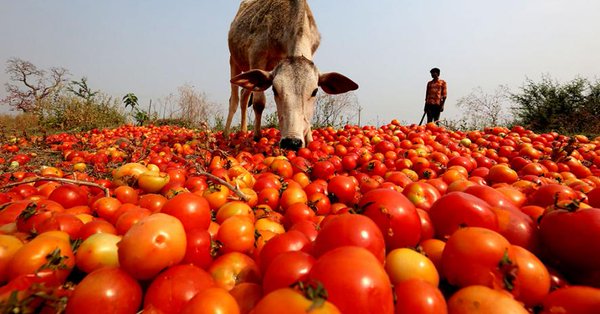
But in these extraordinary times when the lockdown has severely restricted economic activity, it is only agriculture which served as a lifeline. Agriculture, in true sense, reinforced its image as the mainstay of the Indian economy. With urban demand collapsing, with hotels, restaurants and dhabas closed for almost 50 days now, agriculture took the brunt of the lockdown, and still continued to keep the supplies moving. Reports of farmers spilling milk on the streets, poultry birds being buried alive, flowers being re-ploughed, fish rotting in the markets, and agitated farmers throwing away vegetables before cattle and with prices of almost all crops crashing in the market because of supply chain constraints have regularly poured in. Several estimates have put the losses suffered by vegetable growers alone at Rs 25,000-crore; dairy farmers at Rs 10,000-crores; poultry loss at Rs 15,000-crores besides there were huge losses suffered by flower growers, plantation crop, fruit growers and a massive hit suffered by fishermen. In other words, across the country, farmers have suffered a huge loss.

Despite all odds, farmers have also harvested nearly 106 million tonnes of wheat, and have already sown more area under kharif crops and are also getting ready for paddy transplantings in the weeks to come. Adhering to the safety norms, which meant staggering of dates to bring produce into the mandis, procurement of wheat is heading towards a record. Agriculture being already in distress, the expectation was for an immediate relief package to partly offset the losses they have suffered, and provide an incentive for the sowing operations to be undertaken. Here was an opportunity for the government to stand with farmers in distress, and provide a stimulating economic stimulus package. Farmers are in need of an immediate relief package, and providing more cash in their hands would have also helped create more demand.

Even earlier, when the Finance Minister had announced a package of Rs 1.70- lakh crore for farmers and other marginalised sections of the society, the only commitment for farmers was to frontload an instalment of Rs 2,000 under the PM-Kisan scheme, benefitting 8.19-crore farmers, which in any case was due to them. Under the PM-Kisan farmers get a direct transfer of Rs 6,000 per year, in three instalments. The first instalment was in any case due for April-June quarter. In other words, farmers have so far been deprived of any direct support. My proposal therefore is to provide a direct income transfer of Rs 10,000 per farmer, including the tenant farmers, without disturbing the PM-Kisan scheme allocations. In addition, considering the enormous difficulties farmers faced at the time of wheat harvest and procurement, they need to be given a bonus of Rs 100 per quintal over and above the minimum support price (MSP) for wheat procurement. Considering that several lakh migrant workers have returned to their villages, agriculture needs to be strengthened so as to absorb the additional workforce.

The pandemic provides immense opportunities to realise the Prime Minister’s vision of Atmanirbhar Bharat Abhiyan. Revitalising agriculture and turning farming into an economically viable proposition forms the basis of the campaign. The additional allocation of Rs 40,000-crore for MNREGA is a welcome step.

It’s also time to learn from other countries. The US has provided a support of $ 3 billion to purchase vegetables, fruits and milk directly from the farmers and supply it to consumers. A similar strategy can be worked out for perishable crops in India, wherein the government provides at least a support of Rs 10,000-crores (like it is providing for the purchase for pulses/oilseeds) to the state governments directing them to make purchases directly from farmers by using the official machinery, cooperative agency outlets, Mother Dairy outlets, FPOs, organised retailers and also activating the supply chain. Extra-ordinary crisis needs out of box solutions, and it is time the government ushers in steps that are beneficial to farmers. After all, farmers have demonstrated that at this difficult time, they are the real backbone of the economy. #

READ MORE - Agriculture needs an economic stimulus

Sunday, December 29, 2019

For farmers, another depressing year passes by.


Another year passes by. While there were a lot of expectations for a better future for farmers, but as 2019 fades into history, the farming community is still grappling to recover the cost of cultivation. With prices dropping across the spectrum, barring a few crops where assured procurement takes place, farmers incurred massive losses. With agriculture is crisis, the farm labour too had to bear the brunt. Farm wages had prevailed at a five-year low.

For almost two decades now real farm incomes have been on the decline. The depressing trend continued in 2019 as well, and when nearly 42 per cent of the country was reeling under a severe drought in April, spanning across Andhra Pradesh, Karnataka, Maharashtra, Gujarat, Jharkhand, Bihar and parts of Northeast, Rajasthan, Tamil Nadu and Telengana, I thought the plight of farmers undergoing a severe drought at the time of Lok Sabha elections would dominate the electoral campaigns. Except for some mention in Maharashtra, Karnataka, and Telengana, the worsening agrarian crisis failed to evoke a political response.

The raging drought was followed by an erratic monsoon causing huge crop damage in Karnataka, Maharashtra, Kerala and parts of Madhya Pradesh. So much so that after three years of continuous drought, torrential rains that lashed Marathwada region of Maharashtra in August were termed as ‘wet drought’. And yet, foodgrain production jumped to 281.37 million tonnes in 2018-19, showing an increase of 15.63 million tonnes over the average production achieved in the preceding five years (2013-14 to 2017-18). However, in an era of record harvests, the gain in foodgrain production failed to translate into higher income for farmers. According to Niti Aayog, growth in real farm incomes has been ‘near zero’ in the past two years, and prior to that in the five year period between 2011-12 to 2015-16 real farm income growth had hovered at less than half a percent every year.

This has been the travesty of Indian agriculture clearly pointing to a perennial neglect of farming. Somehow agriculture continues to be seen as a non-economic activity which somehow has to be sustained by pumping in subsidies. With dominant economic thinking aimed at pushing a large section of the population from the rural to the urban areas, which are in need of cheap labour, the neglect of agriculture is a natural outcome of flawed economics. After all, with public sector investment in agriculture, between 2011-12 and 2017-18, remaining at 0.3 to 0.4 per cent of the GDP, and with nearly 50 per cent population engaged in agriculture, the reasons for the continued neglect becomes all too apparent. 

Unfortunately what is not being realised is that with unemployment rising to a 45-year high, and the economy on a slowdown spiral, strengthening agriculture is the only way to improve rural spending thereby creating more demand, which in turn will drive the wheels of the national economy. If only farmers could earn a profit from every crop they harvest, the face of agriculture will change for the better, forever. And once agriculture becomes profitable, it will see a reverse migration from the cities to the villages, and will end up absorbing a large proportion of unemployed youth. As I have often reiterated agriculture alone holds the potential to reboot the sagging Indian economy.

The continued decline in farm incomes over the past two decades was reflected in a leaked consumption expenditure survey report for 2017-18 – which has been shelved by the government – showing an average rural household spending on food to be at a paltry Rs 580 per month, roughly Rs 19 a day. Seen in conjecture with the findings of the Global Hunger Index 2019 which ranks India at 102nd position among 117 countries, and considering that 600 million people are dependent on agriculture, it becomes easier to draw a link between falling farm incomes, declining household food consumption and the worrying levels of hunger. The challenge therefore is to increase rural household consumption, which depends on focusing on income generation at the farm and non-farm level in rural areas.

In the interim budget 2019, an effort was made to provide direct income support to agriculture to partly offset the losses farmers have been suffering, something that I have been asking for over the years. Under the PM-Kisan Samman Nidhi scheme a provision was made for providing Rs 6,000 per year for every land owning farmers. With an additional budget provision of Rs 75,000-crore, it resulted in 141 per cent rise over the allocation of Rs 57,600-crore for agriculture in the 2018-19 Budget. While this translates to a miniscule support of Rs 500 per month, it is in reality a tectonic shift in policy planning, moving from ‘price policy’ to ‘income policy’ support in agriculture.

Instead of providing a slew of booster doses for the industry to prop up the economy in downturn, which includes Rs 1.45-lakh crore corporate tax concessions, Rs 75,000-crore for bank recapitalisation and a stimulus package of Rs 25,000-crore to real estate, what can really spur demand is to provide more money into the hands of poor. This is only possible if the focus shifts to bolstering PM-Kisan and MNREGA as the two policy interventions that can make a difference. My suggestion would be to provide for an economic stimulus package of Rs 1.50-lakh crore under the PM-Kisan scheme which would ensure that the direct income support for farmers rises to Rs 18,000 per year or Rs 1,500 per month. In addition, the PM-Kisan scheme needs to be expanded in such a manner so as to bring the estimated 40 per cent tenant farmers in its fold. Spruce it with an extra allocation for MNREGA, at the same time ensuring its effective implementation, and the stimulus would shift to those who actually need it.

This has to be accompanied by a series of reforms in agriculture and rural development, and the country will see resurgence in rural spending thereby reinvigorating the economy. Tax cuts for corporate can wait, but the poor cannot. #

Depressing trend. Orissa Post. Dec 29, 2019. 
https://www.orissapost.com/depressing-trend/

किसानों की मायूसी का एक और साल. Amar Ujala, Dec 29, 2019.


READ MORE - For farmers, another depressing year passes by.

Monday, December 16, 2019

Agriculture is in need of an economic stimulus


The writing was on the wall, a clear pointer to the deep agrarian distress that continues to prevail over the decades. Before a ‘leaked’ 2017-18 National Sample Survey Office (NSSO) report on consumption expenditure — which the government decided to shelve — showed that rural households were spending less and less on food, the Economic Survey 2016 had brought out the unpleasant truth. The average farm income in 17 states, which means roughly half the country, stood at a paltry Rs 20,000 a year, which indicated the low farm household expenditure on consumption.
While the leaked consumption expenditure survey pegged the per capita monthly expenditure on food in rural areas at Rs 580 (roughly Rs 19 a day), the Economic Survey had shared data pertaining to average farm income based not only on what the farming families were able to sell, but also adding what they saved for household consumption. One was often left wondering how these families would be surviving with income levels of less than Rs 1,700 a month. With farm prices remaining depressed, several other studies pointed to farm incomes sliding to a 14-year low, and farm wages, too, showing a marked decline over the past few years.
Another leaked document, the Periodic Labour Force Survey 2017-18 report of the NSSO, had shown that 3.4 crore casual labourers in rural areas (3 crore were farm workers) had lost their jobs between 2011-12 and 2017-18. With unemployment worsening over the past 45 years, the crisis had certainly gone beyond farming.
While all these reports pointed to the deteriorating economic wellbeing of a rural family, the implications it had on pulling down rural spending were not difficult to foresee.
Economists, however, remain divided over trying to manoeuvre a reliable way out of the downturn. While mainline economists agree that weaker consumer demand and slowing private investments are the two key factors that have slowed the economy, leading economic growth to a six-year low of 4.5 per cent in the July-September quarter, the prescriptions being suggested are aimed at the top of the ladder.
Industry associations find the slowdown to be an appropriate opportunity to push for more reforms in the form of cheaper and easy land acquisitions, labour laws, reducing corporate tax, removing tax terrorism, fast-tracking of bankruptcy resolutions and, of course, providing yet another sector-based stimulus.
While mainline economists generally agree that it is the bottom of the pyramid that needs more attention, a set of booster doses that have already been announced to reinvigorate the economy relate essentially to corporate tax stimulus, real estate, automobile sector, bank consolidation and recapitalisation, export incentives, and some sops to micro, small and medium enterprises. A few economists have questioned the need to provide tax breaks to an industry which is already sitting comfortably over cash. They have said that it is not the way to bolster the sagging economy.
With already 5 per cent of the GDP going as revenue foregone, an additional cut in corporate tax rate providing a stimulus of Rs 1.45-lakh every year is only going to further weaken the tax revenue position. Finance Minister Nirmala Sitharaman has also hinted at a relief on the personal income tax in the next Budget.
To say that tax concessions will encourage businesses to invest more in greenfield projects, and eventually help in providing more jobs is not backed by international experience. Nobel laureate Paul Krugman has shown that corporate rate tax cuts in the United States, which received a fillip after President Donald Trump took over, have neither brought in investments nor created jobs. The money the corporate saved was, instead, invested in the stock markets.
No wonder, the Indian stock markets too went into a celebration mode the day after the corporate tax rate cuts were announced.
While the celebrations still continue, and the inflow of foreign funds has increased after the tax rate cut, my worry remains about a large section of the poor who are finding it difficult to buy a Rs 5 pack of biscuits; about those who are struggling hard to market their crop harvest at a remunerative price; about those farm and non-farm workers who are finding it hard to secure a sustainable daily wage.
For the population in the poor category, especially in agriculture, no specific incentives are being announced. More so at a time when a study by the Organisation for Economic Cooperation and Development and the Indian Council for Research on International Economic Relations (OECD-ICRIER) had earlier shown that farmers lost an estimated Rs 45 lakh crore in the 16-year period, from 2000-01 to 2016-17, on account of being denied the right price. Niti Aayog’s own estimates showed the growth in real farm incomes, in the past two years, to be ‘near zero’.
In other words, for two decades in a row, farmers have been at the receiving end, with almost stagnant or declining incomes. It only elaborates the primary reason behind what is seen as a deepening survival crisis. The growth rate in farm wages, too, has been slipping. When agriculture, which engages nearly 50 per cent of the population, is in a crisis, the reverberations it carries on the economy are bound to be intense.
The revival of agriculture, therefore, holds the key. If there is one sector of the economy which is in dire need of an economic stimulus, it is agriculture. The time is appropriate to compensate farmers.
To begin with, if an amount equivalent to the Rs 1.45-lakh-crore tax relief per year to the industry was allocated, instead, to agriculture, it would triple the direct income support amount under the PM-Kisan scheme to Rs 18,000 per year (Rs 1,500 per farmer per month) and extend the scheme to landless farmers as well. Already Rs 75,000 crore is allocated for the PM-Kisan scheme, which needs to be raised by adding another Rs 1.45-lakh crore. The more money in the hands of the poor, the more will be the demand generated, which is the crying need.
Follow it up with measures to make public procurement more effective, expand the network of APMC (Agricultural Produce Market Committee)-regulated mandis; and assure MSP (minimum support price) for all crops for which it is announced, meeting the gap in MSP and market prices by deficiency payments. In addition, drawing from the experience of Kerala, set up a debt relief commission in every state. And invest more in rural roads and public services like schools and health centres in rural areas.#
Agriculture in need of economic stimulus. The Tribune. Dec 17, 2019


READ MORE - Agriculture is in need of an economic stimulus