Showing posts with label banana value chain. Show all posts

Tuesday, September 28, 2021

No transition to sustainable food systems possible without a living income for farmers


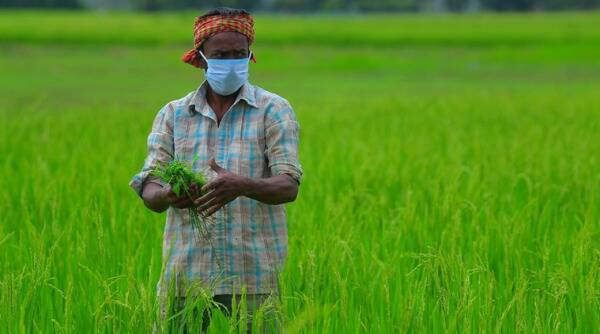
Pic courtesy: Indian Express

In the run-up to the UN Food Systems Summit aimed at achieving more sustainable, equitable and resilient food systems, the UN Secretary General, Antonio Guterres, said: “A well-functioning food system can help prevent conflict, protect the environment and provide health and livelihoods for all.”  

“In food, there is hope.” 

Laudable words, indeed. As the world faces a growing risk of food shortages due to climate change, with several studies warning of the dismal scenario ahead when production of staple crops is expected to contract by almost a third by 2050 in case temperature rise continues unabated, transforming the global food systems to meet the future needs of the people, so as to attain health and nutritional security for one and all, is certainly a timely initiative. More so at a time when increasing desertification, loss of biodiversity, air and water pollution and the devastation intensive farming practices have wrought to soil health and environment had set the alarm bells ringing for long. 

Coming at a time when growing corporate control over agriculture has pushed small farmers to the margins, with monocultures leading to destruction of natural resources, only time will tell whether partnerships between different stake-holders and the commitments from national governments really help to radically transform the existing highly unsustainable food systems. This becomes more difficult to achieve given that high levels of income insecurity is either leading indebted farmers to take the fatal route or abandon agriculture to move to the cities, and those who are left on the farm seem to be somehow surviving against all odds. 

While there is no denying that food provides hope, as the UN Chief said, but unfortunately the people who produce food do not see any hope. 

“Every genuine farmer is now struck unfairly on a treadmill with accumulating debts to meet unless he goes bankrupt, commits suicide or finds another source of income,” a British farmer had summed up the plight of the agrarian community. A banner put up recently by dairy farmers in Northern Ireland loudly announcing -- We can’t afford to feed you anymore – is a telling sign of the crisis that dairy farming are faced with. With prices remaining more or less static for eight years in a row, dairy farmers are unable to recover the cost of production. 

For the same reason, 93 per cent of the dairy farms have closed down since the 1970s in America. Not only dairy farmers, small farmers have also quit agriculture in large numbers. With median incomes in the negative for almost a decade now, and saddled with a huge bankruptcy, farmers have been forced out, hastening the decline of rural America. Mary Rieckmanns is one such farmer, whose family has been raising cows in Wisconsin for generations. “I sometimes feel they are trying to wipe us off the map,” she told the TIME magazine. 

In early March this year, French farmers had hung suicide dolls on trees outside Parliament drawing attention to the economic hardship they were faced with. In neighbouring Germany, farmers too have been protesting, expressing their anger by driving tractors to the cities. In most other European countries, farmers have time and again demonstrated against the sliding farm gate prices, which have rendered farming unprofitable. “What is point to being in debt all the time, and toiling for no reason? We are sacrificed, so the consumer is always happy with low prices,” Dominique Metenier, a French farmer had lamented. 

Concentration of power in the hands of a few multinational companies has resulted in unfair trade practices hitting livelihoods of millions of small farmers and workers in Latin American and African countries. Take the case of chocolate, which is a dominant player in the $210 billion global confectionary industry. While the industry rakes in huge profits, hundreds of thousands of cocoa producers in Africa live on meagre incomes. With child labour rampant in the cocoa plantations, a study has shown that the average income for a large percentage of small cocoa farmers is less than the retail price of a chocolate bar. 

In case of banana, the most eaten fruit in Europe and North America, for growers in Ecuador, Colombia, Costa Rica and Dominican Republic, from where the fruit is largely imported, their earning is anything between 5 to 9 per cent of the end consumer price. The situation is no better for coffee growers, where a majority of the growers live on less than the extreme international poverty line of $1.9 per day. 

To draw attention to the deplorable economic conditions that growers were living with, the World Coffee Growers Forum had roped in the well-known economist Jeffrey Sachs who has proposed a global fund of $ 10 billion a year to help pull out growers from the clutches of extreme poverty. 

In India, which has the largest population engaged in agriculture globally, for almost ten months now tens of thousands of farmers have been protesting at the borders of New Delhi. While the protesting farmers are calling for a repeal of the three farm laws that the government had brought in September last year, which facilitate the entry of free markets in agriculture, farmers are also demanding a law that provides a guaranteed price. Meanwhile, the latest report of the Situational Assessment Survey of Agricultural Households 2018-19, an extensive and elaborate nation-wide survey, shows that the farm incomes have been steadily on a decline. Increasingly, non-farm income occupies a bigger share of the average farm incomes, with earning from crop cultivation alone dropping to a paltry Rs 27 (US$ 0.37) a day. 

What emerges clear is that farming is no longer a viable livelihood. While farmers grow food for the world, they themselves live in hunger. To expect the same beleaguered global farming community, already reeling under indebtedness, suicides and exploited ruthlessly by the markets, to be the strong pillar buttressing the proposed transition towards a sustainable food system will remain a dream. The entire global focus therefore must be to first come up with structural transformation required to provide farmers with an assured and guaranteed income. 

Or else, we’ll continue hoping against hope. #

Source: No sustainable world without a living income for farmers. Sept 22, 2021. Fairfood.nl https://fairfood.nl/en/resources/un-food-systems-summit-no-sustainable-world-without-a-living-income-for-farmers/?fbclid=IwAR0G-iOvRueKOUCx8Gc_vbXDTG1tohRvXsHhci3EFC_rEkrLZkBTLlSbsmE

READ MORE - No transition to sustainable food systems possible without a living income for farmers

Friday, January 17, 2020

Farmer of no value in value-chains


Pic courtesy -- from the web

Inaugurating the National Convention of the National Growers Federation – group of associations of coffee growers in Karnataka – at Bangalore, I asked how much would be a farmers share from a hot cup of coffee that consumers normally drink in a trendy coffee outlet. It took them sometime to work out the cost, so much so that they even looked at some international analysis, and what they presented a day later would simply sound unbelievable.

For every cup of hot coffee that costs consumers Rs 250 on an average in any upwardly mobile coffee bar/lounge, the farmers share is only Re 1.

It didn’t however startle me. More so at a time when the international prices of coffee is a third of what it was about 13 years ago. The commodity futures market for coffee has remained depressed making the lives of producers more tenuous, forcing growers in many countries, especially the younger generation, to abandon plantations. In India, coffee prices have been on the decline for almost three decades thereby further aggravating the crisis in the picturesque coffee belt. To overcome growing debts, estimated at over Rs 8,000-crores, many growers have turned their homes into ‘home stays, some have abandoned plantations and many have moved out.    

Earlier, a British Economic Survey report had computed a farmer’s share in a cup of coffee costing an average of 2.50 pound sterling, at only 10 pence. In other words, the coffee value chain, whether in India or in Britain, offers little or no succour to the coffee growers. Strangely, while all other stakeholders in a value chain end up making profits, it is the primary producer who is left to bear the brunt. “Unlike producers of commodities such as oil and natural gas, coffee farmers have long suffered from being at the wrong end of the value chain - receiving only a small fraction of the retail price of their crop,” says a Reutersnews agency report. Knowing that commodity future trading has played havoc with coffee growers’ livelihoods, the Financial Times had even sought a mechanism to stable coffee prices, which only shows that trading in futures market is no answer to the declining farm incomes across the globe.

Coffee is not the only agricultural commodity to be on the wrong side of the value chain, most other agricultural products fare equally badly. Several studies have shown that in case of bananas grown in Central and Latin American countries and traded in America/European Union, farmers share from every dollar worth of sale of bananas is a paltry 2 pence. Even for the best of the value chains, workers earn around 5 to 7 per cent of the total value of bananas while the retail pockets 36 to 43 per cent of the value. This is true for all agricultural commodities. It is the retail trade that walks away with a disproportionate share of the profits. In the case of milk, some dairy farmers in UK say that they receive at best 19 cents from every litre of milk consumers buy, which is not even enough to cover the cost of production.

To illustrate how farm prices have been declining over the years, the US National Farmers Union worked out a farmer’s share from what the consumers normally spend on a Thanksgiving dinner. Accordingly, a farmer gets just 12 cents from every dollar consumers spend. The US Department of Agriculture (USDA) has meanwhile also worked out that in 2018 for every dollar a consumer spent on food, farmers share of the profit pool was only 14.8 cents, which has seen a five per cent decline over the previous year. Interestingly, USDA analysis shows that while more than 85 per cent of every food dollar spent in the country goes for marketing, processing, wholesaling, distributing and retailing, farmer’s share is too low.  

NFU says for one pound (0.45 kg) of tomatoes costing $ 3.19 in the retail, farmer gets only $0.54; for five pounds of potatoes retailing at $2.30, a farmer’s share is only $0.70; and for two pounds of bread costing $2.10 to the consumer, farmer share is only $0.10. Similar illustrations by the Indian Council of Agricultural Research (ICAR) are required showing what percentage of the retail price of vegetables, fruits and food products actually are passed on to farmers thereby helping consumers to understand the reasons behind growing indebtedness in agriculture leading to farm suicides and deepening of agrarian distress. Take the case of poultry eggs, a newspaper report quoted the Indian Poultry Equipment Manufacturers’ Association saying how in the past one year, the producer ends up making a loss of Re 1 on every egg consumers buy.

If becoming part of a value chain is an effective way for ensuring what is called ‘price discovery’ then there is no reason why farmer’s share in a food product available in the market should be declining. Further, linking these value chains with commodity futures trading is no assurance of price stability or a higher price as the coffee experience has shown. This is because to gain competitive advantage and high profit levels, companies are squeezing farmer’s price.

Since the farmer too needs a stable and appropriate income to survive, to maintain his family, to pay the health and education bills like all of us, the challenge is to find a workable mechanism that ensures the continuous viability of a farming enterprise. My first suggestion is to draw from the experience of Amul milk cooperative, which claims to pay dairy farmers nearly 80 per cent of the end consumer price, and to expand the cooperative farming network to include vegetables and fruits to begin with. The other approach should be to announce a minimum support price or intervention prices for every farm commodity, linked to inflation, and then credit the difference between the market price and the support price into farmer’s account as deficiency payments.

As far as the value chains are concerned, a cess on value added products can go towards providing direct income support for farmers. For this, it is time to look into a policy suggestion made by a Kerala Cabinet minister K Krishnankutty, who has himself been a farmer leader. Calling it Actio Apportum, his suggestion is to create a fund by fixing a cess on a value added product, say Re 1 on every kg of rice, and from the amount generated, which will vary depending on the profit margin, an income support can be provided for farmers. #   

Farmer of no value in chain. The Tribune. Jan 17, 2020
https://m.tribuneindia.com/news/farmer-of-no-value-in-chain-27300?fbclid=IwAR3cP9boJAAdATgih6A0NAutSQU9DAyl4n_dhI63b2_5hQoICQiL_wPvH6k
READ MORE - Farmer of no value in value-chains