Monday, July 29, 2019

The Mighty Himalayas Are Shrinking


Himalayan glaciers are retreating at an alarming rate 
-- Pic Al Jazeera

An ode to a dead glacier. Well, that’s exactly what scientists in Iceland plan to do. On Aug 18, scientists from Rice University and Iceland are planning to put up a memorial for the first glacier – called Ok glacier -- that has disappeared in western Iceland. The poignant message on the memorial plaque states: “Ok is the first Icelandic glacier to lose its status as a glacier. In the next 200 years all our glaciers are expected to follow the same path. This monument is to acknowledge that we know what is happening and know what needs to be done. Only you know if we did it.”

Ok glacier in Iceland is the first glacier to disappear but will certainly not be the last. As the plaque states all its glaciers are expected to disappear in another 200 years. But thirty years from now, in 2050, I am sure many people who read this message will curse the present generation for the disappearing act, for the extremely hot and dry planet we left for them, depriving them of their share of a happy world to live in. They certainly would know what wrong we did.

I think it is an excellent idea to set up memorials for our dying glaciers. But if that be so, the Himalayas would be inundated with memorials all across the Himalayan mountain range extending from Afghanistan, Pakistan, India, Nepal, and Bhutan and to China. Termed as the water tower, Himalayas carry nearly 40 per cent of the earth’s fresh water. But with the United Nations Development Programme (UNDP) estimating that more than 50,000 glaciers are rapidly shrinking, the pace at which these glaciers are disappearing will leave behind a trail of destruction for almost 1.3 billion people living on either side of the highest mountain range.

The Himalayas have also been called as the third pole since they carry the third largest volume of ice after Antarctica and the Arctic. So it is not only that the two poles of the planet – Antarctica and Arctic those are melting, Himalayas too are equally vulnerable.  Although not as fast as the European Alps, which have seen many glaciers dying in the past decade. Perhaps one reason for this is that the temperatures had started rising in Europe much earlier than in South Asia.
 
Nevertheless, I was expecting a kind of an outrage in India when a recent comprehensive study conducted at the Columbia University’s Lamont-Doherty Earth Observatory concluded that the Himalayas are losing more than one and a half foot of ice every year since the year 2000.  Prior to that, the Himalayan meltdown between 1975 and 2000 was to the extent of 10 inches every year. Interesting this study does not include the high-mountain ranges of Asia – Pamir, Hindu Kush and Tian Shan. The cumulative impact of meltdown would certainly be disastrous for the entire Asian region. However, this alarming meltdown in the Himalayan ice cover should have shocked the nation; after all it will eventually strike a deadly blow to people living in the Hindi heartland. But except for a few headlines here and there, I did not see any public outrage. Newspapers didn’t even think it fit to raise this issue in its editorials, and the TV channels were busier with political statements without much relevance.

Based on declassified photographic images taken by US spy satellites as well as routine satellite images spanning 650 glaciers across the region, this study showed how the Himalayas are on a yearly basis losing up to 8 billion litres of water every year. This equals 3.2 million Olympic sized swimming pools being drained out every year. For a country emerging out of a water shock that Chennai in coastal south India went through recently, the shrinking of ice cover in the Himalayas should have made us sit back and think. After all, it is everyone’s future that is at stake, and people must start worrying about the state of water-less economy that we are leaving behind for our children. A strong public opinion could have jolted the nation, and I was hoping Parliament would sit for an impromptu mid-night session.

But nothing like this happened. Except for blaming agriculture for (mis)utilising 78 per cent of the available irrigation water, life went on as usual. So much so that another news report quoting a study by the Central Water Commission and pointing to a decline in water availability from the three major river basins – Indus, the Ganges and Brahmaputra – all emanating from the Himalayas, and serving as a lifeline for the entire northern region and extending up to central India, went unnoticed. The average water potential in the three river basins has declined by almost 40 per cent. A State of Forest Report 2015 had earlier shown that the decreased river flow is on account of cutting down of 628 square kms of forest cover in north and eastern Indian region.    

Under such circumstances, where billions of people living downstream face prospects of river drying up, and thereby acerbating the water crisis hitting agriculture, industry as well as drinking water supply, shouldn’t the Himalayan states – Jammu & Kashmir, Himachal Pradesh, Uttarakhand, Sikkim, Arunachal Pradesh, West Bengal, Meghalaya, Assam, Tripura, Mizoram, Manipur, and Nagaland – come together to collectively formulate a policy framework for protecting the hills? Why suitable policies can’t be put in place to ensure the repeat of Kedarnath devastation does not happen, and why riparian states can’t join hands and collectively invest to protect the river catchments? Ascribing an economic value to the eco-system services that mountains provide, and that includes the services that come from water, maintaining the tree cover, protecting soil erosion, wildlife etc and incorporating it in the state GDP calculations is surely a way to measure economic wealth that mountains provide. Reckless exploitation of hills in the name of development has to stop. This may require a new and distinct development paradigm for the hill states, which rely more on protecting nature and environment. Research programmes too need to suitably modify. I don’t see any logic in agricultural universities in the mountains doing farm research which is exactly a copy of research being done in the plains.#

READ MORE - The Mighty Himalayas Are Shrinking

Monday, July 22, 2019

Will agro-ecological farming usher in the fourth agricultural revolution?


Finance Minister Nirmala Sitharaman’s mention of “zero budget” in farming when she announced the focus areas in agriculture while presenting her first budget has come at a time when a major report – Our Future in the Land – by RSA Food, Farming and Countryside Commission (FFCC) set up in the UK has called for ‘unleashing a fourth agricultural revolution driven by public values’.

This is time for a historic drive to put health at the heart of our food system, the Commission observes, and adds: “All effort, policy, legislation, money and resources must be directed towards implementing and accelerating a transition plan for climate, nature, public health and wellbeing.” Reading the report, I realise it is also time for a historic transformation in India, to move away from intensive farming, which has led to soil degradation, water depletion, increasing desertification, environmental contamination and soaring diet-related illnesses. I am grateful to Nirmala Sitharaman for flagging a crucial issue which in all probability should assume a central role in the growth pathway that new India is trying to enact. If it fails, we as a society too fail to bring in a new agricultural revolution in harmony with nature and human health.

“Zero budget” as the name implies, is actually a system of agro-ecological farming that relies on locally available inputs, including urine and dung from local cow breeds, with emphasis on mulching and multiple cropping, thereby reducing the cost of production. Travelling through Andhra Pradesh where Subhash Palekar’s Zero Budget Natural Farming (ZBNF) is being practiced, I see healthy soil, healthy crop and healthy people. But that's wjhat I see everywhere agroecological farming practices are being followed. Let us also not forget there have been no farm suicide reported so far from areas where agro-ecological farming practices are being followed. The productivity of crops in the areas that have already been converted to ZBNF has not gone down, it remains more or less same and in many crops the yields have increased.

However, despite the claims, ZBNF is a collection of small farmer innovations that have evolved with time. As I said earlier, ZBNF is one of the effective ecological farming systems that have been developed. Agro-ecological farming in reality is a time-tested approach based on the location-specific technological innovations that small farmers have developed and perfected over the years. The late G Nammalvar from Tamil Nadu, Narayana Reddy from Karnataka, Bhaskar Save from Gujarat too have earned international recognition for their pioneering work. At the same time, there are scores of organic practitioners in different parts of the country who have successfully shown the non-chemical way in farming. Subhash Sharma (Yavatmal), Sarvadaman Patel (Anand), Manohar Bhau Parchare (Nagpur), Deepak Sachdev (Indore), Suresh Desai (Belgaum), late Surender Dalal (Jind), Amarjit Singh Sharma (Punjab), to name just a few. It is time to learn from all of them, and any research evaluating the performance of agro-ecology must include their work. Pushing in a monoculture in agro-ecology will be eventually regressive. Nor do I favour any cult building.  

Earlier, Andhra Pradesh had experimented with non-pesticides management (NPM) which led to the formation of Community Managed Sustainable Agriculture (CMSA). I thought it was a very successful agro-ecological model that extended to 36 lakh acres. As a result, pesticides consumption in Andhra Pradesh (before its bifurcation) had come down by 60 per cent. Surender Dalal’s innovative Keet Pathshala (Insect Classroom) had also reduced pesticides consumption in Jind district in Haryana. Similarly, the Indian Council of Agricultural Research (ICAR) has vetted hundreds of such technological innovations in a series of printed volumes that continue to gather dust. Agricultural universities do have short term as well as long term studies on the efficacy and viability of agro-ecological farming systems, largely lying unnoticed, and the immediate need is to mainstream it.  

Former AP chief minister, Chandrababu Naidu, remains a first in seeing the potential of agro-ecological farming. Beginning with CMSA, he was later drawn to the idea of zero budget, and had adopted ZBNF as a flagship programme, supported initially by a Rs 100-crore grant from the Azim Premji Philanthropic Initiative. Naidu had promised to bring the entire farming community, roughly 60-lakh farmers, under its fold by 2024. A laudable objective indeed, considering that shifting farming from chemical-intensive systems to climate resilient agro-ecological methods is the need of the times. I am sure if AP can make an attempt, the rest of the country too can. Himachal Pradesh is already on the path to agro-ecology. But as any programme grows in size, it does need additional finances. The point I am trying to make is that except for the name, there is no zero budget in farming. Even the farmers have to incur cost on raising cows, investing on farm labour required to undertake various farming operations and so on. But with no chemical fertiliser and pesticides being applied, the cost of production certainly is far less. This will certainly hurt the commercial interest of agri-business industry but I guess the fate of present and future generations is more important than the profit margin to people investing in stock market.

To say that agro-ecological farming systems do not need any price incentive is nothing but romanticism. As per the FFCC the era of cheap food has already led to a devastation of environment, human health and acerbated climate change. There is a cost for protecting the eco-system services, which has been denied to farmers all these years. In fact, the 2009 report of the International Assessment for Agricultural Knowledge, Science and Technology for Development (IAASTD), to which India is a signatory, clearly warns against business as usual approach.   

But let’s not forget. When the high-yielding varieties of wheat were introduced it was accompanied by a package of policy initiatives, including adequate infrastructure and subsidy for fertiliser, pesticides and machinery application; making available cheap credit; creating market avenues through APMC regulated mandis, MSP and public distribution system, setting up of FCI and the National Seeds Corporation to name a few. Agro-ecological farming systems too need a different set of policy framework, new pricing and marketing structures, and of course appropriate investments to make it successful. Farmers would do the rest. Government certainly holds many of the key levers, and should be willing to accord priority to the speedy transformation to agro-ecological farming. Last week, in a tweet even the FAO has acknowledged: ‘Agro-ecology can support food production and food security and nutrition while restoring the ecosystem services and biodiversity that are essential for sustainable agriculture. This is exactly what India needs. #

Zero-budget farming. The Tribune. July 22, 2019
https://www.tribuneindia.com/news/comment/zero-budget-farming/805658.html
READ MORE - Will agro-ecological farming usher in the fourth agricultural revolution?

Friday, July 19, 2019

Do we call Trump a racist?
I've been reading a number of thought-provoking articles this week about the appropriateness of using the term "racist" to describe the president and/or his tweets.

In a thoughtful piece on NPR, Keith Woods recommends foregoing labels like "racist." He writes, "That's an alternative to labels: Report. Quote people. Cite sources. Add context. Leave the moral labeling to the people affected; to the opinion writers, the editorial writers, the preachers and philosophers; and to the public we serve."

In the other corner, Issac Bailey writes on Nieman Reports that journalists should use the term since we are in the business of calling things by their names. He said, "In a moment in which clarity is worth its weight in gold, media once again stumbled down the confused path when most Americans are desperately looking for some direction so they can figure out what the heck is going on and what the heck they should think and do about it. ‘Yes, this is what racism looks like,’ we should be screaming to them—not as an editorial opinion, but as a fact."

I frame this debate in terms of peace journalism, and the notion that journalists should lead substantive societal discussions without deepening divisions and falling into the “us vs. them” narratives that many politicians seek. In a previous column, I wrote about the inadvisability of using the term “concentration camp” to describe immigrant detention centers. I oppose this term because I think it further divides us, and makes discussion across political boundaries even more difficult. The same can be said about the term “racist.” When we call Trump racist, are we tarring his supporters with the same brush? And if we are, aren’t we making it more difficult to have an adult dialogue with them about important issues like race and immigration?

I prefer using phrases like, “a tweet widely considered racist” and “comments echoing those of racist segregationists of the 1950’s.” Point out the historical similarities between Trump and the George Wallaces of the world, and between Trump's language and that used by white supremacists, and let readers apply their own labels and judgments.


READ MORE -

Sunday, July 14, 2019

Make no mistake: Only agriculture has the potential to reboot the economy


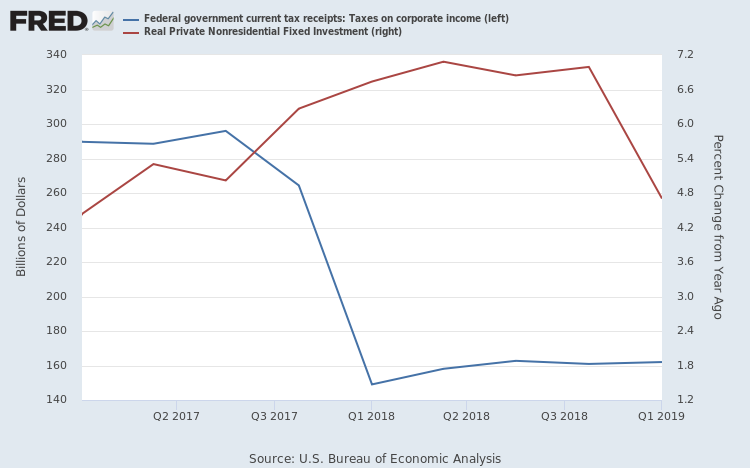
Paul Krugman shared this graph on Twitter how ineffective Corporate tax cuts have been in America. 

At a time when Nobel laureate Joseph Stiglitz says that neo-liberalism is ‘dead and buried’, and the world as a result is increasingly grappling with the gigantic problems of rising unemployment, gnawing inequality and climatic change reaching a tripping point, agriculture alone has the potential to reboot the economy. While the accumulation of wealth in the western countries is essentially built on greenhouse gas emissions, as author Amitabh Ghosh would say, the former UN Secretary General Ban Ki-moon had the courage to acknowledge: “The world’s current economic model is an environmental suicide. Climate change is showing us that the old model is more than obsolete. We need a revolution on how best to make the global economy sustainable.” His clarion call at the World Economic Forum 2011 however went unheeded. No media even thought of initiating a discussion on this grim portrayal of the global economic future.


While the current economic model has outlived its utility, more of the same will only exacerbate the destruction of natural resources, advancing the climatic catastrophe the world is staring at, and lead to unimaginable socio-economic disruptions. Already with the Himalayas melting at an alarming rate, reducing the snow depth by one-and-a half foot every year, with river flow shrinking, lakes and water bodies disappearing; and with oceans polluted and rising, the environmental consequences of economic growth have been dastardly. As if this is not enough, look at the environmental fallout of industrial agriculture. Soil fertility has declined to almost zero in intensively farmed regions; excessive mining of groundwater sucking aquifers dry; and chemical inputs, including pesticides, becoming extremely pervasive in environment, the entire food chain has been contaminated.

As soils become sick, forests are logged for expanding industrial farming, soil erosion and water depletion takes a heavy toll leading to more desertification. Not drawing any lessons, Brazil's new president, Jair Bolsonaro, has launched an assault on the Amazon rainforests. Within hours of assuming office he issued an executive order that practically spells a death-knell for the pristine forests, considered to be a global lung. In Punjab, the Chief Minister has time and again warned of creeping desertification if the present rate of ground water withdrawal is not corrected. A report by the Central Ground Water Board has warned that Punjab and Haryana will turn into a desert in another 25 years if it continues with the current rate of exploitation.

And yet I find expectations on economic reforms have risen significantly. In the second tenure of Prime Minister Narendra Modi, corporate-backed think tanks, credit rating agencies, and economic writers without exception have called for more reforms, going to the extent of seeking bold reforms. I fail to understand that if a higher GDP in the ten years of UPA-1 and UPA-2, an outcome of economic policies driven by the ideology of economic reforms, had failed to translate into jobs, how will aggressively pursuing more reforms create more jobs now. That’s a question no one wants to answer. More so at a time when we are fast moving from jobless to job-loss growth. Recent studies show that besides the urban centres, huge job losses have taken place for the rural farm and non-farm workers as well. 

Similarly, the growing demand for reducing corporate tax to attract investments and provides jobs has come at a time when globally there is no empirical evidence for it. Just because the corporate need it, credit rating agencies and think-tanks are going overboard justifying it.

Nobel laureate Paul Krugman has in a tweet questioned this flawed thinking saying how wrong it was to imagine that slashing corporate taxes would lead to a huge surge in investments. In a graph he tagged (presented below) sourcing US Bureau of Economic Analysis he showed clearly that there is no relation between corporate tax cuts and rising investments. Nor does it lead to more job creation. In fact, he further explains that the tax cuts had only enabled the rich to invest more in the stock markets. Another bold reform that the industry associations are crying for is reforming the labour markets, which essentially means the privilege to ‘hire and fire’ workers. Again, Paul Krugman has in a tweet said “basically very little evidence that we gain anything from the brutality of our labour markets”. In simple words, the ‘brutal’ labour reforms in the US haven’t worked. If it didn’t work in the US, from where we copy and paste economic policies, I wonder how will the same labour reforms work in India. 

This has to change. Not an easy task, but considering the realisation that agriculture needs structural reforms; I see a ray of hope. In the given economic scenario, my understanding is that only agriculture can reboot the economy, sustain millions of livelihoods, and at the same time substantially reduce global warming. The first and foremost requirement is to accept the yeoman role agriculture can play in revitalising the economy in the years to come. The economic thought that encourages farmers to be forced out of agriculture to the cities where cheaper labour is needed has to first change. If agriculture becomes economically viable, the rural economy too undergoes a rapid transformation thereby drastically reducing the rural-urban migration. While the villages will become pivot of economic growth, the cities will be saved of a huge migratory influx protecting them from an impending collapse. With farming becoming viable, it will also reduce the pressure on creating more jobs in the cities. Agriculture therefore is the saviour.

Addressing the fifth meeting of the governing council of the Niti Aayog recently in New Delhi, the Prime Minister had announced the formation of a high-level task force for suggesting structural reforms in agriculture. This is a positive development, and if curated properly has the potential to propel the much needed agricultural transformation by the year 2024. This requires fresh thinking, and banking on approaches that are ecologically sustainable and conform to the location-specific needs of the country. For instance, the Prime Minister’s focus on water harvesting and conservation is driven by the desire to reactivate traditional water harvesting technologies, and make water conservation an important factor in farming strategies. Instead of intensive farming, the emphasis has to shift to agro-ecological farming systems requiring less water, with the focus diverted to local production, local procurement and local distribution. What India needs is a series of desi reforms in agriculture, ensuring that growth in agriculture is so entwined with food policies that hunger and malnutrition is relegated to the past.    

Meanwhile, a high-level task force of chief ministers headed by Maharashtra Chief Minister Devendra Fadnavis has been formed. The task force would do well if it does not copy the failed agricultural reforms from the United States and European Union. To illustrate, Indian economists are building up pressure to open up agriculture to foreign direct investment in multi-brand retail trade as well as in preparing the farm markets for commodity trading. If this had worked, I see no reason why the average farm incomes in the US should have nosedived in 2018. The US Department of Agriculture (USDA) had estimated the ‘median’ farm income to be in the negative at minus $ 1,553 (or minus Rs 107,739). In other words, the average farm household in the US was living in debt, with the debt margin increasing substantially for half the households existing below the ‘median’. In fact, the Chief Economist for USDA had admitted that real farm incomes have been declining since the 1960s, thereby necessitating huge farm subsidies to keep farming viable. This is happening at a time when the world’s biggest commodity trading centre, the Chicago Mercantile Exchange is located in the US, and the world’s biggest organised retail chain the US-based WalMart has completed more than half a century. But neither commodity trading nor the entry of private markets could rescue agriculture. 

Instead of borrowing failed agricultural prescriptions what India needs is a revolution on how best to make farm economy viable and sustainable. To me, this is a great opportunity. The Prime Minister has already set the ball rolling when in the interim budget in February made a provision for providing a direct income support of Rs 6,000 per year to small farmers, which was extended later to all land-owning farmers. In my understanding it was a tectonic shift in economic thinking, moving away from ‘price policy’ to ‘income policy’. Gradually, I am sure the direct income support in the years to come will one day increase from Rs 500 a month to as much as Rs 5,000 a month. And I am hoping that PM-Kisan scheme is followed by setting up a National Commission for Farmers Income & Welfare, incorporating the existing Commission for Agricultural Costs and Prices (CACP), with the mandate to provide an assured income of Rs 18,000 per month per farming family. This has to be provided by way of topping-up on the average incomes in each of the districts. The date for assessing farm incomes district-wise is available.

Considering that the average farm income in 17 states of India or roughly half the country stands at a mere Rs 20,000 a year, the importance of direct income support can be easily gauged. At the same time, public sector investment between 2007 and 2017 being in range of 0.4 per cent of GDP, the reason why agriculture is faced with a terrible agrarian crisis becomes obvious. With low investment and low incomes, no miracles can be expected. Agriculture therefore needs massive infrastructure investments, including expanding the existing APMC regulated markets infrastructure to reach 42,000 mandis in 5 kms radius, linking these mandis with a network of village link roads, strengthening the MSP delivery system, and providing for a network of godowns, foodgrain silos and warehouses. This has to be accompanied by formulating Ease of Doing Farming initiatives on the same lines as ease of doing business. Ease of Doing Farming will be a governance reform removing bottlenecks and hurdles farmer’s encounter during crop production, harvesting and marketing operations.     
.
Transforming agriculture is only possible provided policymakers get out of the dominant mindset that considers agriculture to be a burden on the national exchequer. It has to be acknowledged that the path to future economic growth definitely passes through agriculture. Given the right kind of policy push, farming can turn into an economic activity thereby not only strengthening the livelihood security for 600 million people directly or indirectly dependent on farming but in addition creating a huge demand that will reignite the wheels of economic growth. This is the probable image of a sustainable future that the world awaits eagerly, where an ecologically sustainable agriculture corrects the climate imbalances, reduces income inequality and helps builds up sustainable livelihoods. #


Make no mistake: Only agriculture has the potential to reboot the economy. National Herald. July 13, 2019. https://www.nationalheraldindia.com/india/make-no-mistake-agriculture-alone-has-the-potential-to-reboot-the-economy


READ MORE - Make no mistake: Only agriculture has the potential to reboot the economy

Monday, July 8, 2019

Horrifying photos sometimes necessary
“The first time I saw the picture, I looked away quickly, shocked. The second time I saw it, tears welled up in my eyes.”

While these words accurately describe my reaction to seeing the awful photo of Óscar Alberto
AP photo of area where Oscar and Valeria Ramirez were found.
Martínez Ramírez and his 23-month-old daughter, Valeria, whose bodies had washed up along the Rio Grande’s shores a few weeks ago, they were in fact written in 2015, and chronicled my reaction to the photo of Alyan Kurdi, a three-year-old Syrian refugee who drowned and washed ashore in Turkey.


Our humanity, and our journalistic principles, are continually being challenged by the plight of migrants. As journalists, we must incessantly, vigilantly question whether (and how) to use shocking, horrifying photos like these.

In hindsight, in Alyan’s case, the right thing may have been to publish the photo, which generated a mountain of both increased interest in and donations for Syrian refugees. For example, Reuters reported, “The average number of daily donations to a Syrian refugee fund run by the Swedish Red Cross rose 100-fold. Before the photo circulated, the charity received fewer than 1,000 donations in a day; afterwards, it rose to almost 14,000.”

Before any of this was known, Alyan’s photo ignited debates in newsrooms about the appropriateness of using the image. Robert Mackey, writing in the New York Times (September 25, 2015) said, "A number of reporters argued forcefully that is was necessary to confront the public with the human toll of the war in Syria, and the impact of policies that make it difficult for refugees to find asylum in Europe. But many editors were concerned about shocking their readers and wanted to avoid the appearance of trafficking in sensational images for profit."

Those same issues frame the debate about the Ramirez photo. On one hand, there’s an understandable desire to shock complacent readers about the grim reality on the U.S. southern border. On the other, there’s the concern about sensationalizing the story and exploiting its victims.

A strong case can be made for using the photo. “It’s irresponsible for a news organization to shield its audience from hard truths,” Kelly McBride wrote at Poynter.org. “…No matter what your political views on immigration are, the fact that so many children are suffering because of decisions made by the U.S. government is something every American should take note of.” 

The counter argument is primarily concerned about how the picture was used. The National Association of Hispanic Journalists (NAHJ) slammed the Associated Press for tweeting the Ramirez photo, which it called “exploitative and dehumanizing.” A NAHJ statement said it was especially egregious that it was used on Twitter, which means that users could just stumble upon the image which was “thrust into news feeds without discretion for the viewers or the migrant family the Associated Press exploited.” 

The NAHJ and McBride are both right.

If accuracy is our bedrock principle, then how can this tragedy be told without the photo? If responsible peace journalism gives voice to the voiceless, the photo is necessary to animate the tragedy of the Ramirez family and of the other 6,915 migrants who died along the border between 1998 and 2016. (https://www.nnirr.org/drupal/stopping-migrant-deaths )

That said, NAHJ’s is correct that slipping the Ramirez photo into people’s social media feeds without letting them decide if they want to see it is irresponsible. Many news outlets were more careful with the Ramirez photo.  “NPR didn't lead with photo, but website readers see the image as they scroll down…(Also), The Los Angeles Times didn’t use the image on its homepage, but it runs at the top of the story." (Poynter.org)

News organizations must first decide if photos like Alyan Kurdi and Oscar and Valeria Ramirez are needlessly sensational, or are instead necessary for a complete understanding of the story. Then, journalists must decide if the photo accurately reflects the story, or instead relies on or reinforces stereotypes, racism, sexism, or xenophobia. If the photo is accurate and necessary, then it should be used, though readers must be allowed to choose for themselves if they want to see it.

--For another interesting take on this, see: https://www.pri.org/stories/2019-06-26/what-difference-does-one-photo-make-lot-first-then-nothing


READ MORE -

Tuesday, July 2, 2019

Summertime Expulsion Timelines- How Long Can A District Wait To Hold A Summer Expulsion Hearing And The Hearing Still Be Legal?

By Michelle Ball, California Education Attorney for Students since 1995

Have you ever wondered if your child may escape expulsion if he or she does something just before summer vacation?  Maybe they can skate by and the discipline will be forgotten?  What are the timelines during summer break?


Most parents probably think that if a child does something expellable 5 days before school ends that any discipline hearing will not be held until the fall semester, months later.  Not so, at least not if the
hearing is legal.  Per California Education Code §48918(a) expulsion hearings must be held within 30 schooldays.  

But aren't there no schooldays during the summer?  Good question.  


(c) “Schoolday” means a day upon which the schools of the district are in session or weekdays during the summer recess. [emphasis added]

What this means is, although school may end on May 25, the "schooldays" for purposes of expulsion hearing timelines are still running Monday- Friday during the summer.  This count would likely exclude any major holiday such as July Fourth.

So, no expulsion hearing will wait until the fall semester if the act occurred the prior school year, at least not without a parent waiver or the student being in a year round school.  

This can be positive for the student as Districts can miss summer timelines and be forced to drop an expulsion recommendation.  Administrators may also have limited summer staff they don't want to pull away from summer break for a hearing, so may be slightly more willing to make a deal.  This is not always the case, but we can
all hope.

Much of the time, alert district administrators are aware of the summer issues.  However, if a parent is also alert, and calculates the time, finding that the hearing was not convened timely (e.g. it was convened after 30 "schooldays"), that parent may then stop the hearing from proceeding at all.  If the district moves forward regardless, this error could give a parent the right to appeal and overturn any discipline that results from the untimely expulsion hearing.

So, if your kid did something at the end of last schoolyear and is facing an expulsion hearing in the fall, or late summer, you may want to check your calendars and count the days to see if maybe the expulsion hearing is now untimely, and even better, illegal for the district to pursue.  

Best,


Michelle Ball

Education Law Attorney 


LAW OFFICE OF MICHELLE BALL 

717 K Street, Suite 228 

Sacramento, CA 95814 

Phone: 916-444-9064 

Email:help@edlaw4students.com 

Fax: 916-444-1209

Website, Blog, Twitter, YoutubeFacebook


Please see my disclaimer on the bottom of my blog page. This is legal information, not legal advice and no attorney-client relationship is formed by this posting, etc. etc.!  This blog may not be reproduced without permission from the author and proper attribution of authorship. This blog may not reflect the current state of the law.


READ MORE - Summertime Expulsion Timelines- How Long Can A District Wait To Hold A Summer Expulsion Hearing And The Hearing Still Be Legal?

Monday, July 1, 2019

Budget 2019: Ease of Doing Farming


Considering that nearly 50 per cent of the country is reeling under a serious drought, with June being one of the five hottest months in the past 100 years, and with growth in real farm incomes remaining almost ‘near zero’ in the past seven years, the Finance Minister Nirmala Sitharaman has a difficult task cut out when she presents her maiden budget on July 5. But expectations are riding high.

There is no denying that agriculture is in a desperate need for reforms but the bigger challenge for the new government will be on how to increase real farm incomes. Economic Survey 2016 had estimated the average income of a farm family in 17 States of India, which means roughly half the country, at a paltry Rs 20,000 a year, and with a major study conducted by OECD-ICRIER pegging the loss farmers suffered on account of being denied the rightful price, between the years 2000 and 2017, at a whopping Rs 45-lakh crores, farmers have been at the receiving end. As if this is not enough, recent studies show farm incomes plummeting to the lowest level in 15 years, and huge job losses for the rural farm and non-farm workers as well. 

Farmers have toiled hard to produce bumper harvests. And yet, with each passing year, the plight of a farming family has only worsened. Agriculture in reality has been a victim of macroeconomic policies which aim at keeping food inflation low, provide cheaper raw material for the industry, and meet the obligations of international trade. While the terms of trade were against agriculture, public sector investment between 2011-12 and 2016-17 declined to 0.4% of the Gross Domestic Product (GDP). Private sector investment too dipped to 1.8% in the same period. With public and private sector investment on the decline, coming down to a low of 2.2% of the GDP in 2016-17, the neglect of agriculture was all too apparent. 

There is hardly a day when farm suicides are not being reported from one part of the country or another. Take the case of Punjab, where even after the loan waiver of Rs 2-lakh per farmer was initiated in January 2018, as per Bhartiya Kisan Union calculations there have been 430 farm suicides reported in the year gone by. Between 2000 and 2017, a house-to-house survey by three public sector universities had calculated a total of 16,600 farm suicides. If such is the depressing farm scenario in the frontline agricultural state, the agrarian distress prevailing in the rest of the country can be easily imagined.

The launch of Prime Minister Kisan Samman Nidhi Yojna (PM-Kisan) in Feb 2019, which provides all landowning farmers with a meagre direct income support of Rs 6,000 a year, or Rs 500 per month, the government made its intent clear that it is keen to revive agriculture. It also is an indication of government’s willingness to provide direct income support. The scheme has been now extended to all 14.5-crore landowning farmers , and it now needs to be further extended to 14.4-crore landless farmers. Already a budget provision of Rs 87,000-crore has been made and to include another 14.4-crore landless farmers the total budgetary allocation would be around Rs 1.6- lakh crore. To the question where will the money come from, the best and easy instrument available for the Finance Minister is to immediately scrap the annual fiscal stimulus package of Rs 1.86-lakh crore being doled out to the industry, in operation since the global economic meltdown in 2008-09. There is no economic justification for the package. It continues to be paid for ten years now.

In 2018-19, farm credit to the tune of Rs 11.68-lakh crore was extended to agriculture. This may further be revised to Rs 12-lakh crore in this budget. But the bigger challenge remains on how to reach this to the small and marginal farmers. Economic & Political Weekly had recently estimated that not more than 15 per cent small farmers have access to institutional credit, and that’s the reason why farm loan waivers have not been able to stem farmer suicides. The task therefore should be on how to bring more farmers under the ambit of institutional credit. In addition, among the foundational reforms that the country is crying for the government should announce setting up of a National Commission for Farmers Income & Welfare with the mandate to provide every farming family with an assured income of Rs 18,000 per month. This should be provided by way of top-up approach over the average income that farmers get in each district. That data for this is available.  

Expanding the network of Agricultural Produce Market Committee (APMC) regulated markets, from the existing 7,000 mandisto a probable target of 42,000 mandisin 5 kms radius, should be accorded top priority. This should be accompanied with a budgetary provision for setting up grain silos and warehouses across the country. Since the BJP manifesto had committed to provide Rs 25-lakh crore of investment in agriculture in the next 5 years, a beginning should be made by investing at least Rs 5-lakh crore this year on setting up mandis and godowns.

But more importantly, much of the problems farmers confront are related to governance. Like the ease of doing business for the industry, agriculture too needs Ease of Doing Farming initiatives to remove the hurdles and bottlenecks farmers encounter during cultivation, harvesting and marketing operations. Nirmala Sitharaman would appreciate this much better because it was during her tenure as Commerce Minister that 7,000 steps for ease of doing business were laid out. I wonder why she can’t unroll a mechanism to provide 5,000 steps for Ease of Doing Farming. #


READ MORE - Budget 2019: Ease of Doing Farming

Monday, June 24, 2019

Inflammatory language blocks discourse
An edited version of my previous column (see below) was recently published in the Los Angeles Times. Despite this, I have not yet "gone Hollywood."

I received a reply email from a LA Times reader who, in my view, missed the point of my piece. His email to me is at bottom; my response is here.

Response
My purpose in writing this brief column was not to argue about immigration policy. There are plenty of voices on both sides doing that. Rather, I wanted to make it clear that the tone of the discourse matters, that when liberals use phrases like “concentration camp,” they inflame already heated partisans, and further polarize our society. The same can be said of conservatives who label immigrants “illegal,” a phrase contained in your letter. Conservatives use “illegal” pejoratively, to smear new arrivals with a broad brush that implies criminality.

Both liberals and conservatives hide behind the technical definitions of these terms. Yes, technically, some immigrants have broken the law, and the detention centers may be concentration camps. But we know the baggage that this language carries—the dog whistles that appeal to partisans on both sides of the political spectrum.

Until we can rid our society of inflammatory language on both sides, how can we even begin a substantive discussion about reforming our broken immigration system?

Sincerely, etc.


Email:

Subject: Re:Opinion - No "concentration". LATimes Jun 17, 2019

Dear Mr. Youngblood,

Notwithstanding you may be an erudite person, you still struggle to grasp the meaning the words "Legal and illegal" .

When I immigrated to USA (many moons ago) I had to wait three months for my passport and four months for my visa. I was vetted by the American Consulate on three different occasions. When I landed at JFK (NYC), I was "interrogated", again, by the immigration officer for 30 minutes. I had to carry my card describing the assigned military status (in the Country) in case of National call. 

Now we have 1000s of Illegal immigrants, crashing through our boundaries and they are living in a "sanctuary" State. A baby that is born (illegal parents) here, receives free medical accommodations at the County hospital and per diem to the parents.

I was hit twice by one of my new "compatriots" that had no car insurance and no license.

My business took me around the World, and on many occasions I was vetted by the local Police even though I had a valid passport and visa (E.g., Israel, Argentina, Paraguay...etc).

It does not matter wether you are a liberal, a leftist or an anarchist; in my eyes your "liberalism" is a tantamount of subversion. I am quite sure that some of your relatives when they first arrived here, went through "physical hell" and embarrassment when they had to go through immigration one by one in State Island. It was deplorable, Yet, they did not strike, destroy properties or raise our flag upside down. They worked an average of 10 to 14 hours daily, worse than slavery, and yet they tried to learn English and show a devotion the the Country that gave them a place to live.

If you reply, please, "educate me" about where I am wrong. Back to my Grandfather, again, he used say, "it is never late to get an education"

Cordially,

(Name withheld)
California

P.S. Forgot to mention that when I travelled,  I had to menage to communicate with their language. There were no push one or push two. Its unjustifiable or permissible that the majority of the so called "immigrants" do not attempt to speak English. It would like me, entering your residence and dictate to you how to live in your house. What would be your reaction? A benevolent and pious welcome? I sincerely doubt. You would call the Police immediately and have me arrested for "trespassing"!

READ MORE -

Sunday, June 23, 2019

Cities drought-proofed, farms and farmers left to die.


Water trains can provide relief to residents in Chennai. But what about 600 million people reeling under drought in rest of the country? 

As millions of Chennai residents are faced with a severe water crisis, Tamil Nadu is requesting Kerala to supply two million litres of drinking water every day. Chief Minister E K Palaniswami said his government has also decided to ferry by train 10 million litres of drinking water daily from Vellore to Chennai for the next six months. While extraordinary steps are being taken the meet the water exigency in the metropolis, in neighbouring Karnataka, a few kilometres outside Bangalore city, life comes virtually to a standstill. With 88.6 per cent of Karnataka -- 156 of the 176 -- hit by a raging drought, it will take several years for the rural economy to bounce back if the rain gods do not play truant in future.

Karnataka’s Economic Survey 2018-19 has painted a distressing scenario. It has projected a negative growth rate of minus 4.8 per cent in agriculture. With a shortfall of 22 per cent pre-monsoon rains between March to the end of May, and a total deficit of 41 per cent in southwest monsoon rains till June 19 across the country, agriculture in the southern peninsula – Tamil Nadu, Karnataka, Kerala, Andhra Pradesh, Telengana and Goa – has been badly hit because the rainfall deficit encountered in these areas is a lot higher at 56 per cent. A joint survey to access the loss suffered in the rabi season is underway in most places. Delayed and scanty rains expectation in the weeks to come may add on to the prevailing rural distress.

While Bangalore is among the four metropolis -- the other three being, Chennai, Hyderabad ad Delhi -- that will run out of ground water by 2020, as per a NITI Aayog report, the city requires 1,400 million litres per day with reports penning the current availability at an average of 65 litres per capita per day. Strangely, while the rest of the state has been reeling under a series of drought – at least for 12 years in the past 18 years at a stretch, Bangalore city remains insulated. This is despite 79 per cent of its water bodies drying up in the past four decades. Hyderabad too doesn’t give an iota of the terrible water crisis prevailing on either side of the city in Telengana and Andhra Pradesh – a clear reflection of the drought-proofing accomplished over the years in urban areas.

In Maharashtra, where 72 per cent of the state is engulfed in a severe drought, some consider it to be the worst since 1972, the total crop loss in rabi production has been pegged at 63 per cent as compared to a year before. The output of cereals has fallen by 68 per cent, pulses by 51per cent, oilseeds 70 per cent, wheat 61per cent, and maize by 75 per cent. As per Economic Survey 2018-19, agricultural output in Maharashtra had declined by minus 8 per cent. Such is the magnitude of the water crisis that more than 50,000 farmers in Ahmednagar district alone have abandoned their homes and migrated to live in the 500 makeshift cattle camps that have been set up. When there is no water for daily use, and crop fields had turned barren what else could have been expected from the villagers, who find it safe to move into the cattle camps. There are at least 10 lakh cattle in the 1,500 cattle camps that have been set up across the state.

Numerous reports have highlighted the grave water crisis that prevails in Maharashtra where water guzzling sugarcane crop alone consumes as much as 76 per cent of the available ground water. And yet I haven’t seen any effort to encourage farmers to shift from sugarcane to other less water consuming crops. Ironically, not more than 6 per cent of Maharashtra’s cultivable land is occupied by sugarcane. This is primarily because of the politically powerful sugar lobby, which is not willing to make a change in business proposition. 

Since While 60 per cent of the orange orchards have also reportedly dried up in Marathwada region, the prediction of a shortfall in monsoon rains expected in the central regions of the country adds up to the prevailing rural misery. No wonder, Maharashtra has officially recorded 12, 021 farmer suicides in the past four years. Yet, farmers have not given up on hope, returning to their villages to plough their land and be prepared in time for the rains to arrive. Cotton sowing in the famous black cotton soils should finish by the first week of July, any further delay in sowing would be detrimental.

With 43.4 per cent of the country reeling under a drought affecting 600 million people, the continuing drought in several parts of the country – Jharkhand for instance had faced seven consecutive years of drought till 2017 – the prevailing rural misery and continuing distress over the years cannot be even imagined. But with the cities being increasingly insulated from the drought that prevails in the countryside, the dominant narrative very conveniently shifts to the decline in rural consumption as if it is a measure of rural deprivation. That the tractor sales have fallen by 31 per cent in the southern states is being seen as economic fallout of the continuing drought. Similarly, the slump in sales of cars and automobiles occupies larger space in the media.

The human cost of the resulting rural tragedy has never been estimated. Perhaps an indication was provided by the Economic Survey 2016 when it worked out the average farm income in 17 states of India, roughly half the country, at Rs 20,000 a year. In other words, on an average a farm family was somehow surviving in half the country on less than Rs 1,700 per month. That is why farmers in Maharashtra have been quoted as saying in the media: “People have stopped expecting a decent life.” #


Cities drought-proofed, farms and farmers left to die. Deccan Herald. June 23, 2019
https://www.deccanherald.com/specials/sunday-spotlight/cities-drought-proofed-farms-and-farmers-left-to-die-742224.html?fbclid=IwAR331h_G7JFjV1lw8qDojH7b7nzws_9dAQmP4rmbdJ7HvUzsmTAmFx7pqo0 
READ MORE - Cities drought-proofed, farms and farmers left to die.

Saturday, June 22, 2019

How to make agriculture economically viable


Speaking from the ramparts of Red Fort on August 15, 1955, Jawaharlal Nehru had said: “It is very humiliating for any country to import food. So everything else can wait but not agriculture.” As India readies to celebrate 75 years of Independence in 2022, agriculture remains the Achilles heel of an economy poised to be the third largest in the years to come. Considering that nearly 49% of the workforce is engaged in agriculture, and knowing well that real farm incomes have almost stagnated or declined for the past two decades, addressing the acute agrarian distress that prevails remains the biggest challenge. 

The Niti Aayog’s own estimates show the growth in real farm incomes at around near-zero in the past two years, and prior to that between 2011-12 and 2015-16, real farm incomes had risen by less than half a percent every year. Economic Survey 2016 had earlier worked out the average income of a farming family in 17 states of India to be a meagre Rs 20,000 a year, which means farming families in roughly half the country were surviving on less than Rs 1,700 per month. An ICRIER-OECD study has shown conclusively that farmers suffered a cumulative loss of Rs 45-lakh crore in the 17-year period between 2000-01 and 2016-17. This was on account of farmers being denied a rightful price for their produce. As if this is not enough, recent studies show farm incomes plummeting to the lowest level in 15 years, and huge job losses for the rural farm and non-farm workers as well. 

Farmers have toiled hard to produce bumper harvests. And yet, with each passing year, the plight of a farming family has only worsened. Agriculture in reality has been a victim of macroeconomic policies which aim at keeping food inflation low, provide cheaper raw material for the industry, and meet the obligations of international trade. While the terms of trade were against agriculture, public sector investment between 2011-12 and 2016-17 declined to 0.4% of the Gross Domestic Product (GDP). Private sector investment too dipped to 1.8% in the same period. With public and private sector investment on the decline, coming down to a low of 2.2% of the GDP in 2016-17, the neglect of agriculture was all too apparent. 

Agriculture has been crying for reforms. But because the policy emphasis has remained on moving people out of agriculture to the urban centres, which are in need of cheap labour, farmers have in reality been penalised to grow food. Prices have been deliberately kept low to keep consumers and industry satisfied. This has to change. Policy makers must treat agriculture as an economic activity, which alone has the capacity to reboot the economy. An indication to this is provided in the Bharatiya Janata Party manifesto which promises to invest Rs 25 lakh crore in agriculture in the next five years, and provide a higher minimum support price (MSP) to farmers. Coupled with the launch of Prime Minister Kisan Samman Nidhi Yojna (PM-Kisan) in Feb 2019, which provides all landowning farmers with a direct income support of Rs 6,000 a year, the intent to revive agriculture is in sight. Further, addressing the Niti Aayog the Prime Minister announced the setting up of a high-level task force for undertaking structural reforms in agriculture.

Telangana launched its innovative Rythu Bandhu scheme, providing Rs 8,000 per acre per year, in 2018. Odisha launched its Krushak Assistance for Livelihood and Income Augmentation (KALIA) variant in Dec 2018. Since then several states — West Bengal, Jharkhand, Andhra Pradesh, Karnataka and Haryana — have started paying farmers directly, some incorporating the allocation available under PM-Kisan. In other words, governments are realising the need to provide direct income support to farmers. The essential foundational reforms should include setting up a National Commission for Farmers Income and Welfare, with the mandate to assure a monthly income of Rs 18000 per family by way of a top up approach. This will create a huge demand, thereby reinvigorating the industry and triggering a high economic growth. At the same time, initiating an Ease of Doing Farming programme will go a long way in removing the hurdles and bottlenecks farmers encounter during cultivation, harvesting and marketing operations.

Expanding the network of Agricultural Produce Market Committee regulated markets, from the existing 7,600 to a probable target of 42,000 mandis, should be accorded top priority. In addition, strengthening Farmer Producer Organisations (FPOs) and encouraging startups in agriculture to draw out entrepreneurship should make agriculture an attractive proposition. In China, seven million educated youth, including holders of postgraduate degrees, were sent to rural areas in 2018, and reports say 60% have stayed back. To bridge the rural-urban divide, China plans to send millions of educated volunteers to the villages every year and is encouraging young migrants in cities to return. To spur rural development, India, too, needs to draw a lesson to make agriculture economically viable, environmentally sustainable and attractive. It is surely possible provided we change our mindset and let 2022 be the milestone to restore the pride in agriculture, make farm distress history, and turn farming into a vibrant economic enterprise. #


To spur rural development, India must make agriculture economically viable. The Hindustan Times. June 22, 2019. https://www.hindustantimes.com/analysis/to-spur-rural-development-india-must-make-agriculture-economically-viable/story-XXK8pGACkUftlI1A259lON.html
READ MORE - How to make agriculture economically viable

Monday, June 17, 2019

India is drying up, fast

With only a few elders left, all other have migrated from this drought-hit village in Anantpur.

“Congratulations to all ... we have achieved 50 degree temperature this year. Let’s cut more trees to achieve 60 degrees the next year,” a sarcasm-speaking tweet the other day had come as a jolt. It was however hard to tell whether the quiet sarcasm had gone over majority of reader’s head who are following the Twitter or had made more and more people to sit up and think.

Whatever had been the impact, the fact remains that while 2018 was the fourth hottest year on record in the past 140 years since the world began to keep a track on temperatures, NASA expects 2019 to be still hotter. The heat is therefore on. In India, a 22 per cent deficit has been recorded in pre-monsoon showers in the months of March, April and May – the second lowest in past 65 years – and with monsoons delayed by a fortnight or so, daily temperatures have been sizzling. Churu in Rajasthan has already crossed 50 degrees Celsius thrice this season, and even Delhi burnt with an all-time high of 48 degrees.

With nearly 43 per cent of the country engulfed in a drought, an estimated 600 million people are reeling under its fury. With temperatures soaring, water sources going dry, parched lands staring as far as one can see, “hundreds of villages have been evacuated as historic drought forces families to abandon their homes in search of water,” reports The Guardian. In Ahmednagar district in Maharashtra, such is the wrath of a continuing drought that more than 50,000 farmers have shifted to 500 camps meant for cattle. There are 1,501 cattle camps in Maharashtra, where 72 per cent of the area is faced with a drought. Reports say village after village around the capital city of Mumbai has been deserted. More than 88 per cent of Karnataka is somehow surviving under a severe drought. With 156 of the 176 talukas declared drought hit, Karnataka has faced 12 years of drought in past 18 years.

Karnataka’s economic survey for the year 2018-19 projects a negative growth rate of minus 4.8 per cent in agriculture.  Therefore, while drought has taken a heavy toll of standing agricultural crops, and also crippled the farming-led economic activity not only in Karnataka but in nearly half the country, adequate attention is finally getting to the declining ground water levels. With the conundrums of water conflicts between states, between communities within a state, and as well as individuals  standing in queues increasing over the years, policy makers are now realising the importance of water conservation. Already an alarm has been raised with a recent report by Niti Aayog warning that 21 cities – including the four metropolises -- Bangalore, Chennai, Hyderabad and Delhi -- will run out of ground water by 2020, just a year-and-half away. Since ground water provides for 40 per cent of the water needs, about 600 million people across the country are expected to be hit.

But the problem of ground water depletion is not only confined to the cities. In fact, it is because of the unbridled exploitation of ground water that even a short dry spell turns into a more destructive drought. At most places across the country the rate of depletion exceeds 0.5 metres a year and often touches 1 metre. Add to it the reduced availability of water from shrinking rivers; the resulting water crisis has reached worrying levels. Reports say the water availability from the mighty Narmada River for instance has declined over the past decade, from 30.84 million-acre feet in 2007-18 to 14.80 million-acre ft in 2017-18. Ministry of Water Resources estimates water levels in 91 reservoirs falling to 18 per cent of their capacity. Moreover, water from numerous dams is being diverted from agriculture to meet the needs of the urban areas, including providing for drinking water. This has added on to farmer protests leading to rural-urban conflicts.  

Somehow down the line, over the years, the emphasis had shifted from water conservation, water harvesting and groundwater recharge. Revival of traditional water bodies, which could have played a major role in drought-proofing, received lip service. Restoration of ponds and measures for recharging groundwater remained incomplete, abandoned or preceded at a slow pace. There still exists close to 200,000 traditional water bodies, ponds and tanks across the country, which needs to be revived. In Punjab, where 110 of the 138 blocks are in the ‘dark zone’ which means over-exploited, revival of the 15,000 ponds and traditional water bodies could not only help in recharging ground water but also in providing irrigation. So far only 54 such village ponds have been rejuvenated. Strangely, even in Rajasthan, instead of reviving the excellent water conservation structures perfected over the ages, the emphasis is on drip irrigation. Not even a drop of rain water was allowed to go waste in these baoris (step wells). In Karnataka, an estimated 39,000 traditional ponds and tanks existed. While nearly three quarters of them have dried up, encroached upon or turned into sewerage dumps, there is still a sizeable number that can be revived. Meanwhile, Karnataka has launched a jalamruthascheme under which the traditional water bodies would be rejuvenated. A good initiative, but the pace of resurrecting traditional water bodies needs to be hastened.

Traditional water harvesting structures have more or less disappeared. Although Karnataka is trying to preserve the traditional water harvesting structure – kalyanis, Odisha has the kutta and mundatraditional water harvesting systems, some still in operation, but the traditional wisdom association with the traditional water harvesting system has been more or less lost. Several years back, travelling to Texas A&M University in America, I was surprised when they showed me the traditional water harvesting structures of Tamil Nadu being followed. I am not sure whether the Tamil Nadu government knows about its own traditional water harvesting system. Centre for Science & Environment had sometimes back published a book Dying Wisdom listing all the traditional water harvesting systems. There is a dire need to rediscover the dying wisdom.

In the age of borewells, the emphasis has to revert back to traditional water harvesting. Else the borewells too will go dry sooner or later. Recharging the depleting ground water in a sustainable manner is what is urgently required. But this cannot be in isolation while ‘business as usual’ continues. Destroying forests, water bodies, catchment areas in the name of development must cease. Otherwise, with temperatures sizzling to an unmanageable high, crossing the Rubicon may turn out to be catastrophic. #  

India is drying up, fast. The Tribune. June 18, 2019
https://www.tribuneindia.com/news/comment/india-is-drying-up-fast/789376.html?fbclid=IwAR2UI9oLMD9p4W9g8uND3ZYwCMoA9_l9droODhQGlLuLUnV2aWg8Mw1BCWU 
READ MORE - India is drying up, fast

Thursday, June 13, 2019

"Concentration camp" rhetoric inflames, polarizes
Sometimes as journalists, we are so desperate to call attention to an important story that we resort to inappropriately inflammatory language. This is the case with a well-meaning but ill-conceived op-ed piece in the Los Angeles Times, “Call immigrant detention centers what they really are: concentration camps” (June 9).  

The purpose of Jonathan Katz’s column, to shine light on the darkness that is the Trump administration’s immigration policies and practices, was admirable. There should be, as Katz notes, “mass outrage” at a system that separates children from their parents and “brutally” holds detainees in isolation cells.

Katz is correct that sparking “mass outrage” takes work. The question becomes how to best engage the public on this vital issue. This is where Katz’ approach fails. Instead of engaging a large portion of the public, he further alienates those in the center and on the right with his over-the-top, “concentration camp” hyperbole.

Nazi concentration camp (from US Holocaust  Museum)
The column’s critical and historical analysis of the types (“levels”) of concentration camps is correct, but misses the point. Although the term “concentration camp” does technically describe Trump’s immigration detention facilities, the smoke created by the term obscures what’s going on inside these facilities. There is a technical distinction between concentration and death camps, but this distinction is pragmatically irrelevant—in the public’s view, they are one in the same. Regardless of which type of concentration camp is being discussed, the vast majority of readers will reflexively equate “concentration camp” with ghastly images of Nazi death camps.

To take Katz’ comparison to its logical conclusion, if immigrant detention centers are modern day Nazi death camps, then the Republicans who support these centers must be Nazis, and their leader a 21stcentury Adolph Hitler.        

Katz writes that calling immigrant detention centers “concentration camps” will increase the likelihood that this issue will get the attention it deserves. Yet, as is usually the case with hyperbole, even if it’s well-meaning, the opposite is true. Overblown rhetoric like “concentration camp” serves only to polarize and to inflame passions on both sides. Using “concentration camp” will add gasoline to liberals’ anti-Trump flames; will force conservatives to rally around Trump, who may have his faults but is not Hitler; and will force those in the shrinking political center to choose a side. 
As for much-needed consensus and compromise on immigration, language like this makes it all but impossible. How can liberals compromise with Nazis? And how can conservatives compromise with those who think they are Nazis? 

Katz is correct when he writes, “With constant, unrelenting attention, it is possible we might alleviate the plight of the people inside (immigrant detention centers), and stop the crisis from getting worse.” Stopping the crisis and reaching a compromise on immigration is certainly desirable, but won’t happen if inflammatory terms like “concentration camp” are allowed to leak into the vernacular. Let’s stick with “immigrant detention centers” and follow Katz’ advice to give this story the “unrelenting attention” it deserves.


READ MORE -