Friday, March 15, 2019

Punjab agriculture is crying for a change


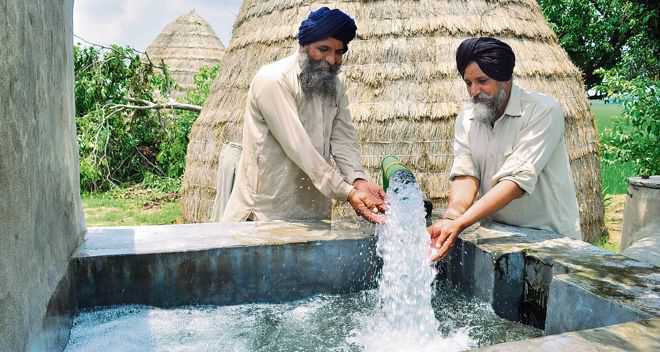
Presenting this year’s budget, Punjab Finance Minister Manpreet Badal sounded an ominous warning. Not that it wasn’t known earlier but coming from him was yet again an official acknowledgement of a worrisome futuristic scenario that is fast pushing the frontline agricultural state towards desertification and an impending ecological disaster. “76 per cent of the assessed blocks are over-exploited and the estimated ground water availability for future irrigation use is negative.”

The warning had been sounded earlier. The two reports on crop diversification in 1986 and 2002, authored by the eminent agricultural economist Dr S S Johl, were essentially in response to the depleting ground water situation. I remember Dr Johl many a times making a very strong point as to how Punjab ends up virtually exporting water when it transports surplus wheat and paddy every year to the deficit areas. Later, in 2009, the observations of NASA’s Gravity Recovery and Climate Experiment (GRACE) satellite data showed an equally worrisome trend. “We don’t know the absolute volume of water in the Northern Indian aquifers, but GRACE provides strong evidence that current rates of water extraction are not sustainable, hydrologist Matt Rodell of NASA was quoted as saying. Subsequently, a number of international and even national studies by the Indian Council of Agricultural Research, Central Ground Water Board and even the Punjab Agricultural University, among others, have pointed to a grim future ahead. 

Chief Minister Amarinder Singh too has been very concerned at the depleting water resources. Speaking in the Vidhan Sabha, he sounded a poignant note when he said that the state has run out of all options and there was an urgency required to tackle the water crisis, which may include changing the cropping pattern, going in for crop diversification and so on. But after all these warnings, if the Finance Minster simply ends up reiterating the government’s resolve to address the problem of groundwater depletion using the common popular jargons like judicious, sustainable and equitable use to manage water availability and eventually informed that the government is in dialogue with the World Bank to find a workable solution, clearly showed the lack of political courage to take the bull by the horn.

Like the previous governments, the present Congress regime too has shied away from initiating any significant step to move away from water guzzling crops, primarily paddy, lest it upsets the predominant vote bank. Interestingly, almost at the same time the budget session was in progress, the Coordinator of the All India Kisan Coordination Committee, Yudhvir Singh, while addressing a series of meetings organised by the Bhartiya Kisan Union (Lakhowal) was asking farmers to shift not only from paddy cultivation to restore ground water but also move away from intensive farming to agro-ecological practices. He wanted them to devote at least one acre out of the total land area they have to non-chemical agriculture. In fact, he made an impassionate plea urging farmers to reduce crop output. “Your problem is you produce more. If you were to reduce production by 10 per cent on an average, you’ll get a better price for your crop harvest and also save on chemical inputs.”

With 98 per cent assured irrigation, and having the highest crop productivity in wheat, rice and maize – the cereal crops – Punjab has the dubious distinction of turning into a hotbed of farmer suicide. With over 16,600 farm suicides, including farm labourers, documented in a house-to-house survey between the year 2000 and 2017 by the three public sector universities – Punjab Agricultural University, Ludhiana; Punjabi University, Patiala; and the Guru Nanak Dev University, Amritsar, there was ample evidence to relook at the intensive farming model that the state had adopted. World Bank had played a crucial role in pushing the intensive and exhaustive farming model, and to expect the same institution to help in improving the management of its scarce resources clearly showed that the state had not learnt any lessons and was not willing to change.

Albert Einstein had once said: “We cannot solve problems by using the same kind of thinking we used when we created them.” I have always maintained that we cannot ask the same people who were in a way responsible for the crisis, to provide solutions. First and foremost, the time is appropriate to move away from intensive farming, which has triggered massive environmental degradation and has brought the food bowl onto the edge of sustainability. The impending ecological disaster will not be addressed by changing the cropping pattern. A recent study by the Centers for International Projects Trust (CIPT), a Columbia University initiative, has after a detailed study on water budgeting shown that crop diversification will not make much of a difference in ultimate water balance.

What Punjab needs in fact is a change in farming systems. It is time the Punjab government does a complete rethink of the integrated farming systems that needs to be evolved, if it is serious in protecting its future. If Andhra Pradesh (AP) can launch Zero Budget Natural Farming with the aim to convert all its 60-lakh farmers to non-chemical agriculture by the years 2024, I see no reason why Punjab cannot at least initiative agro-ecological methods of farming for the marginal and small farmers to begin with. Considering that every third farmer in Punjab is below the poverty line, this is the community that needs immediate hand holding. Instead of pushing more machines and more chemicals into farming, using the Rs 6,000 per year direct income support allocated under the PM-Kisan scheme, Punjab should supplement with its own contribution and like AP provide at least Rs 15,000 per year. This package should be linked to agro-ecological farming systems. In Karnataka, for instance a direct income support of Rs 10,000 per year is announced for farmers cultivating millet crops.

In Chhattisgarh, instead of going in for increasing crop productivity to emerge out of the prevailing farm crisis, the new Congress government, has incorporated the traditional “Narwa (water), Garuwa (livestock), Ghurawa (compost/biofertiliser), and Baadi (backyard cultivation)” in an interesting agro-ecological approach to be accomplished at panchayat level. These are just a couple of examples to show there exists a way out provided the state government is willing. After all, extraordinary problems need extraordinary solutions. More of the same will only acerbate the crisis.

Punjab agriculture is in fact crying for change. A change that will save it from the impending ecological disaster that Manpreet Badal warned about. It has to begin with reframing and redesigning the farming systems. But this will be strongly resisted by a powerful cartel that exists -- among politicians, bureaucrats, agricultural scientists, and economists – who will call for business as usual. Unless the Chief Minister can break through that cordon, Punjab will continue to suffer. #

Review farming methods to tackle water crisis. The Tribune. Mar 14, 2019

READ MORE - Punjab agriculture is crying for a change

Sunday, March 10, 2019

Rural investments can change the face of India.


When Rooop Singh and his younger brother Basant Singh returned after performing the last rites of their father, they didn’t know that destiny too had the same pathway reserved for them. A decade after they cremated their father, Avtar Singh, who had committed suicide unable to bear the burden of mounting indebtedness; the two sons took the same fatal route. They jumped into the Bhakra canal in Punjab. They were residents of Patiala district.

Mounting farm indebtedness had taken two generations of the family. While the two sons ended their lives in November 2017, their father had died some 10 years earlier, in 2008. Both the brothers together owned 2.5 acres of land and were cultivating another 30 acres on contract. Not an isolated case, but it tells you how a perpetually loss making farming enterprise has taken a huge human toll over the decades. As the serial death dance on the farm continues unabated in Punjab, farmer unions estimate that even after the Congress government announced farm loan waivers, more than 430 farmers had committed suicide in a year

Therefore the recent report that farm incomes have touched the lowest in 15 years didn’t come as a surprise. It only endorses what has been known for long. The Centre for Monitoring of Indian Economy (CMIE) too had predicted that the nominal farm incomes in 2018-19 would be in the negative. This is in a way an extension of the findings of the Niti Aayog which had worked out the real farm incomes in the five year period, between 2011-12 and 2015-16, to be less than half a per cent every year, 0.44 per cent to be exact.

In such a dismal scenario, I sometimes wonder how the farming communities survive year after year. Those who end their lives add up to the collateral damage but what about those who do not give up, and continue to struggle against all odds? More so when it is generally believed that the real farm incomes have been on the decline for almost four decades now. A recent study by the Organisation for Economic Cooperation (OECD) has estimated a loss of Rs 45-lakh crore that the farmers had suffered on account of being paid a lesser price for their produce between the year 2000 and 2017. Another study by UNCTAD had earlier estimated that the farm prices all over the world when adjusted for inflation had remained almost static in the 20 year period between 1985 and 2005.

It is therefore obvious that in order to keep food inflation under control, successive governments have denied farmers their rightful income. The entire burden of keeping food prices low has been very conveniently passed on to farmers. In other words, it is the farmers who are bearing the entire cost of subsidising the consumers. At the same time, farmers are being deliberately paid less so as to provide cheaper raw material for industry. A farmer therefore has only two roles – to provide cheaper food for the consumers and provide cheaper raw material for the industry.

To be born in debt and live in debt all through his life is virtually like living in a hell. Imagine being told every year that the government has enhanced the credit limit for farmers. It is generally believed that credit pe credit is the only way for farmers to survive. As the debt keeps mounting the distress grows, but I have never seen economists and policy makers ever talking of providing farmers with their rightful income. It is for the first time, confronted with farmers’ anger visible through the electoral results in the Hindi heartland, that the government has launched a direct income support programme to provide small farmers with an annual support of Rs 6,000. This meagre amount signifies a significant shift in economic thinking – moving from credit to income support.  

But what is little understood is that the decline in farm incomes is an outcome of an economic design that we follow. As I said earlier, agriculture is being deliberately kept impoverished to keep economic reforms alive. Continuing with the same flawed economic thinking, the chief economic advisor has also called for more investments in industry so as to pull the youth from the rural to the urban areas. This is exactly what the World Bank had directed India way back in 1996. It is primarily for this reason that public sector investments in agriculture have remained between 0.3 to 0.5 per cent of the GDP between 2011 and 2017. The total investments, both public and private, have also been declining steadily – from 3.1 per cent of GDP in 2011-12 to 2.2 per cent in 2016-17. Compare this with the tax concessions being given to industry, which measures 5 per cent of GDP. The best way to kill agriculture therefore is to drastically curtail public sector investments in this sector which employs 52 per cent of the country’s population.

No wonder, as per the latest CMIE calculations, of the 56.6-lakh job losses encountered in past 12 months, almost 82 per cent or 46-lakh are from rural areas. This is the outcome of an economic policy that aims at pushing the rural unemployed youth to urban areas, which are in need of dehari mazdoor. If displacing farmers so as to create a workforce of dehari mazdoor is economic growth, there is a serious need to take a relook. Shrinking land holdings are not a problem, the bigger difficulty arises by denying the farmers with a rightful price for his produce.

The deliberate neglect of agriculture has rendered farming uneconomical and environmentally unsustainable. What is not being appreciated is that investing in rural areas is the only viable long term solution to many of the problems India faces – hunger, poverty, youth unemployment, forced migration and climate change. All these have deep roots in the rural areas. Since agriculture is the predominant rural occupation, the thrust of any sensible economic policy has to begin with treating agriculture as an economic activity. It alone has the ability sustain millions of livelihoods and thereby reboot the economy. #

कर्ज माफी से आर्थिक मदद की ओर. Amar Ujala. Mar 11, 2019
READ MORE - Rural investments can change the face of India.

Tuesday, February 26, 2019

The noose of blank cheques around farmers neck


Gurpreet Singh is a small farmer from Kishangarh village in Moga district of Punjab. He owns 3.5 acres of land and had defaulted in repaying an instalment on a Rs 5.6-lakh crop loan that he had taken from State Bank of India (SBI). A year ago, he was sentenced to two years rigorous imprisonment for two years. His fault, he had failed to make repayment as per the schedule. “As I had an SBI account, they took blank cheques from me,” he told the Indian Express.

Gurpreet Singh is among thousands of farmers who have been served legal notices under Section 138 of the Negotiable Instrument Act, 1881. Hundreds of them have served jail terms over the years and numerous others are on bail and await trial. In all cases, the modus operandi is the same. Banks take blank cheques from farmers at the time when they seek loans, and fill in the amount due when it becomes apparent that farmer is unable to repay an instalment, and file for a criminal case. What should otherwise be a civil case thereby turns into a criminal offence, which I think is patently wrong. “Almost 99 per cent farmers’ who draw loans from the banks, whether private, cooperative or nationalised, and fail to pay back face this ordeal, “says Bharti Kisan Union (Ugrahan) leader Sukhdev Singh Kokrikalan.

Seven farmer unions had joined hands against the unsavoury practice by banks of using blank cheques to recover the unpaid dues. “These days, banks are taking triple securities from farmers – pledging of land, signing by a guarantor and blank/post-dated cheques, “Buta Singh Burjgill, president of the BKU (Dakunda) faction was quoted in a newspaper. While numerous reports have appeared from Haryana, Uttar Pradesh, Rajasthan and Madhya Pradesh of public auction of farm lands or tractors mortgaged with the banks, it is invariably the blank cheques that land more and more defaulting farmers behind bars in Punjab. This is primarily because Punjab has banned auction of mortgaged land or ‘kurki. Even this is denied by farmers who say that ‘kurki’ orders are issued frequently but it’s only because of pressure from farm unions that auctions are not allowed.

Now compare this with Mudra loans. Minister of State for Finance Shiv Pratap Shukla informed Parliament that loans worth Rs 7,277.31-crore of public sector banks till March 2018 under the Pradhan Mantri Mudra Yojna (PMMY) had turned bad. Subsequently, an RTI revealed that Rs 11,000-crore of Mudra loans belonging to 13.85 lakh account holders had turned into non-performing assets (NPA) till Aug 3, 2018. Interestingly, while the government has set up a Credit Guarantee Fund for Micro Units (CGFMU) which guarantees payments against default in micro loans up to Rs 10 lakh to eligible borrowers, no such provision exists for defaulting farmers. Bad loans of Punjab farmers are in reality far less when compared with Mudra loan defaults.

Strange, while post dated/blank cheques are taken from farmers at the time of applying for bank loans, there is no such condition for Mudra loans. In fact, borrowers don’t need to pay processing charges or offer any collateral. Or else 13.85 lakh borrowers who have defaulted on Mudra loans would have been served legal notices, and hundreds of them would have been behind bars. Therefore the question that arises is why the practice of taking blank cheques at the time of granting a loan only confined to farmers? Is it because given the level of illiteracy and economic depravity, farmer is a soft target?   

Take the case of the new scheme offering loans up to Rs 1-crore within an hour, or 59 minutes to be exact. For the medium, small and micro-enterprises (MSME) an automated, contact-less provision has been enacted for providing loans from Rs 10-lakh to Rs 1-crore. For these loans, collateral is not mandatory considering that these loans are covered with a Credit Guarantee Fund Trust for Micro and Small Enterprises (CGFTMSE).  Again, if the State can act as a guarantee for defaults for MSME business loans, I see no reason why a similar guarantee fund should not be created for farm loans. After all, farmer is an entrepreneur and farming too is a business activity.

Bank’s argument that the practice of obtaining blank cheques serves as a security for farm loans is in fact discriminatory. The high handedness being shown by banks to use the blank cheques from gullible farmers so as to easily convert these civil cases into criminal, defies any logic. Meanwhile, Punjab’s Cooperation Minister Sukhjinder Singh Randhawa, who after prolonged negotiation with agitating farmers and bankers, has assured that banks will withdraw cases and return blank cheques back to farmers owning up to 5 acres of land and loan up to Rs 10-lakh. Roughly about 6,000 small farmers will benefit if the bounced checks are returned back, but protesting farmers want this practice to be withdrawn completely.  

Although banks have promised before the Punjab & Haryana High Court to return blank cheques for the small farmers in a week or so, I don’t see any reason why the practice of drawing blank cheques is not completely dispensed with. Banks cannot be allowed to wilfully exercise a discriminatory policy against farmers. There have been cases when banks have attached farmer’s pension to recover outstanding dues. According to National Crime Record Bureau statistics, 80 percent indebted farmers who committed suicide in 2015 had taken loans from banks and registered microfinance institutions. This defies the common understanding which blames private money lenders for adopting unlawful recovery tools.

Farming is a risky enterprise, which operates under difficult economic as well as climatic conditions. But the dual approach adopted by banks to recover outstanding farm loans from farmers using coercive means, while going soft on massive corporate loan defaults besides other business loans, clearly shows that the credit policy is designed to benefit the rich at the cost of the poor. Let me illustrate. As per a report presented by the Public Accounts Committee of Parliament the total outstanding loans of the public sector banks, termed as NPAs, stood at Rs 6.8 lakh crores in March 2014. Out of this, 70 per cent belonged to the corporates whereas only 1 per cent default was of the farmers. Corporate NPAs presently stand at a whopping 10.3 lakh crores. Did we ever hear of any of the corporate defaulter going to jail for bounced cheques? #

The noose of blank cheques around around farmers. The Tribune. Feb 26, 2019
https://www.tribuneindia.com/news/comment/the-noose-of-blank-cheques-around-farmers/734792.html?fbclid=IwAR3GHTLP6-veVt3aw4klj-eqTIoeZHo8s0aHN99j8YzjEOqfbV0LFZx8HA0
READ MORE - The noose of blank cheques around farmers neck

Monday, February 25, 2019

When Your Child Tells You School Staff Are Treating Them Wrong- Should You Believe Them?

By Michelle Ball, California Education Attorney for Students since 1995

Has your son or daughter told you they are being punished by school staff while other kids doing the same things are not?  Do they complain often about being treated bad in class or being excluded by the teacher?  Did you believe them?  Should you?

As parents we know our children.  We know they are fantastic, wonderful, amazing, and also that they can be troublemakers and sometimes make things up.  We also naturally trust school staff as revered authority figures.  The schools know this and use this to their advantage.  

I know when I was a kid I never thought schools or school staff could do wrong.  I thought schools were safe places and the staff would always help me.  It is this viewpoint that keeps parents doubting their kids when they may actually be reporting a REAL problem.  As parents we may tend to doubt them if they say a teacher wronged them, as we think: "Teacher X would never do that!"  I am sorry to say, sometimes Teacher X may "do that."

I have met with many parents who find their child is an inappropriate target of staff at their school.  They have either been labelled a troublemaker, and are then blamed for everything happening around them; or a staff member just does not like them, and as a result picks on them or excludes them.  Neither case is appropriate.

But what should a parent do about it?  There are some basic steps which could help.

First, get all the information from your child on what is happening, who is involved, and the circumstances.  

Next, investigate further.  Can you schedule a visit to the classroom or campus to observe?  Can you speak with staff about how your child is doing and what is going on in class?  It is possible this may solve it.  

If this does not put an end to the situation, a parent may want to have a meeting with the school administration to discuss.  A written submission of the situation could be a good idea and daily email of issues may be needed to keep a record, as well as put the school on notice.

The District is a resource as well if things cannot be resolved at the school level.  

Often I find that parents are not believed either, as school/district personnel may have the "No staff member would do wrong" syndrome.  Schools also tend to believe their own staff over a parent, and definitely pick and choose when to believe a child.  One minute the kid is the source of all knowledge (for example when they accuse another kid of selling drugs or bullying) and another time the child will not be believed when they are the victim.  Who knows which time this is.

Ultimately, you may end up needing to file a formal investigation request and/or personnel complaint on the situation.

If all else fails, you can also seek an intradistrict transfer, but often for parents this is a last resort.  However, your child and their safety is important and if things can't or won't get corrected, sometimes we need to do something else.

I think the message I have for parents is that you SHOULD listen to your kids on allegations they have.  At least listen then investigate for yourself.  Too much bad stuff goes on at school that parents find out too late.  What I have heard over the past 20+ years from parents is enough to make any parent run far away from any school.... but I only hear the bad stuff and am a tad jaded as a result.  There is plenty of good in schools, but we need to help our kids when they tell us something bad is occurring.  As, oftentimes they may be right!

Best,

Michelle Ball
Education Law Attorney 

LAW OFFICE OF MICHELLE BALL 
717 K Street, Suite 228 
Sacramento, CA 95814 
Phone: 916-444-9064 
Email:help@edlaw4students.com 
Fax: 916-444-1209
[please like my office on Facebook, subscribe via twitter and email, and check out my videos on Youtube!]


Please see my disclaimer on the bottom of my blog page. This is legal information, not legal advice and no attorney-client relationship is formed by this posting, etc. etc.!  This blog may not be reproduced without permission from the author and proper attribution of authorship.

READ MORE - When Your Child Tells You School Staff Are Treating Them Wrong- Should You Believe Them?

Sunday, February 24, 2019

"I have always said that agriculture is being sacrificed to keep market reforms alive." My interview


Distinguished food and trade policy analyst, award winning journalist, writer and researcher DEVINDER SHARMA was trained as an agricultural scientists and quit journalism to write on food and trade policies. He tells SARBJIT DHALIWAL how unfairly independent India continues to treat its farming community

You have been advocating the need for a direct income support for farmers. Now that the Finance Minister has announced an income support of Rs 6,000 per year to small farmers owning less than 5 acres, do you think cash transfer is the way to address farm crisis? 

For more than four decades now farm incomes have remained more or less static. Several studies have shown that the real farm incomes have been on the decline. More recently, a  Niti Aayog study has shown that in the five-year period, between 2011-12 and 2015-16, real farm income had grown by less than half a percent every year, 0.44 per cent to be exact.

Following demonetisation, with farm gate prices slumping across board, we have seen reports of farmers throwing tomato, potato, onion and garlic on the streets. Irate farmers had re-ploughed standing crops of vegetables and reports of farmers endlessly waiting at the market to dispose off their farm produce, had appeared frequently. Farmers’ anger was clearly visible, and following the electoral debacle in the Hindi heartland, the government borrowed the idea to bring in direct income support to farmers.

Like the concept of universal basic income, I believe direct income support is a significant shift in economic thinking. For several years now, I have been asking for direct income support. Even in US and Europe, farmers have been given direct income support for long. The time has come in India to move from ‘price policy’ to ‘income policy’ which means over the next few years the government will have to further provide farmers with an assured or a guaranteed monthly income. After all, how long can we leave farmers to face the tyranny of the markets?

But many people say Rs 6,000 support is too less and too late ...

Yes, you are very right. Rs 6,000 a year actually translates into Rs 500 a month or less than Rs 17 a day. I don’t understand how the government thinks that with such a meagre amount small and marginal farmers will be able to get out of the terrible agrarian crisis that prevails. I don’t know how the government thinks Rs 500 per month will enable farmers to get out of the suicide trap. It seems the immediate objective is to ensure that the first instalment of Rs 2,000 lands in the bank accounts of small farmers before the ensuing general elections, for which a budgetary provision of Rs 20,000-crore has been made.

That there is a drought of practical ideas and thinking at the policy planning level was never in doubt otherwise there is no reason the farm crisis should have multiplied to such a severity. But to provide Rs 500 per month to a small farmer and then think it will do the miracle is a clear-cut reflection on the disconnect that prevails between policy planning and the ground realities. No wonder agriculture is in dire crisis.

The least that could have been done was to double the income support amount, from Rs 6,000 to Rs 12,000 per small farming family.

But where will the money come from?

That’s a question I hear whenever farmers loans have to be waived or they have to be given any financial support. No one has ever asked where the money will come from when huge corporate bad loans are written off. Between April 2014 and April 2018, Rs 3.17 lakh crore of corporate loans have been struck down, and no questions over fiscal imbalance caused or where from will the money come have ever been raised.

Take the case of 7th Pay Commission. Arun Jaitley has earlier informed that it will entail an additional annual burden of Rs 1.02 lakh crore which will benefit 45 lakh central government employees and another 50 lakh pensioners. But when the 7th Pay Commission is implemented by the state governments, PSUs, colleges/universities, a Credit Suisse Bank study says the annual burden will be in the range of Rs 4.5–lakh crore to Rs 4.8-lakh crore. Did you hear anyone asking from will the money come from or whether it will add on to fiscal deficit?

Now coming to income support, if only the government had doubled the income support to Rs 12,000 per year per small farmer I am aware that the budgetary allocation would have also doubled. Piyush Goyal has said that Rs 6,000 support will require an additional finance of Rs 75,000-crore in a year. If the amount had been doubled, the budgetary requirement would increase to Rs 1.5 lakh crore.

Before you raise an alarm over where will the money come from, let me tell you that the immediate need was to discontinue an economic stimulus package of Rs 1.86 lakh crore that is being paid to India Inc since 2008-09 when the global economic meltdown took place. No one knows why this stimulus package still continues to be paid. No one ever asked the fiscal implications of this package, which means the country has spent Rs 18.60 lakh crore in ten years. Is that a small amount? And look, the tap still continues to flow. Why couldn’t this economic stimulus package be stopped and diverted to agriculture? If done, I am sure the Finance Minister could have announced a direct income support of Rs 15,000 per month to farmers.

I agree, but two wrongs don’t make it right

I too agree with you. But first tell me why do you think that even one wrong makes it right? Why is that the former Chief Economic Advisor Arvind Subramanian used to say that writing-off corporate loans leads to economic growth and waiving farm bad loans leads to credit indiscipline and former RBI Chief Urjit Patel had even called farm loan waivers as a moral hazard? Isn’t that simply a way to defend the wilful corporate defaulters?

Merrill Lynch had gone to the extent of telling us that farm loan waiver, which has already touched 1.9 lakh crore, amounts to 2 per cent of GDP. But it never told us how much would an NPA of Rs 10.3-lakh crore would be in terms of GDP. That’s how the blatantly biased economic system works. When you give money to the poor, it is called subsidy, a word that has been demonised. But when you give massive doles or tax cuts to corporate, it is called incentive for growth. No wonder, I have always said that it is socialism for corporate and capitalism for farmers.

Why is that while both the corporate and the farmers draw loans from the same banks, corporate get ‘haircuts’ with bulk of the loans written off by banks, which in turn leads to economic growth, whereas the poor farmer’s assets are seized and auctioned even for small outstanding amounts Rs 1 lakh or less. I have seen farmers going to jail for defaulting on just one repayment. In Punjab, thousands of farmers have received legal notices from banks for not being able to pay back in time and hundreds of them are in jail. Why doesn’t the same happen with Corporate big wigs? Why should the banking norms be different for different people?

You have also talked of income disparity. Can you tell us why do you say that agriculture has been deliberately kept impoverished?

I have always maintained that agriculture is being sacrificed to keep market reforms alive. Why I say so is because in the economic liberalisation paradigm, agriculture plays only two roles – First, it has to provide cheaper raw material for the industry, and secondly, it must provide cheaper food to people and keep food inflation low. Therefore farmers alone have carried this burden all these years. Farmers do not realise when they cultivate crops, they actually cultivate losses. The match is invariably fixed against them.

Let me illustrate. In 1970, the MSP for wheat was Rs 76 per quintal. Forty five years later, in 2015, the wheat price was Rs 1,450 per quintal, an increase of 19 times. To understand how farmers have been deprived of their rightful price, I made a comparison with other sections of the society. The basic pay (plus Dearness Allowance) of government employees in the same 45-year period had gone up by 120 to 150 times; of university/college professors by 150 to 170 times, of school teachers by 280 to320 times. If only the basic pay of employees and teachers for instance had risen in the same proportion as the farmers, I am sure a majority would have quit their jobs and with many suicides reported.

In addition, employees get a total of 108 allowances. When was the last time you heard of a house rent allowance being included in the MSP for farmers; an educational allowance for the children; health allowance for the farmer’s family members and a travel allowance for them? Why should MSP only take care of out of pocket expenses that a farmer incurs plus family labour along with a small profit margin? Why not calculate farmers cost like the way Cost Accountants do for the agribusiness industry?

Farmers have been demanding a higher MSP, as suggested by the Swaminathan Commission, and also want a loan waiver. How justified you think are their demands?  

Farm loan waiver is the immediate relief farmers need. After all, if for four decades farmers have been denied their legitimate income, and have survived on taking credit and repay that credit draw more credit from another source, why shouldn’t the nation stand with them and see that they are relieved of their economic burden once for all. Let’s give an opportunity to farmers to get rid of the entire economic baggage they carry. Waiving farm loans is not an act of generosity or is an attempt at being politically correctness, what we need to understand is how and why farmers have been deliberately kept impoverished all these years.

A recent OECD-ICRIER study says that in the past two decades farmers have incurred a loss of Rs 45-lakh crore on account of low prices. Earlier, I remember an UNCTAD study had estimated that farm gate prices across the globe had remained frozen between 1985 and 2005 when adjusted for inflation. Can we even imagine how with all these losses has the farming community been surviving year after year? Despite living in hunger themselves, they still produced food for the country. 

Swaminathan Commission’s recommendation is for giving farmers the weighted cost of production plus fifty per cent profit. But the government has manipulated the formula treating the basic expenses in production as A2 plus family labour (A2+FL) and then given 50 per cent over it. This formula gives a much lower price than what Swaminathan recommended. Although the new improved price has been announced for all 22 crops for which MSP is announced but everywhere farmers were able to sell at a much lower price, often 25 to 40 per cent less than the announced price. As a result economic losses continued to pile up.

As per the high-powered Shanta Kumar committee even though only 6 per cent farmers get the benefit of MSP and the remaining 94 per cent farmers are dependent on the vagaries of markets, MSP must be enhanced to the level Swaminathan recommended. But I see a lot of pressure is being exerted by the industry (and their brand of economists) to dismantle the regulated markets. This will be rather unfortunate. The reason is simple. Once the APMC markets are disbanded, farmers will be ruthlessly exploited and price discovery will become an instrument for exploitation. Take the case of Bihar. It abolished APMC markets in 2006. In the absence of APMC, farmers are able to sell wheat and paddy at prices which are much lower than that in Punjab and Haryana where farmers do receive MSP because there exists an elaborate network of APMC mandis. This year, huge stocks of paddy illegally transported all the way from Bihar have been apprehended in Punjab and Haryana.

The answer therefore lies in strengthening the APMC network rather than disbanding it. There exists roughly 7,600 APMC mandis so far and what India needs is a network of 42,000 mandis for every 5 km radius.

What in your opinion should the government to do to pull agriculture out of the distress that prevails? Is there a sustainable solution that can bring back the smile on the face of farmers?

Yes, of course. Agriculture needs a holistic set of reforms, including credit policy, market reforms, trade policy etc, which must begin with the premise that agriculture too is an economic activity. In fact, at a time of jobless growth now leading job loss growth, agriculture being the largest employer alone has the potential to reboot the economy. The three steps that the government should initiate immediately in addition to what I have said earlier, so as to ensure economic security must include:  

1) Along with direct income support, the next step to augment farm incomes should be to set up a Farmers Income Commission. My suggestion is to rename the existing Commission for Agricultural Costs and Prices (CACP) as a Commission for Farmers Income and Welfare with the mandate to ensure that farmers are able to realise an assured monthly income of at least Rs 18,000 for a household owning not less than an acre. At the state level, each state should set up a Farmers Income Commission.
2) Initiate a series of steps for ease of doing farming. This involves governance, and also removing obstacles that farmers face routinely. If industry can have 7,000 steps carved for ease of doing business I see no reason why agriculture cannot get the same attention. This will need a separate monitoring wing with enough teeth, under the Ministry of Agriculture and Farmers Welfare. At the state level, Farmer Commission should be given more powers to regulate farming operations. 
3) It is time to increase public sector investment in agriculture, which has been dwindling over the years. Between 2011-12 and 2016-17, public investment has remained between 0.3 and 0.4 percent of the GDP. Considering that nearly 50 per cent population is engaged in agriculture, the total investment, both public and private, must increase every year. But this can happen only when agriculture is treated as an economic activity.#

India support socialism for industry, capitalism for farmers. National Herald, Feb 24, 2019
  
READ MORE - "I have always said that agriculture is being sacrificed to keep market reforms alive." My interview

Thursday, February 14, 2019

Agriculture can alleviate employment woes.


Pic courtesy: IVHQ


Look at these headlines. As many as 7,000 people, most of them college graduates, applied for 13 job vacancies for waiters in Maharashtra’s secretariat. Of the 4,607 applicants for 14 job vacancies of sweepers and sanitary workers in Tamil Nadu Assembly Secretariat, most have professional qualification of MBA, M Tech, B Tech, post graduate and graduates, reads another. And last year, in March 2018, an estimated 25 million people, more than the population of Australia, applied for about 90,000 positions in India Railways, screamed TV news channels.


In 2015, over 2.3 million candidates, including 2.2 million engineers and 255 Ph.D. holders had applied for 368 posts of peon in the Uttar Pradesh State Secretariat. A year later, a massive 93,000 candidates, including 20,000 graduates and 50,000 post graduates, had applied for the posts of 62 peons with a technical wing of the Uttar Pradesh police. Almost at the same time, another 19,000 people, including MBAs and post graduates had applied for 114 jobs of ‘safai karamchari (sweepers) with Amroha Municipal Corporation in Uttar Pradesh. There may not have been riots over increasing unemployment but not only in Uttar Pradesh is the job situation so appalling, it is equally bad across the country.  

This is borne by the fact that India’s unemployment rate rose to a 45-year high during 2017-18, as a newspaper reported quoting the National Sample Survey Organisation (NSSO) study conducted between July 2017 and June 2018. At a time when India’s economy has been on a growth trajectory in the past four years – growing at an average exceeding 7 per cent per annum – the failure to provide jobs to millions of people joining the employment queues is a clear cut pointer that relying on a higher GDP is not the answer to creating more jobs. Whether we like it or not, it is now becoming apparent that a higher GDP does not translate into more jobs.

Although the Finance Minister Arun Jaitley dismisses the study, saying “if the economy is growing at 12 per cent nominal growth in the past five years, it would be an economic absurdity to say that such a large growth, the highest in the world, doesn’t lead to the creation of jobs,” but the question that needs to be asked is where are the jobs? While all out efforts are being made to show that job creation is on track, a report from Centre for Monitoring of Indian Economy (CMIE) deflates the claims when it shows that in the past one year, almost 11million people lost their jobs. “An estimated 9.1 million jobs were lost in rural India while the loss in urban India was 1.8 million jobs. Rural India accounts for two-thirds of India's population, but it accounted for 84 per cent of the job losses," the report said.

Growth without jobs is meaningless. The indication that a higher GDP does not automatically lead to more jobs was clearly visible in the UPA era when despite a high growth exceeding 8.3 per cent on an average, only 15 million jobs were created in the ten years, between 2004 and 2014. This was against the annual intake of about 12 million fresh entrants in the job market every year, which meant that against the need to provide 120 million people with employment, the UPA could provide only 15 million jobs. Ten years is not a small period, and it is here that policy makers failed to realise the inability of economic growth to create more jobs.

Still worse, a Planning Commission report had worked out that between 2004-05 and 2011-12 , about 140 million jobs were lost in agriculture. Many economists term the migration from agriculture to be a welcome sign. Going by the World Bank prescription, which was doled out way back in 1996, India was directed to go for a population shift, translocating 400 million from the rural to the urban areas in the next 20 years, by the year 2015. While most government economists have blindly followed the World Bank prescription, I have always termed these 400 million people being forced to migrate from the villages as ‘agricultural refugees’. In the absence of any alternative employment opportunity, these millions are swarming into the cities looking for menial jobs.

Without any definite strategy to employ them, no one knows what these millions will do in the urban centres. If the objective is to move people out of agriculture simply to meet the growing needs of cheaper labour for infrastructure, industry and real estate, in other words to provide for dehari mazdoor, there is something terribly wrong with the way dominant economic thinking is perceived. The general understanding being that those moving out of agriculture will be automatically absorbed by the manufacturing sector. It was primarily for this consideration that the National Skill Development Policy aimed at reducing the population in agriculture from 52 per cent to 38 per cent by the year 2022. But the reality is that during the period agriculture saw an unprecedented rate of migration, manufacturing too slumped, causing a loss of 53 million jobs. More recently, another 10.6 million jobs were lost in the manufacturing sector during the four year period 2011-12 to 2015-16.

Since agriculture is the biggest employer, employing 52 per cent of the population as per 2011 Census, the answer to the monumental employment crisis that India faces actually rests in the crop fields. If only agriculture can be turned economically viable and ecologically sustainable, it can easily take away much of the pressure the country faces in creating additional employment. All it requires is a paradigm shift in economic thinking, which begins by first treating agriculture as an economic activity, which has multi-faceted roles cut out. Making farm livelihoods economically sustainable should be the first step, with the objective to ensure gainful employment to marginalised communities. Once agriculture becomes economically viable, providing more income in the hands of 600 million people, it will reignite the rural based industry, and in the process trigger a reverse migration.

Only agriculture has the ability to reboot the economy. The increased demand a refurbished agriculture will create will be phenomenal, leading to a spurt in industrial production. This may not be ascribed in the economic textbooks, which still emphasise on reducing the population in farming but it is time to look beyond. If Constitution of India can be amended umpteen numbers of time, I see no reason why dominant economic thinking (and economic curriculum) cannot undergo a transformation for better, keeping in tune with changing times. It’s time to accept that agriculture is truly the mainstay of Indian economy. #

Agriculture can alleviate employment woes. The Tribune. Feb 15, 2019
READ MORE - Agriculture can alleviate employment woes.

Thursday, February 7, 2019

Income Support Announcement represents a tectonic shift, but inadequate -- My Interview


Chandigarh: Last week, while presenting the Narendra Modi government’s last budget, acting finance minister Piyush Goyal announced a direct income support scheme for small and marginal farmers across the country. Under the Pradhan Mantri Kisan Samman Nidhi scheme, farmers owning less than two hectares will be provided Rs 6,000 per annum by the Centre.
Punjab-based agriculture policy expert Devinder Sharma was among the first, in 2013, to propose the idea of direct income support for farmers. On the sidelines of the 4th International Dialogue on Himalayan Ecology in Chandigarh, The Wire spoke to Sharma about the need for income support, the adequacy of the Centre’s scheme and other reforms that the agriculture sector needs.
The interview has been edited for clarity.
Why did you feel, as early as you did, that India’s farmers needed an income support scheme?
When I looked at the agriculture sector as a whole, there was a very clear message. Farmers were suffering as a result of two things – 1. Lack of public sector investment and 2. Denial of rightful income. I also understood that farmers were victims of market volatilities. There was no way that the markets would be able to rescue farmers.
Looking at global agriculture, it was obvious that agriculture was in decline across countries because farmers were being denied their rightful income.
And you felt that this was happening primarily because of the way markets were designed?
It was primarily because of the economic design. Agriculture is being sacrificed to keep economic reforms alive. Farmers don’t realise that when they cultivate crops, they actually cultivate losses. The same principle works globally, not just in India. The state of Indian agriculture is a result of the economic model that we have borrowed from the West.
If you look at American or European agriculture, the share of population engaged in agriculture is much lower than that in India. But still it was surviving because of substantial state subsidies including direct income support to farmers.
So you don’t agree with the argument that is sometimes made that we have too many people in agriculture and that is the basic problem.
No, I don’t agree with that. Agriculture cannot survive without subsidies because otherwise volatility of markets will mean that farmers are denied their rightful income.
The prevailing economic design wants two things from agriculture – 1. Provide cheap raw material for the industry and 2. Keep food prices low to keep a check on inflation.
Institutions and think-tanks keep telling us that we have to move people from rural to urban areas. But they don’t say what they will do in urban areas. The idea is that they will provide cheaper labour as daily wage labourers. That is the economic design. Is that a sensible design?

Devinder Sharma. Credit: Youtube
How do you view the recent announcement by the Central government that it will be providing Rs 6,000 per annum as a direct income support to small and marginal farmers?
The announcement itself is a tectonic shift. The time has come when we need to shift from price policy to income policy. Price policy has failed and income policy is the only way to bail out farmers. So, in that sense it is good and it is a big shift.
Is it adequate?
The thing is, it has not been done in a way that it can make an impact now. Rs 6,000 means Rs 500 per month. How do you expect to solve agriculture distress by Rs 500 per month?
What would have been a figure that would have been adequate?
I would say Rs 6,000 per month. I know that there are limitations and that won’t be possible. But still they could have doubled what they have given. They could have provided Rs 12,000 per year to begin with.
And there is no lack of money. I will tell you why. Over the last few years India has provided several lakh crores to the industry. We have provided them fiscal stimulus packages, we have waived their loans through bank recapitalisation.
Did anybody ask the question ‘where will the money come from?’ No questions on ‘fiscal slippage’ either.
Why are these questions only asked when we have to give money to farmers? Nobody wants to close the tap which gives money to corporates.
Why is it important to move from a price policy to an income policy?
If you see in the last three years, prices of crops have continued to be well below MSP. For certain crops they have remained 40-50% below MSP throughout the season. It is clear that the price policy is not working. The economic design ensures that farmers don’t get the rightful price for their produce.
So is an income policy by itself going to be enough to address agrarian distress?
No, you need other reforms. We need to set up enough functional markets. We need to have mandis within a five-km radius so that farmers can easily reach them. Our credit policy needs urgent reforms. We need to move from chemical to non-chemical agriculture. Our storage capacity needs to increase for that we need to invest in warehouses.
There need to be multiple reforms to solve the problem. If industry can be provided 7,000 steps for ease of doing business, why can’t we provide at least 1,000 steps for ease of doing agriculture?

Income Support Announcement represents a tectonic shift, but inadequate. The Wire. Feb 6, 2019
https://thewire.in/agriculture/interview-income-support-announcement-represents-a-tectonic-shift-but-inadequate
READ MORE - Income Support Announcement represents a tectonic shift, but inadequate -- My Interview

Direct Income Support for farmers is a welcome move.


Finance Minister Piyush Goyal in his Budget speech announced a direct income support of Rs 6,000 per year for small farmers owning less than 2 hectares of land, which is certainly meagre by any standards, but is a tectonic shift in economic thinking around the role of agriculture for development. It entails a paradigm shift from the existing ‘price policy’ to move towards ‘income policy’ unlocking the immense growth potential existing in agriculture.  

The announcement of a direct income package of Rs 6,000 for 12-crore small farmers, which actually boils down to Rs 500 per month to be paid in three instalments, is certainly too meagre by any standards. Although the Finance Minister has made a budgetary provision of Rs 20,000-crore for the remaining period of the fiscal to enable the first instalment of Rs 2,000 to be credited in the bank accounts of beneficiary farmers before the forthcoming general elections, the petty amount has evoked sharp reaction from the distressed farming community. And rightly so.

I don’t know how a direct income support of Rs 500 per month per small farming household will be able to pull out 12-crore small and marginal famers from the terrible agrarian crisis that prevails. Nor do I understand how this meagre support will help in reducing the spate of farm suicides. There is hardly a day when farm suicides are not being reported from one part of the country or another. Take the case of Punjab, where even after the loan waiver of Rs 2-lakh per farmer was initiated in January 2018, as per Bhartiya Kisan Union calculations there have been 430 farm suicides reported in the year gone by. Therefore the question that needs to be asked is how did the policy makers conceive of the idea to provide a paltry direct support which will not even make an iota of a difference.

Considering that the average income worked out by Nabard All India Rural Financial Inclusion Survey 2016-17 stands at a paltry Rs 8,931 per month, it is quite certain that the direct income support of Rs 500 per month will not be enough in achieving the objective of doubling the farm income. Nor is this amount fit enough for any significant farm investments the farmer would like to make. Economic Survey 2016 had earlier computed the average income of a farmer in 17 States, which means roughly half the country, at a pitiful Rs 20,000 a year. In other words, the average income of farming family in half the country stood at less than Rs 1,700 per month. I shudder to think how several million farmers survive in that miserly income.

Since the government has already made an annual budgetary provision of Rs 75,000-crore for PM-Kisan (beginning with the full-fledged budget expected after elections) there is no reason why the direct payment amount couldn’t have been double. At Rs 12,000 per small farmer, the budget allocation would have certainly doubled, which means a hike in budgetary allocation to Rs 1.5-lakh crore. To the question where will the money come from, the best and easy instrument available for the Finance Minister was to immediately scrap the annual fiscal stimulus package of Rs 1.86-lakh crore being doled out to the industry, in operation since the global economic meltdown in 2008-09. While there is no economic justification for the package, it continues to be paid for ten years now. In simple words, Rs 18.60 lakh crore has been paid to the industry since 2008-09 and no question has ever been raised about the fiscal imbalance accruing. I see no reason why this money couldn’t have been transferred to farmers account.    

Like in Telangana’s Rythu Bandhu scheme, the Centre too has kept the direct income support limited to land owning farmers. The only difference being that while the Rythu Bandhu scheme is open ended, which means even if a farmers has ten acres of land he will get a proportionate support, the Centre is restricting it to farmers owning less than 2 hectares. It however excludes tenant farmers, who form nearly 40 to 50 per cent of the farming population, from getting the same benefits. At the same time, direct cash payments landing in the bank accounts of absentee landlords remains a big problem.

Nevertheless, as someone who has been a strong advocate for direct income support, it is gratifying to see direct payments now becoming an economic necessity. Agriculture has been and still remains a victim of the tyranny of markets. For more than four decades now, agriculture incomes had remained static with many studies providing an empirical evidence of declining real farm incomes. I have always maintained that agriculture has been deliberately kept impoverished to keep the economic reforms alive. Keeping the food inflation low and by ensuring a cheaper raw material for the industry, the entire economic burden has been quietly passed on to farmers.

An economic model, where agriculture is treated with disdain and has been very cleverly projected as an uneconomic activity, has to be reversed. To say that the Rs 500 a month cash dole to small farmers may be increased in the future as the government's resources grow is a reflection of the same faulty economic thinking. As a result most economic resources have been slowly and steadily shifted to the industry. Since 2004-05, the industry has got Rs 55-lakh crores of tax concessions. Niti Aayog estimates these concessions to be 5 per cent of GDP. Knowing that income saved is income earned, this in reality is no less than direct income support. In addition, the industry has been provided with massive incentives, which in reality are subsidies. On the other hand, an OECD-ICRIER study has worked out a total loss of Rs 45-lakh crores in the period 2000 and 2017 on account of low farm prices.

If only the farmers were paid their legitimate dues, the face of agriculture would have been much bright. In addition, I fail to understand why governments have refused to take steps for ease of dong farming. Agriculture alone has the potential to reboot the economy, and can sustain millions of livelihoods thereby reducing the pressure on job creation.

Providing direct cash payments to small and vulnerable groups is the first step in augmenting farm incomes. I am sure with the passage of time direct cash amount will see an incremental increase. This has to be simultaneously followed with the setting up of a Farmers Income Commission, with a mandate to ensure a minimum monthly income of Rs 18,000 per farming family per month. This will open the doors to agriculture receiving more public sector investments, more holistic reforms, and in bargain being turned into an economic activity. # 

Farmers need much more than cash dole. The Tribune. Feb 6, 2019

READ MORE - Direct Income Support for farmers is a welcome move.